
YouTube Watch Time: Why It Matters and How to Improve It

If you've been trying to grow your YouTube channel and feel like you're spinning your wheels, watch time might be the missing piece. It's one of the most important signals YouTube uses to decide which videos get pushed to more people. And yet a lot of creators ignore it completely, focusing only on views and subscribers.
Watch time is simply the total number of minutes people spend watching your videos. It sounds basic, but the way YouTube uses it behind the scenes is anything but simple. The algorithm looks at watch time to figure out which videos are worth recommending. More watch time usually means more reach, more new viewers, and faster channel growth.
I remember when I first started paying attention to my own analytics. I had a video sitting at around 10,000 views and thought it was doing great. Then I checked the average view duration and saw people were dropping off in the first 30 seconds. The video wasn't actually performing well at all. That moment changed how I think about every single video I make.
Why YouTube cares so much about watch time
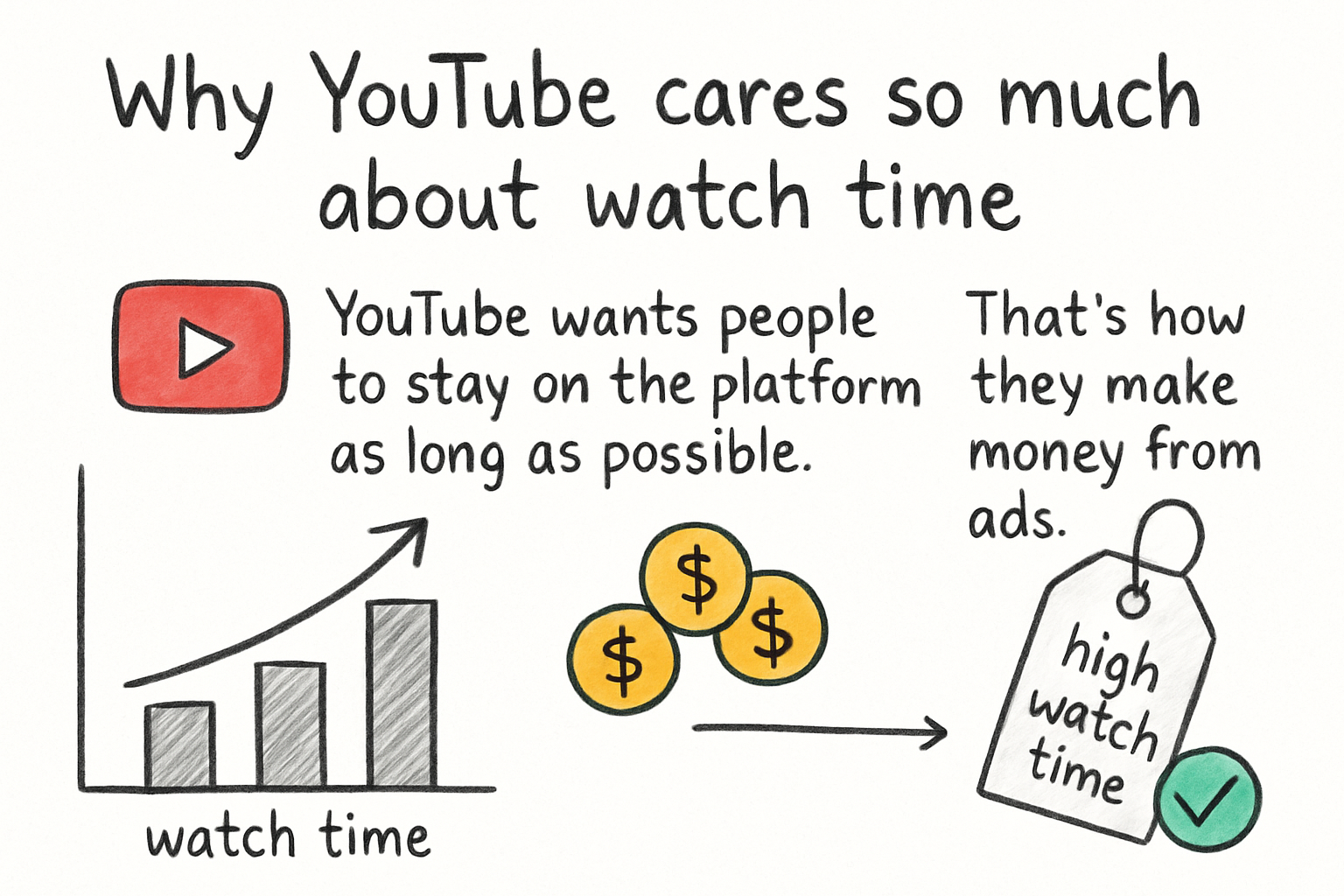
YouTube wants people to stay on the platform as long as possible. That's how they make money from ads. So naturally, they reward creators whose videos keep people watching. Watch time is one of the strongest signals they use to rank and recommend content.
When your video racks up more watch time, YouTube takes that as a sign that people find it valuable. It starts showing your video in suggested feeds, search results, and on the homepage. That extra exposure is free traffic, and it can compound quickly if your videos keep performing well.
Watch time also plays a big role in monetization. To join the YouTube Partner Program, you need at least 4,000 hours of watch time in the past 12 months. If you haven't hit that threshold yet, our guide on becoming a YouTube Partner walks you through exactly what's required and how to get there faster.
A lot of you have asked about this, especially in the comments on past posts, so it's worth being direct here: views don't grow your channel the same way watch time does. A video with 500 views and a 70% retention rate will almost always outperform a video with 5,000 views and a 10% retention rate. YouTube sees that first video as the better one, and it'll push it further.
What kills watch time and how to fix it
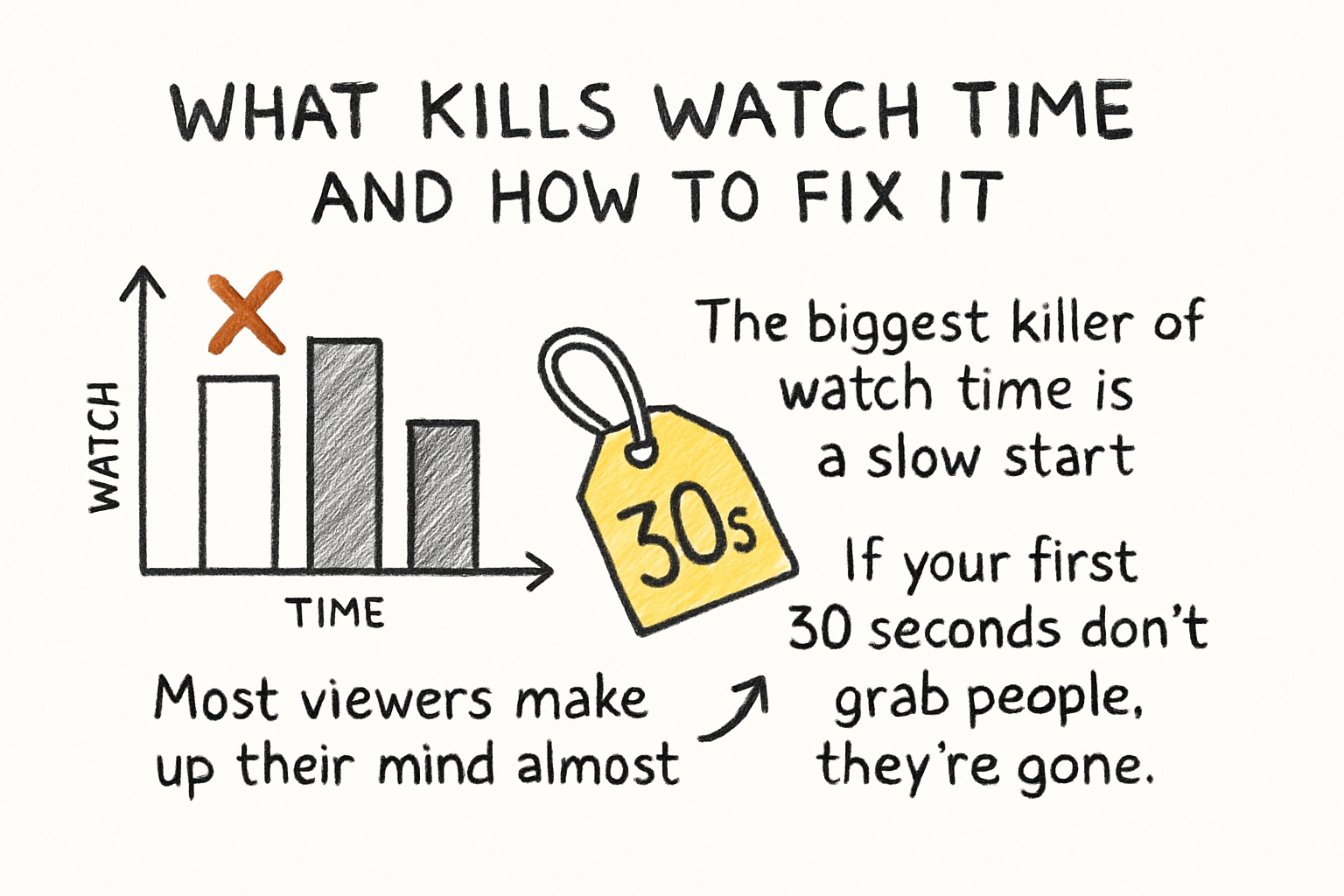
The biggest killer of watch time is a slow start. If your first 30 seconds don't grab people, they're gone. Most viewers make up their mind almost immediately about whether a video is worth their time. That means you can't spend the first minute introducing yourself, thanking people for clicking, or explaining what the video is about in a vague, rambly way.
Start with something that creates curiosity or promises a clear payoff. Tell viewers right away what they're going to get out of watching. Then deliver on that promise consistently throughout the video. Every time the energy dips or a section drags, you're giving people a reason to click away.
Pacing matters too. Long videos can work really well, but only if every part earns its place. A 20-minute video with tight editing and strong content will hold attention better than a 10-minute video that meanders. Cut the filler. Say what you need to say and move on.
Thumbnails and titles are also part of the equation. If your thumbnail promises one thing and your video delivers something different, viewers feel tricked. That kills trust and tanks your retention. Our post on what makes a YouTube video go viral gets into how thumbnails and titles work together with content quality to keep people watching all the way through.
Practical ways to grow your watch time right now
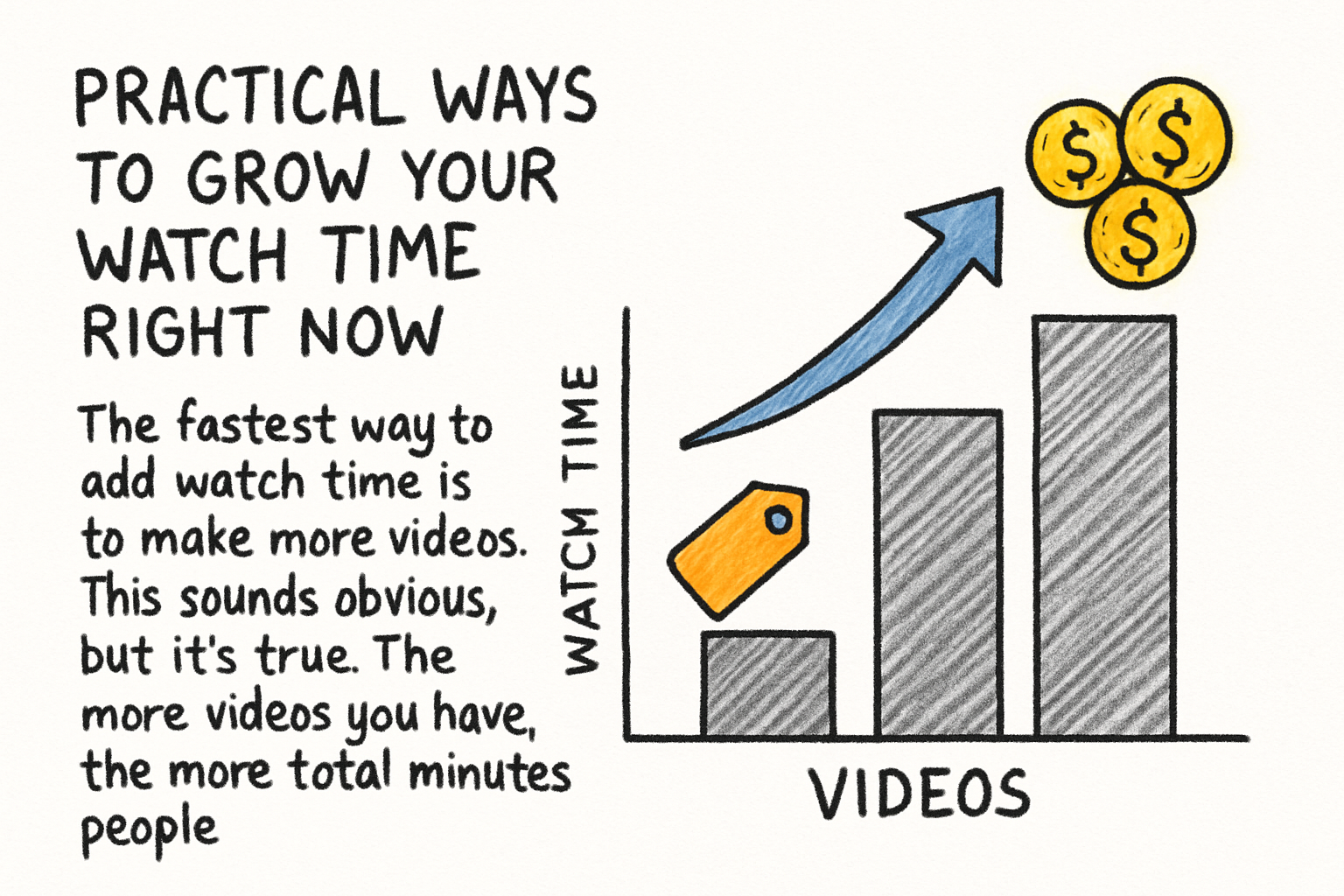
The fastest way to add watch time is to make more videos. This sounds obvious, but it's true. The more videos you have, the more total minutes people can rack up on your channel. And if someone likes one video, they'll often binge watch others. That chain effect adds up fast.
Playlists are one of the most underused tools for boosting watch time. When a video ends and the next one in a playlist automatically plays, you're not giving the viewer a reason to leave. Group your videos into clear, logical playlists based on topic or series. Make it easy for someone to keep going without thinking about it.
You should also think about your video length strategy. Shorter videos can build watch time if they have strong retention, but longer videos have a higher ceiling. I personally think the sweet spot for most channels is somewhere between 8 and 15 minutes, because it gives you enough room to cover a topic well without losing people halfway through.
One thing people overlook is posting consistently. YouTube rewards channels that upload on a regular schedule. It keeps your existing audience engaged and signals to the algorithm that you're an active creator. Pairing a solid upload schedule with a strong YouTube channel growth strategy makes a real difference in how fast your watch time climbs.
Ready to take the next step?
Watch time isn't some mysterious force you can't control. It's a direct reflection of how well your content connects with your audience. The better your videos hold people's attention, the more YouTube rewards you with reach, and the faster your channel grows. If you're ready to take your channel seriously and want smarter tools to help you create better content, check out Kliptory and see what it can do for you. And if you have questions or tips about improving watch time, drop them in the comments below. We'd love to hear what's working for your channel.