How to Make ASMR Videos: A Beginner's Guide

ASMR videos have exploded in popularity over the past few years, and it's not hard to see why. Millions of people watch them every night to relax, fall asleep, or just quiet down a noisy mind. If you've ever thought about making your own, you're not alone. A lot of you have asked about this, and today we're finally breaking it all down in a way that actually makes sense for beginners.
The good news is that you don't need a fancy studio or thousands of dollars in gear to get started. Plenty of successful ASMR creators started with a basic microphone and a quiet room. What really matters is understanding how sound works, what your audience is looking for, and how to keep them watching. Get those three things right, and you'll be in a much better spot than most people who try this for the first time.
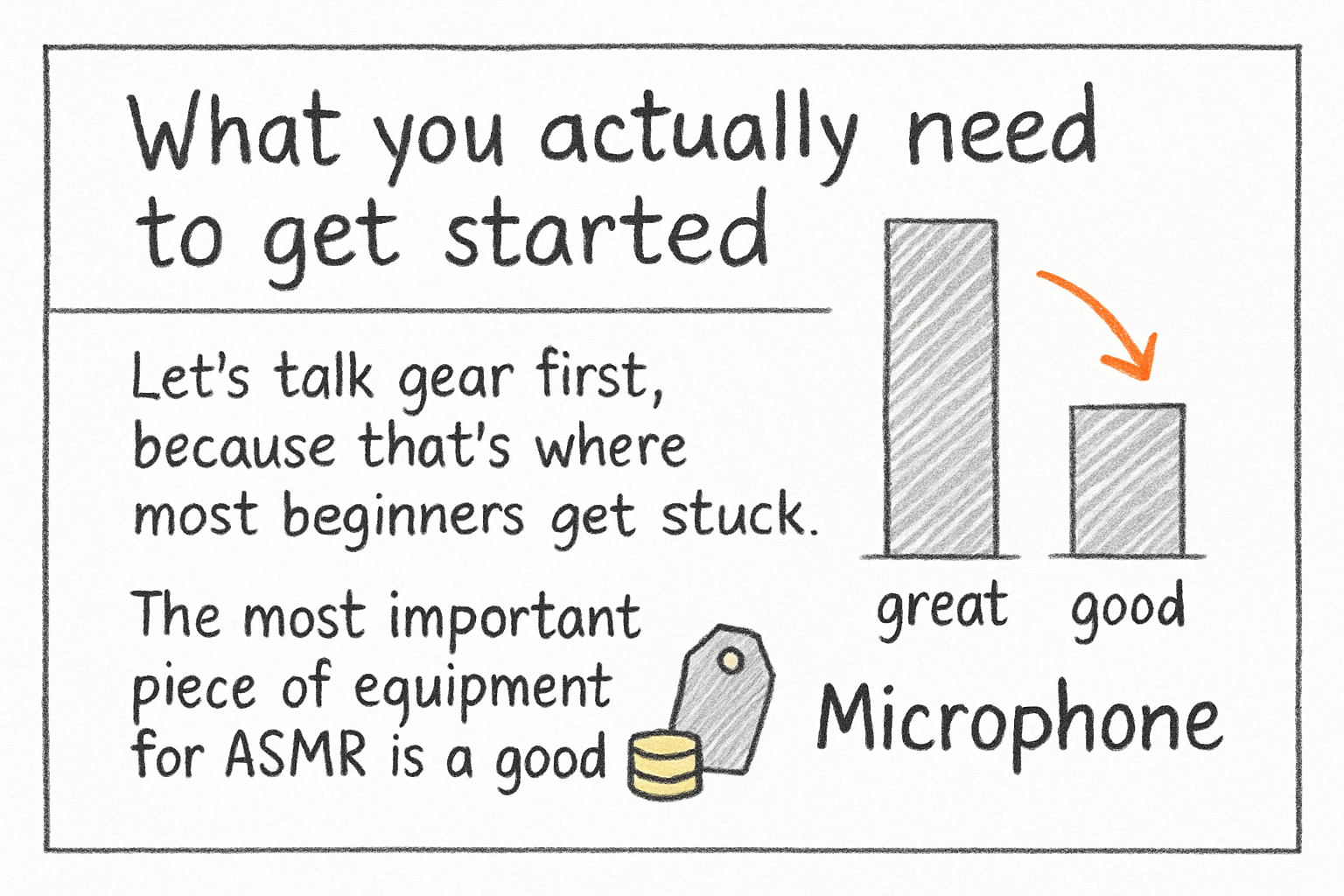
What you actually need to get started
Let's talk gear first, because that's where most beginners get stuck. The most important piece of equipment for ASMR is a good microphone. Not a great camera, not ring lights, not a green screen. The mic is everything. ASMR is built on sound, so if your audio quality is poor, people will click away before your video even gets going.
A USB condenser microphone is a solid starting point and won't break the bank. Brands like Blue Yeti or Audio-Technica make reliable entry-level options that ASMR creators swear by. If you want to go a step further, a binaural microphone setup can create that 3D sound effect that makes listeners feel like they're actually in the room with you. That feeling is a big part of what makes ASMR so addictive to watch.
For your recording space, find the quietest room in your home. Close the windows, turn off fans, and put a towel under the door if you need to. Some creators even drape blankets around their recording setup to absorb extra sound. It sounds a little silly, but it genuinely works. I personally think the recording environment matters just as much as the microphone itself, because even a great mic will pick up a refrigerator hum or a distant dog barking.
Once you've sorted out your audio setup, your camera choice becomes much simpler. Even a decent smartphone camera can shoot clear enough footage for ASMR, especially in good lighting. Natural light from a window or a simple softbox light will do the job without making your setup look harsh or unflattering.
Choosing your ASMR style and triggers
ASMR triggers are the specific sounds or visuals that give viewers that tingly, relaxed feeling. Some of the most popular ones include tapping on surfaces, crinkling paper or plastic, whispering, scratching textures, brushing sounds, and roleplay scenarios like a doctor's visit or a library checkout. The variety is massive, and that's actually great news for beginners because it means there's room for you to find something that feels natural.
The best way to figure out your style is to watch other creators and notice what sounds you personally enjoy making. I remember the first time I tried tapping on random objects around my desk just to hear what they sounded like on a recording. A wooden box sounded amazing. A plastic cup sounded tinny and flat. Experimenting like that taught me more in an afternoon than any tutorial could.
Roleplay ASMR tends to perform really well because it combines audio triggers with a story or scenario. Viewers feel cared for, which keeps them watching longer. And watch time is one of the most important factors for growing on YouTube. If you want to dig into why that matters, our guide on increasing watch time on YouTube explains exactly how the algorithm responds to how long people stay on your videos.
Don't try to copy what's already trending right away. Pick two or three triggers that feel comfortable and natural to you, then build your first few videos around those. Authenticity comes through in ASMR more than almost any other format. Viewers can tell when someone is forcing it, and that breaks the whole relaxing experience you're trying to create.

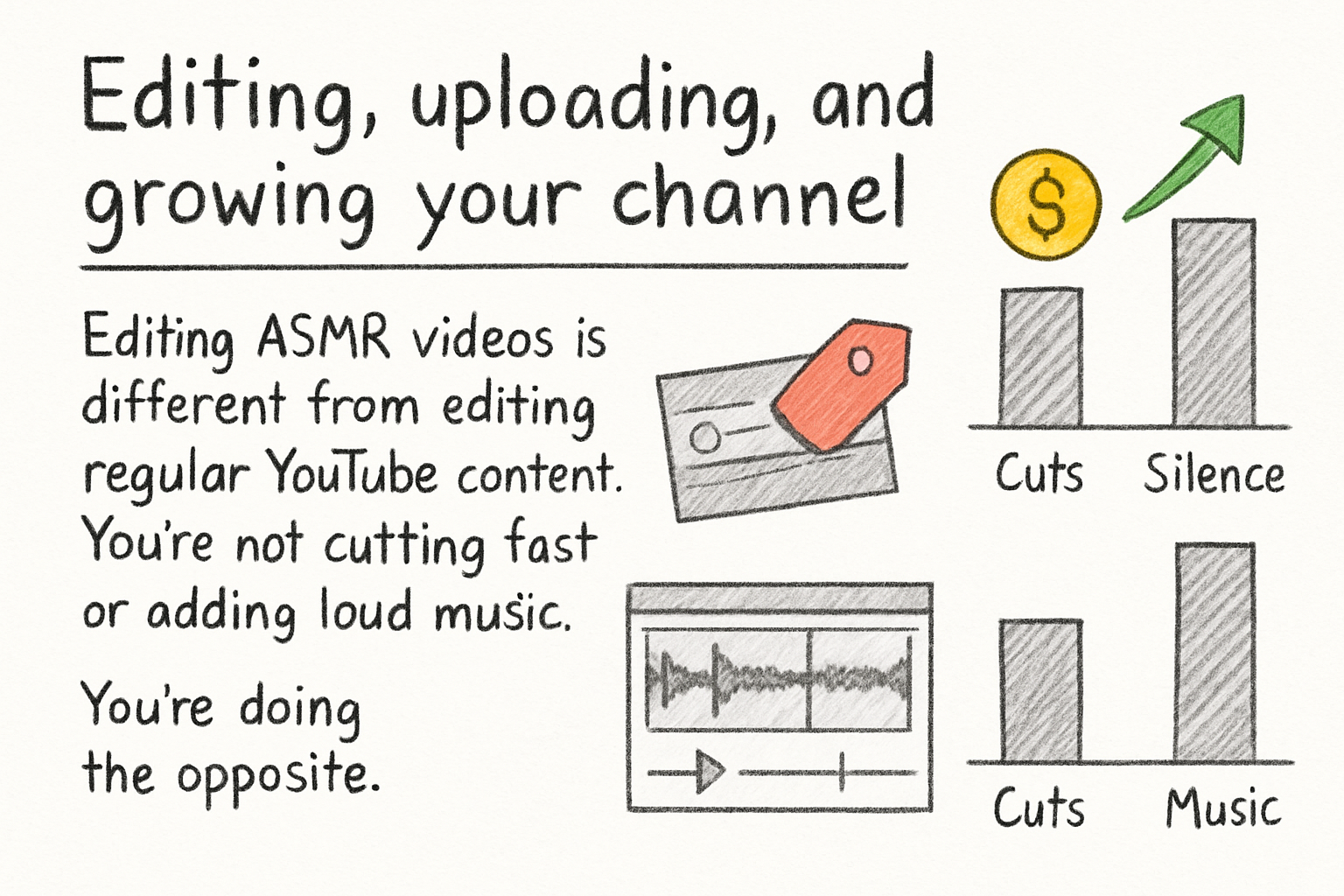
Editing, uploading, and growing your channel
Editing ASMR videos is different from editing regular YouTube content. You're not cutting fast or adding loud music. You're doing the opposite. The goal is to remove dead air, fix sudden volume spikes, and clean up any background noise without stripping out the warmth of your audio. Free software like Audacity is great for cleaning up sound, and programs like DaVinci Resolve let you handle both audio and video without spending a dime.
Keep your edits minimal. Long, slow fades work better than hard cuts. If something sounds abrupt or jarring, fix it, because ASMR viewers are extremely sensitive to interruptions. Some creators add soft, ambient music underneath their recordings at a very low volume, but this is optional and really comes down to your personal style.
When it comes to uploading, your title, thumbnail, and tags all play a role in helping people find your video. Use clear, descriptive titles like "Soft Tapping on Wood for Sleep" or "Cozy Bookstore Roleplay ASMR." Thumbnails should be calm and inviting, usually featuring a close-up of your face or the objects you're using. If you're unsure how many tags to include, we covered that in detail in our article on how many tags to use on YouTube.
Growth takes time in the ASMR world, but consistency is the thing that separates creators who make it from those who quit too soon. Aim to post at least once or twice a week when you're starting out. Reply to comments, ask your viewers what triggers they want to hear next, and pay attention to which videos keep people watching the longest. Those patterns will tell you everything you need to know about what to make next.
Ready to take the next step?
Starting an ASMR channel is one of those things that sounds complicated until you actually try it. Once you get your first recording done and hear how good your voice or tapping sounds in decent audio quality, it becomes genuinely fun. Drop a comment below and tell me what kind of ASMR content you're thinking about making. Whether it's roleplay, nature sounds, or just good old tapping, I'd love to hear your ideas. And if you want tools to help you track how your videos are performing as your channel grows, check out Kliptory and see what it can do for you.