How to Increase Watch Time on YouTube

If you've been posting videos for a while and still feel like people are clicking away too fast, you're not alone. Watch time is one of those metrics that can make or break a channel, and a lot of creators don't fully understand why until it's too late. The good news is that it's not some mystery. There are real, repeatable things you can do to keep people watching longer.
Watch time basically tells YouTube how much of your video people are actually sitting through. The more of it you rack up, the more YouTube's algorithm tends to push your content to new viewers. We actually covered why watch time matters and how it connects to your channel's growth in a past article, so if you want the full picture on what the metric actually measures, that's a great place to start. But today we're getting into the practical stuff, the things you can start doing right now.
I've talked to a lot of creators who think the problem is their content, when really it's their structure. Your video idea might be great, but if you're losing people in the first 30 seconds, it doesn't matter. Let's break down exactly how to fix that.
Hook viewers before they even think about leaving
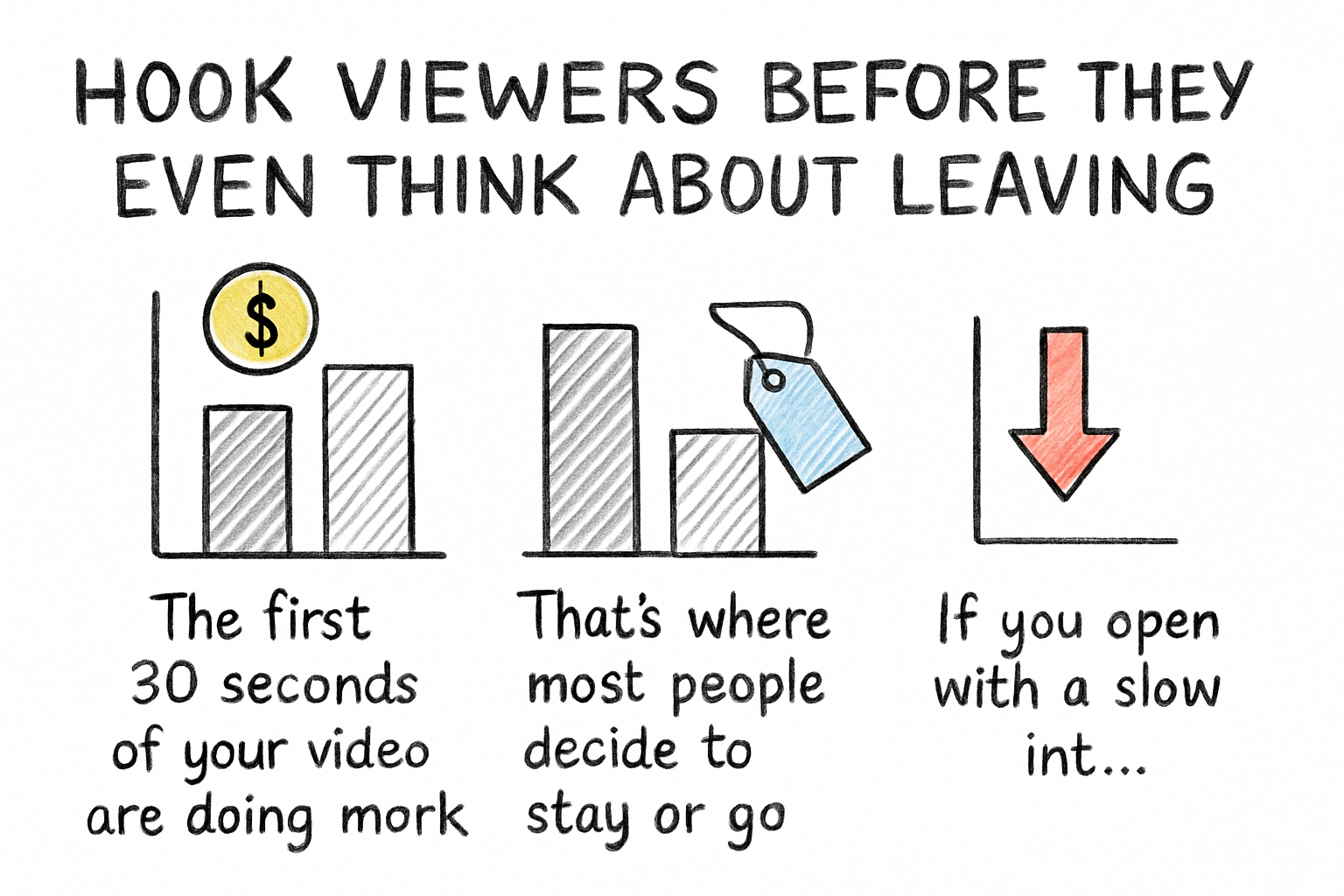
The first 30 seconds of your video are doing more work than any other part. That's where most people decide to stay or go. If you open with a slow intro, a long logo animation, or a vague "welcome back" greeting, you're already losing people. Get to the point fast. Tell them what they're going to get out of watching, and make them feel like they'd be missing something if they clicked away.
One thing I personally think gets overlooked way too much is the pattern interrupt. That's when you do something unexpected early on, like showing the end result first, asking a question the viewer didn't expect, or jumping straight into a story. It breaks the habit of scrolling and makes the brain pay attention. Even a quick visual change in the first few seconds can reset someone's attention.
A lot of you have asked about how to write a good hook, and honestly the simplest way to think about it is this: what's the most interesting part of your video? Lead with that. Don't save the best stuff for the end hoping people will stick around. Give them a taste up front and then build toward the full payoff.
You should also think about your thumbnail and title as part of the hook. If someone clicks expecting one thing and gets something different, they're gone in seconds. Make sure what you promise in the thumbnail actually shows up early in the video. That alignment between expectation and delivery is huge for keeping your audience retention numbers healthy.
Structure your video so people want to keep watching
Good videos aren't just well-filmed, they're well-built. Think of your video like a story with clear chapters. Each section should feel like it's leading somewhere, and each ending should make the viewer want to see what comes next. This is called an open loop, and it's one of the most effective ways to reduce drop-off in the middle of a video.
I remember the first time I started using chapter markers in my own videos. I thought they'd actually hurt watch time because people might skip ahead. Turns out the opposite was true. Viewers felt more in control, and that made them more likely to keep watching instead of bouncing entirely. Structure builds trust, and trust keeps people around.
Playlists are another tool that a lot of creators underuse. If your video ends and there's a natural next video someone should watch, guide them there. A well-named playlist can keep someone watching your content for 20 minutes when they only planned to watch 5. If you need ideas on how to name those playlists in a way that encourages binge watching, there's a solid guide on creating catchy playlist names worth checking out.
You should also use end screens and cards strategically. Don't just throw them in at the last second. Point to a related video at a moment when the viewer is naturally curious about what comes next. That timing matters more than most people realize. A well-placed card in the middle of a video, right after you mention a related topic, can move someone from one video to the next without them ever really planning to watch two videos in a row.

Keep your editing tight and your pacing honest
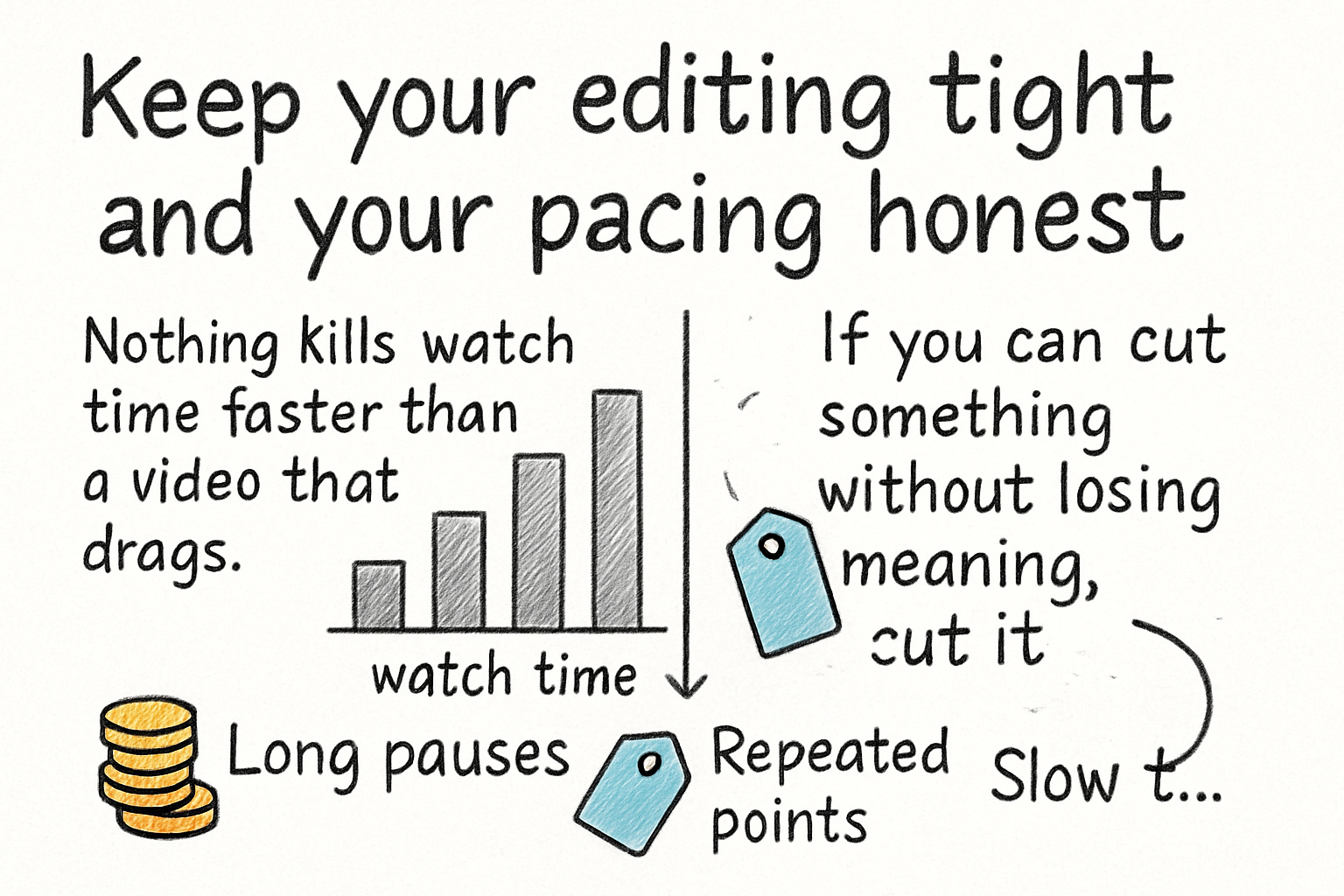
Nothing kills watch time faster than a video that drags. If you can cut something without losing meaning, cut it. Long pauses, repeated points, slow transitions, and filler words all add up. Viewers today are used to fast content, and if your pacing feels slow, they'll find something that moves faster. That doesn't mean you have to rush, it means you have to be intentional with every second.
A good rule of thumb is to watch your own videos at 1.5x speed after you edit them. If it still makes sense and flows well at that speed, your regular-speed version is probably tight enough. If it feels loose or repetitive, go back in and trim. It sounds simple, but most creators skip this step entirely.
Audio quality matters just as much as your edits. Bad audio makes people click away faster than almost anything else. You don't need an expensive setup, but a decent microphone and a room without echo will do more for your watch time than any fancy camera upgrade. People will watch a slightly blurry video with great audio, but they won't sit through crisp visuals with bad sound.
If you want to grow beyond just watch time and start thinking about your channel as a whole, our YouTube channel growth strategy breakdown covers what actually moves the needle over time. Watch time is a piece of the puzzle, but it works best when it's part of a bigger plan. Keep making videos that respect your audience's time, and the numbers will follow.
Ready to take the next step?
Improving your watch time isn't a one-week project, it's an ongoing habit. Start with your hooks, build better structure, and tighten your edits. Those three things alone can make a real difference in how long people stick around. If you've tried something that worked on your channel, drop it in the comments below, because I'd love to hear what's actually moving the needle for real creators. And if you want a smarter way to analyze and grow your channel, check out Kliptory and see how it can help you turn your watch time data into an action plan.