YouTube Niche Finder: How to Find the Best Topics for Your Channel

Starting a YouTube channel is exciting, but it can also feel completely overwhelming. You sit down, ready to record, and then it hits you: what am I actually going to make videos about? That one question stops more creators before they even start than anything else. Picking the right niche is not just about what you love. It is about finding the sweet spot where your interests, your skills, and what people actually want to watch all come together.
A lot of you have asked about this exact topic, and honestly, it makes total sense. The niche you choose shapes everything from your audience size to how much you can earn down the road. Get it right, and you have a foundation that makes every video easier to plan and more likely to get found. Get it wrong, and you spend months creating content for an audience that barely exists. So let's break down how to actually find the best topics for your channel in a way that makes sense and works.
Why your niche matters more than you think
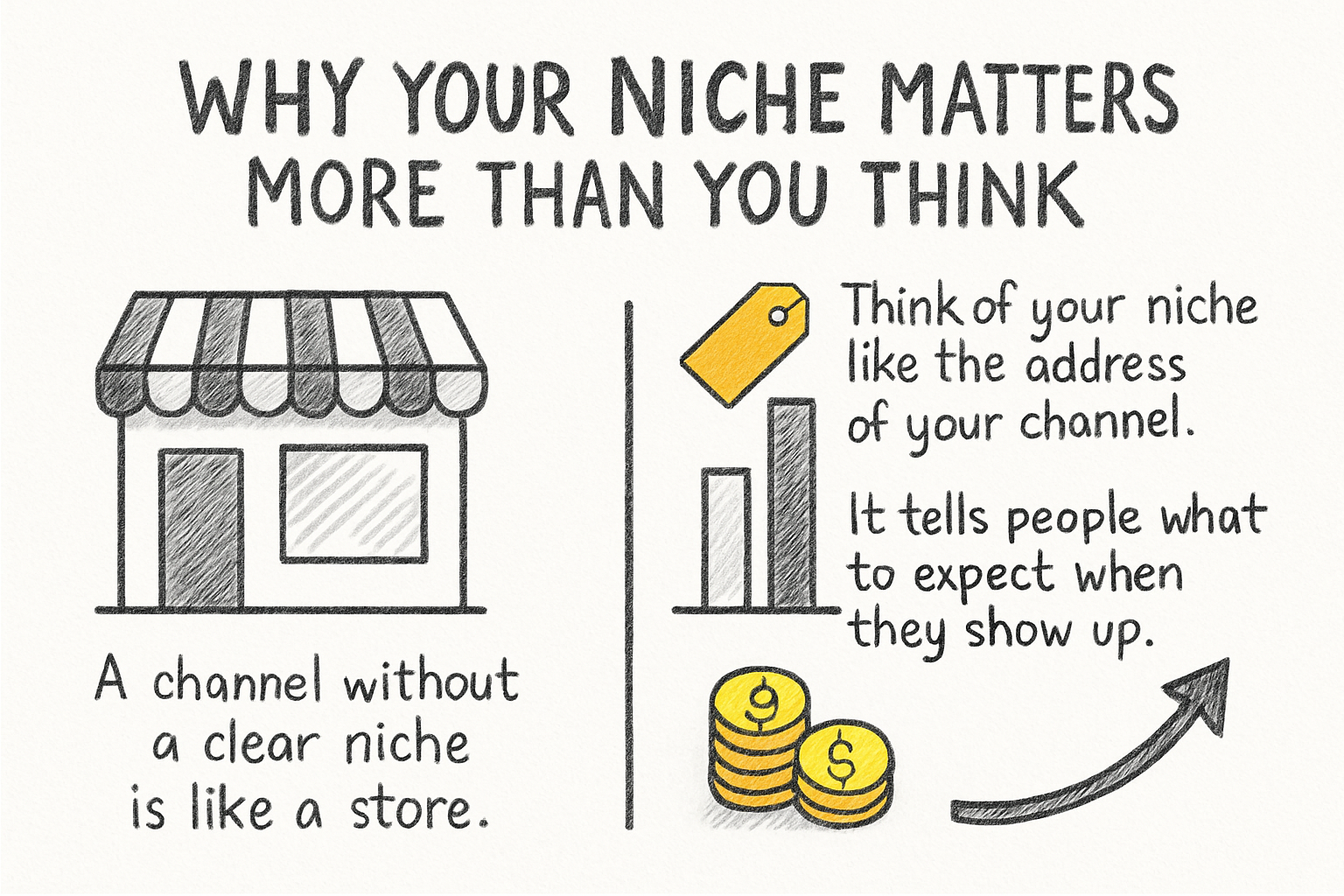
Think of your niche like the address of your channel. It tells people what to expect when they show up. A channel without a clear niche is like a store that sells everything from car parts to wedding cakes. Sure, some people might browse, but nobody is coming back as a loyal customer. YouTube's algorithm also works better when it understands what your channel is about, and that only happens when your videos share a clear theme.
Here's something most beginners do not realize: going too broad is just as risky as going too narrow. A channel about 'cooking' is hard to break into because you're competing with millions of videos. But a channel about 'quick meals for college students on a budget' has a real target. People searching for that topic are way more likely to subscribe because your whole channel speaks directly to them.
I personally think the biggest mistake new creators make is choosing a niche based only on what's trending instead of what they can actually talk about for years. Trends fade. Your genuine knowledge and enthusiasm don't. If you find a niche that excites you and has real search demand, that combination is hard to beat.
It's also worth thinking about the money side of your niche early on. Some topics attract way higher ad rates than others. If you want to learn how different niches compare in terms of earning potential, the YouTube Niche Monetization Scorer is a great place to start before you commit.
How to actually find your best niche
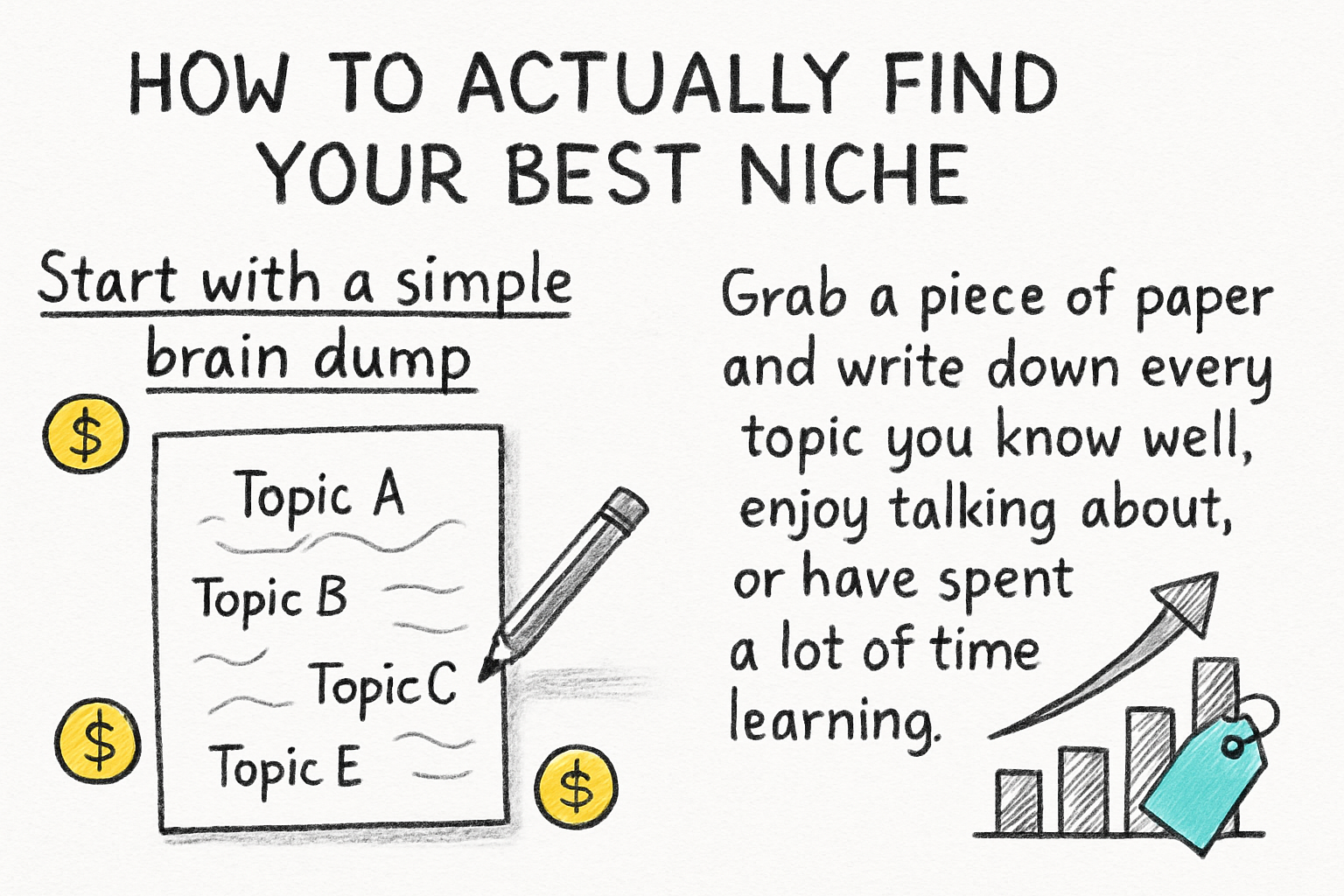
Start with a simple brain dump. Grab a piece of paper and write down every topic you know well, enjoy talking about, or have spent a lot of time learning about on your own. Do not filter yourself yet. Just write. You might surprise yourself with how many options you actually have. Once you have your list, look for patterns or combinations that feel specific and interesting.
Next, test those ideas against real search data. Go to YouTube and type one of your topics into the search bar. Look at what comes up. Are the results from huge channels with millions of subscribers, or do smaller channels show up too? If smaller channels are getting decent views on that topic, that's a real signal there's room for you. Google Trends is another free tool that shows whether interest in a topic is growing or dying out over time.
I remember when a friend of mine started a channel about van life. She was worried it was already too saturated. But she narrowed it down to van life specifically for people over 50, and that angle helped her find an audience pretty quickly. The topic was not new, but her specific angle was. That's the move.
You should also look at the comment sections of popular videos in topics you're considering. What are viewers asking for that those creators are not covering? Those gaps are goldmines. Once your channel is up and running, keeping your viewers engaged matters just as much as the niche itself, and understanding how to increase watch time on YouTube will help you hold the audience you worked hard to find.
Testing and refining your niche over time
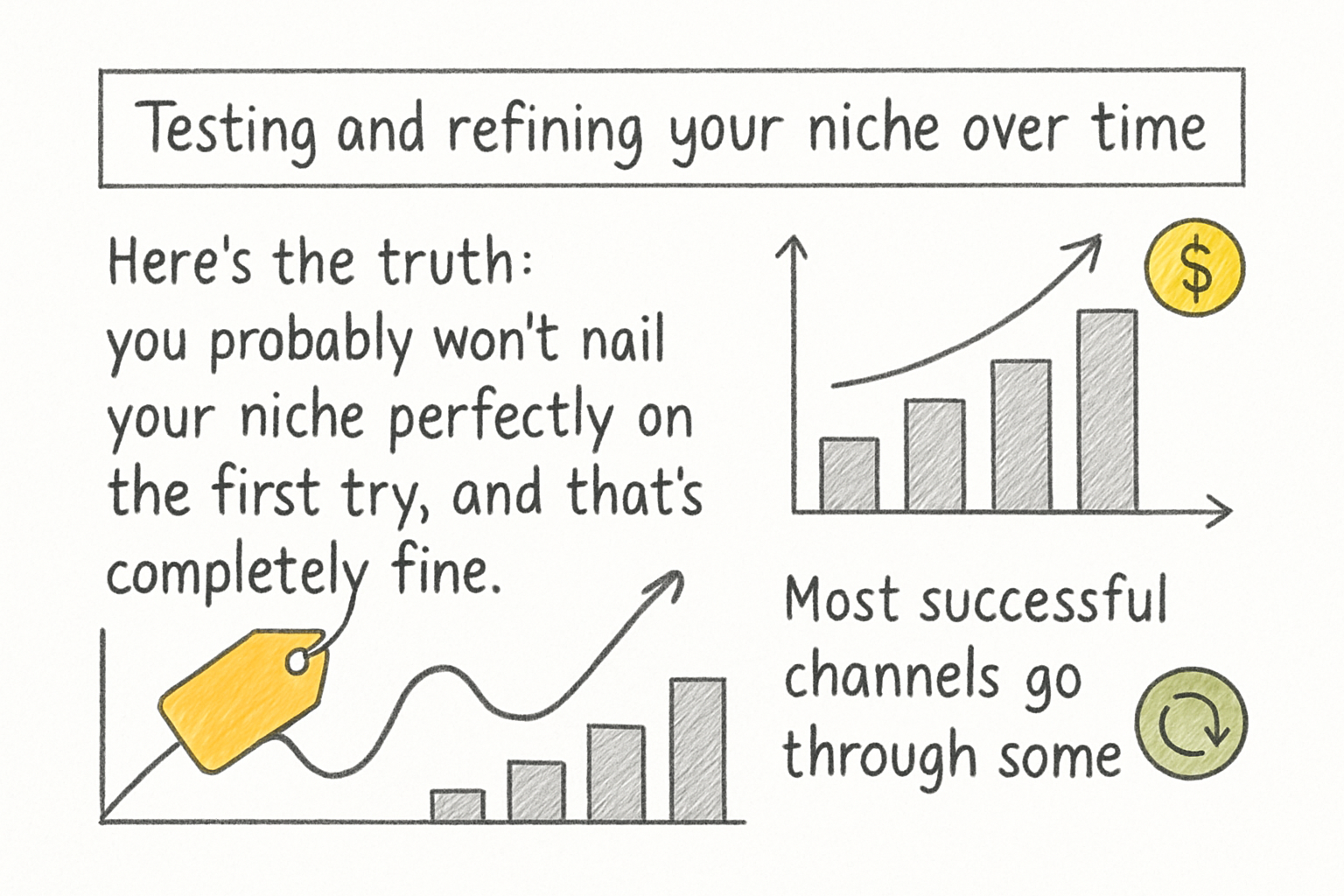
Here's the truth: you probably won't nail your niche perfectly on the first try, and that's completely fine. Most successful channels go through some kind of shift in their first year. The key is to treat your early videos like experiments. Pay attention to which ones get more views, longer watch time, and more comments. Those patterns will tell you what your audience actually wants, not just what you thought they wanted.
Publish at least ten to fifteen videos before you make any big decisions about changing direction. Ten videos is not enough data to know anything for sure, but it's enough to start seeing trends. If three or four videos on one sub-topic consistently outperform the rest, that's your audience talking. Listen to them. You can also look at your YouTube Analytics to see which videos people finish watching versus which ones they click away from fast.
Once you start seeing what works, double down on it. Create a series around your strongest topic. Build playlists that keep people watching video after video. If you've ever wondered how to set those up in a way that actually keeps people watching, the ideas in this YouTube playlist name generator guide can help you structure things more strategically.
As your channel grows and your niche becomes clearer, you'll also want to think about optimization beyond just the niche itself. Things like tags, titles, and descriptions all play a role in helping the right people find your videos. We covered this in detail in our post about how many tags you should use on YouTube, which is worth reading once you're ready to start fine-tuning your upload strategy.
Ready to take the next step?
Finding your YouTube niche is not a one-day decision, but it does not have to take forever either. Start with what you know, check the data, test your ideas, and adjust as you go. The creators who succeed are not always the most talented ones. They're the ones who stay consistent and keep learning. If you have questions, drop them in the comments below because I read every single one. And if you want a tool that actually helps you plan, analyze, and grow your channel, check out Kliptory and see how it can make the whole process a lot less guesswork.