
What Makes a YouTube Video Go Viral?


Every few weeks, some random video blows up on YouTube. Maybe it's a guy catching a fish with his bare hands, or a kid explaining quantum physics on a whiteboard. You watch it, share it, and then wonder how that video got 20 million views while your carefully planned content sits at 300. It feels like luck, but there's actually a lot more going on under the surface.
Going viral on YouTube isn't a magic trick. It's a mix of timing, emotion, smart packaging, and yes, a little bit of luck too. But the creators who go viral more than once aren't just lucky people. They understand what makes viewers click, watch, and share. And once you get that, everything changes.
A lot of you have asked about this exact topic in the comments, so let's break it down the right way. No fluff, no empty promises. Just the real stuff that actually makes YouTube videos take off.
The first few seconds matter more than you think
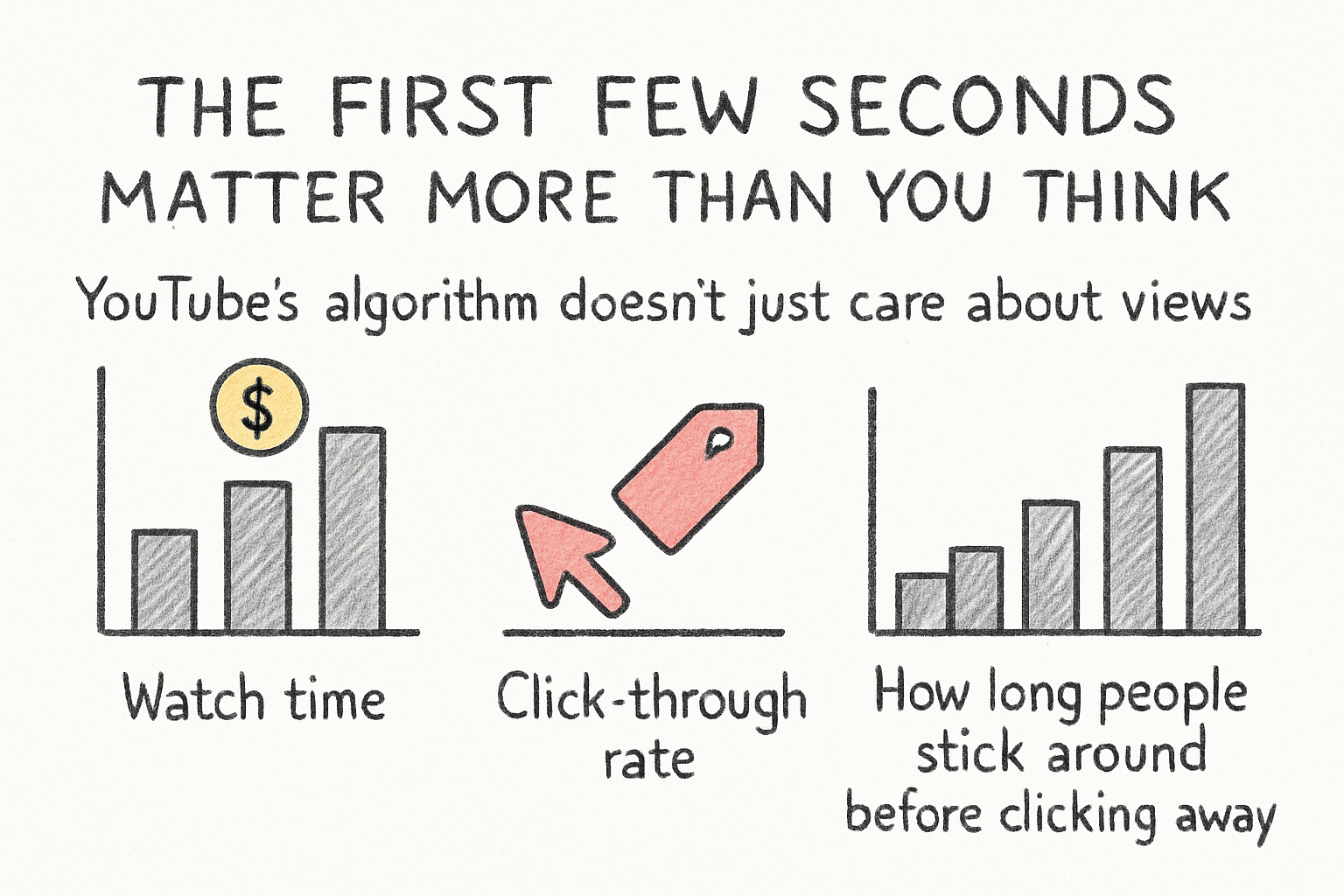
YouTube's algorithm doesn't just care about views. It cares about watch time, click-through rate, and how long people stick around before clicking away. That last one is huge. If someone clicks your video and leaves in the first ten seconds, YouTube takes that as a sign your content isn't worth pushing to other people.
This is why the opening of your video is everything. You don't get a warm-up period. You've got maybe five seconds to hook someone before their thumb is already scrolling. The best viral videos tend to open with either a bold statement, a surprising visual, or a question that makes you feel like you'll miss something important if you leave.
I personally think the biggest mistake new creators make is spending the first 30 seconds introducing themselves. Nobody cares yet. Save that for later. Drop them right into the action and earn their attention before you ask for it.
There's also the thumbnail and title to think about. These are what get people to click in the first place. Your thumbnail is basically a tiny billboard, and your title is the headline. If those two things don't work together to create curiosity or promise something interesting, the algorithm never even gets a chance to help you. We talked about how to use keywords to boost discoverability in our piece on how to do YouTube keyword research like a pro, and the same ideas apply here.
Emotion is the real engine behind sharing
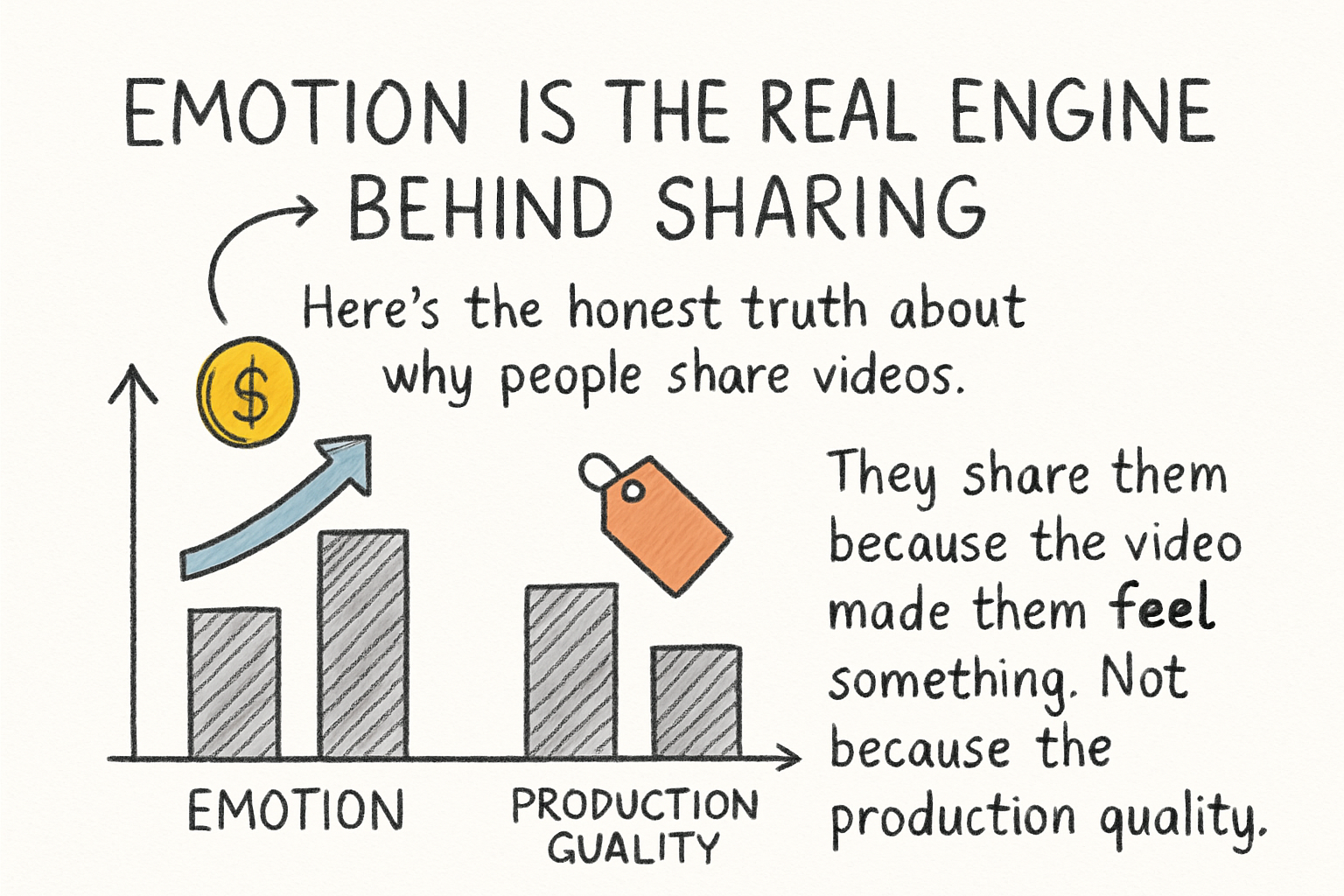
Here's the honest truth about why people share videos. They share them because the video made them feel something. Not because the production quality was great or because the creator has great hair. Emotion drives sharing, plain and simple.
Think about the viral videos you've actually sent to a friend. Chances are the video made you laugh, surprised you, made you a little emotional, or showed you something you'd never seen before. Those are the categories that travel. Boring is the only thing that doesn't spread.
This doesn't mean you have to manufacture fake emotion or do something wild for shock value. It means your content needs a real point of view. It needs to make the viewer feel something. Even a tutorial can do this if you tell a story around the skill you're teaching. The "before and after" format works for a reason. It creates tension and then releases it.
I remember watching a video about someone restoring an old rusty bike that had literally zero production value. The camera was shaky, the lighting was bad, and the creator never looked at the camera once. But the transformation was so satisfying that it got millions of views. That's emotion doing its job. No fancy equipment required.
The algorithm rewards consistency, not just one-hit wonders
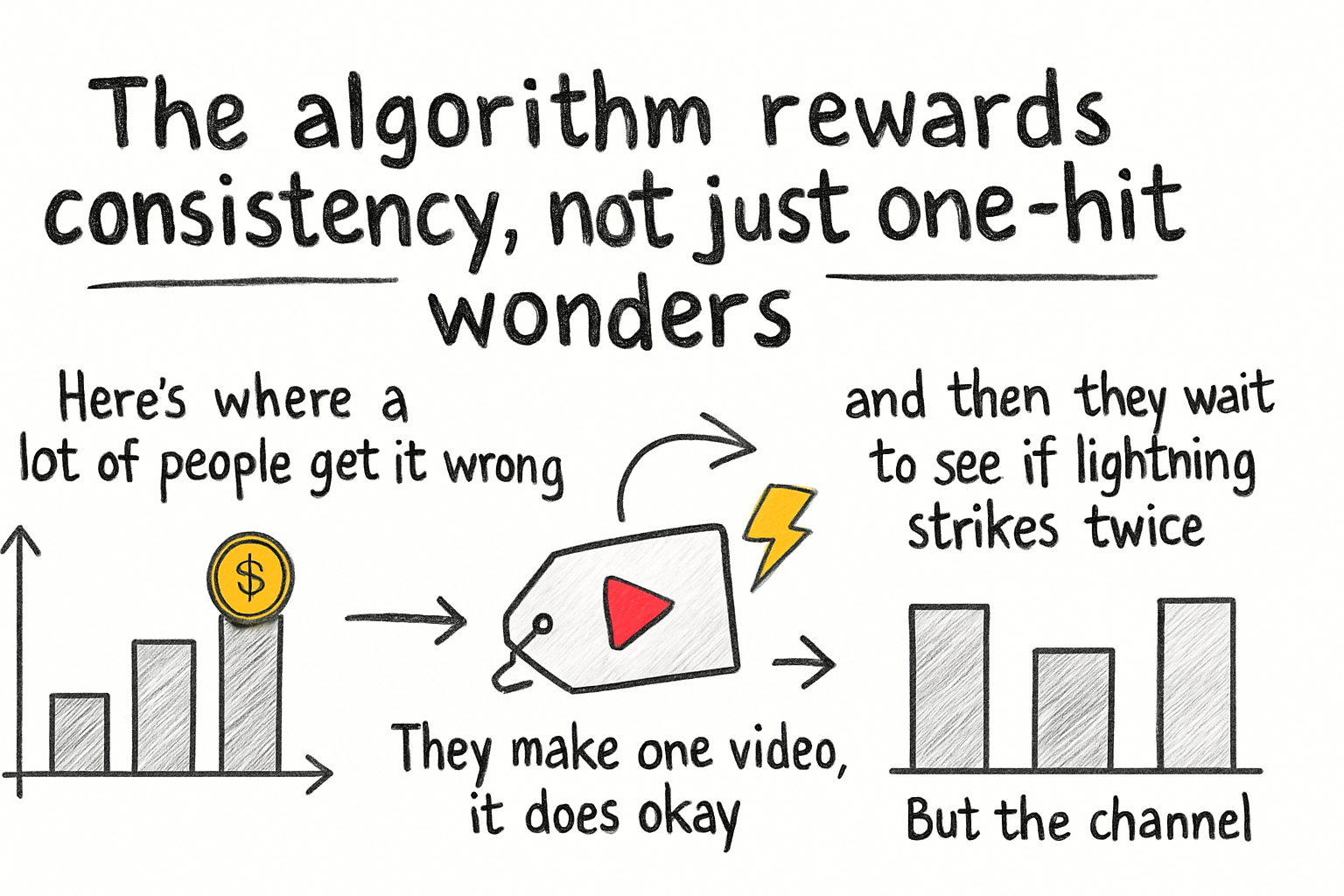
Here's where a lot of people get it wrong. They make one video, it does okay, and then they wait to see if lightning strikes twice. But the channels that grow fast and keep growing are the ones that treat YouTube like a long game. The algorithm is designed to push channels that upload regularly and keep viewers coming back.
When you post consistently, YouTube learns what your channel is about and who to show it to. That means your videos get put in front of the right people more often. One viral video can get you a spike in subscribers, but your consistent content is what keeps them. And those subscribers are what help your next video take off faster than the last one did.
Growth also comes from understanding what your audience actually wants to watch. If you're guessing, you're leaving a lot on the table. Our guide on YouTube channel growth strategy goes deeper into how to figure that out without just throwing videos at the wall.
It also helps to think about your videos as a system, not just individual pieces of content. Use strong titles and tags that help YouTube categorize your content correctly. Our article on YouTube tags and how to use them the right way is a good starting point if you haven't thought much about that side of things. The more signals you give the algorithm, the better it gets at finding your audience for you.
Ready to take the next step?
Going viral isn't guaranteed for anyone, but it's also not pure luck. It's about grabbing attention fast, creating real emotion, and showing up consistently enough that the algorithm starts working in your favor. Start with one thing from this post and build from there. If you've had a video go viral or you're still trying to crack the code, drop your experience in the comments below. And if you want smarter tools to help grow your channel, check out Kliptory and see what it can do for you.