How Do You Become a YouTube Partner?

A lot of you have asked about this, so let's break it down in plain terms. Becoming a YouTube Partner sounds fancy, but it's really just the process of joining YouTube's official program that lets you make money from your videos. It's called the YouTube Partner Program, or YPP, and once you're in, you can earn ad revenue, sell channel memberships, and unlock other ways to get paid for your work.
The catch is that you don't just sign up and start earning. YouTube has rules you have to meet first, and those rules exist to make sure partners are serious creators with real audiences. If you've been posting videos for a while and wondering when the money starts, this post will walk you through exactly what you need to do and what to expect along the way.
I personally think the YPP is one of the best things YouTube has done for everyday creators. It's not perfect, but it gives regular people a real shot at building income from something they love. You just have to know the path to get there.
What are the requirements to join the YouTube Partner Program?
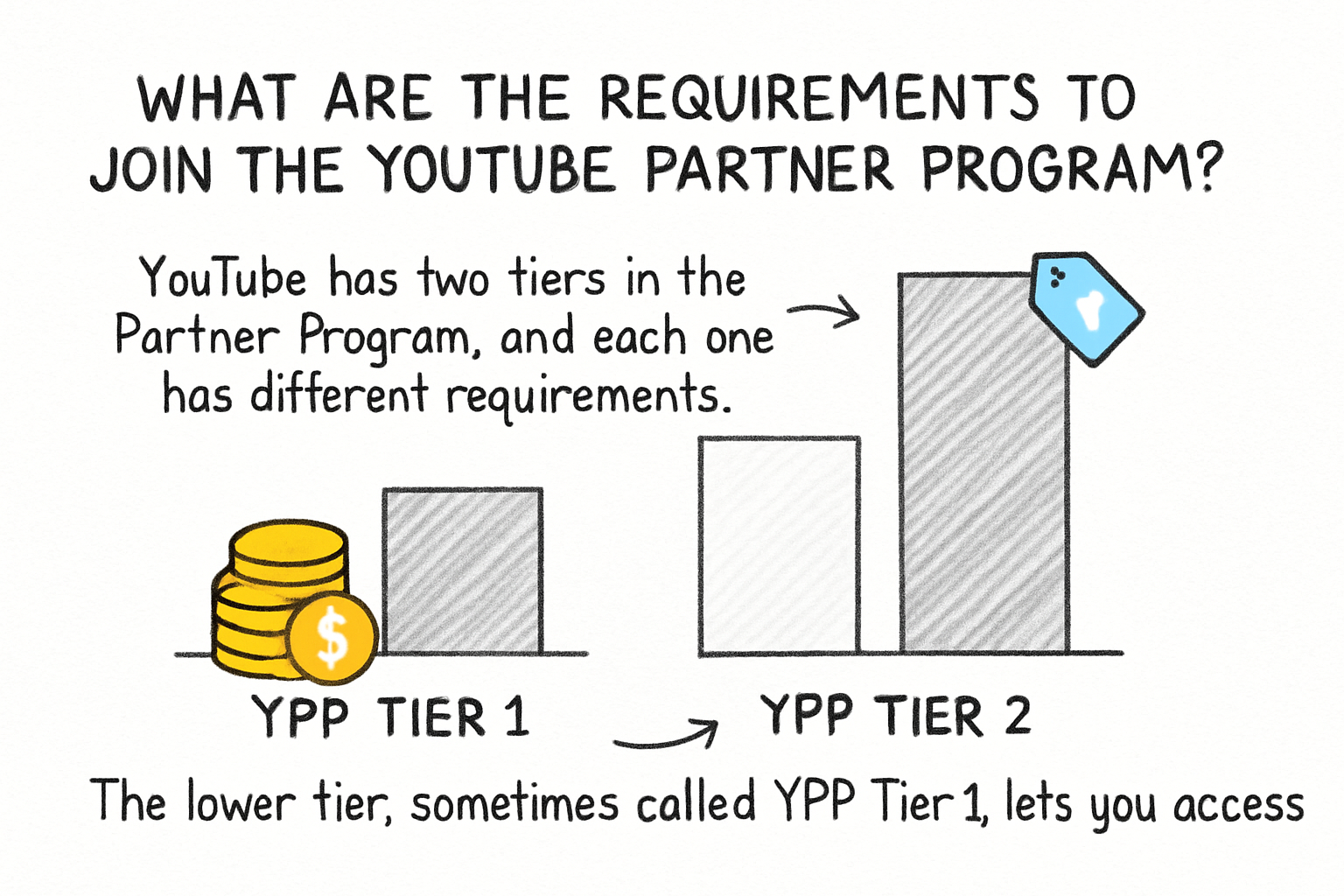
YouTube has two tiers in the Partner Program, and each one has different requirements. The lower tier, sometimes called YPP Tier 1, lets you access fan funding features like channel memberships and Super Thanks. To get in at this level, you need 500 subscribers, three public video uploads in the last 90 days, and either 3,000 watch hours in the past year or 3 million Shorts views in the last 90 days. It's a lower bar than it used to be, which is good news for newer creators.
The higher tier is where the real ad money kicks in. To unlock ad revenue through Google AdSense, you need 1,000 subscribers and either 4,000 watch hours over the past 12 months or 10 million Shorts views in the last 90 days. Once you hit those numbers, you can apply and YouTube will review your channel. The review usually takes about a month.
Your channel also has to follow YouTube's monetization policies. That means no copyright strikes, no community guideline violations, and content that advertisers actually want to run ads on. YouTube looks at your whole channel history, not just your recent videos, so it matters that you've been playing by the rules all along.
If you want a deeper look at what happens after you get in, our step-by-step guide on how to monetize videos on YouTube covers the setup process from start to finish. It's worth reading before you apply so you're not caught off guard.
How do you actually grow fast enough to qualify?
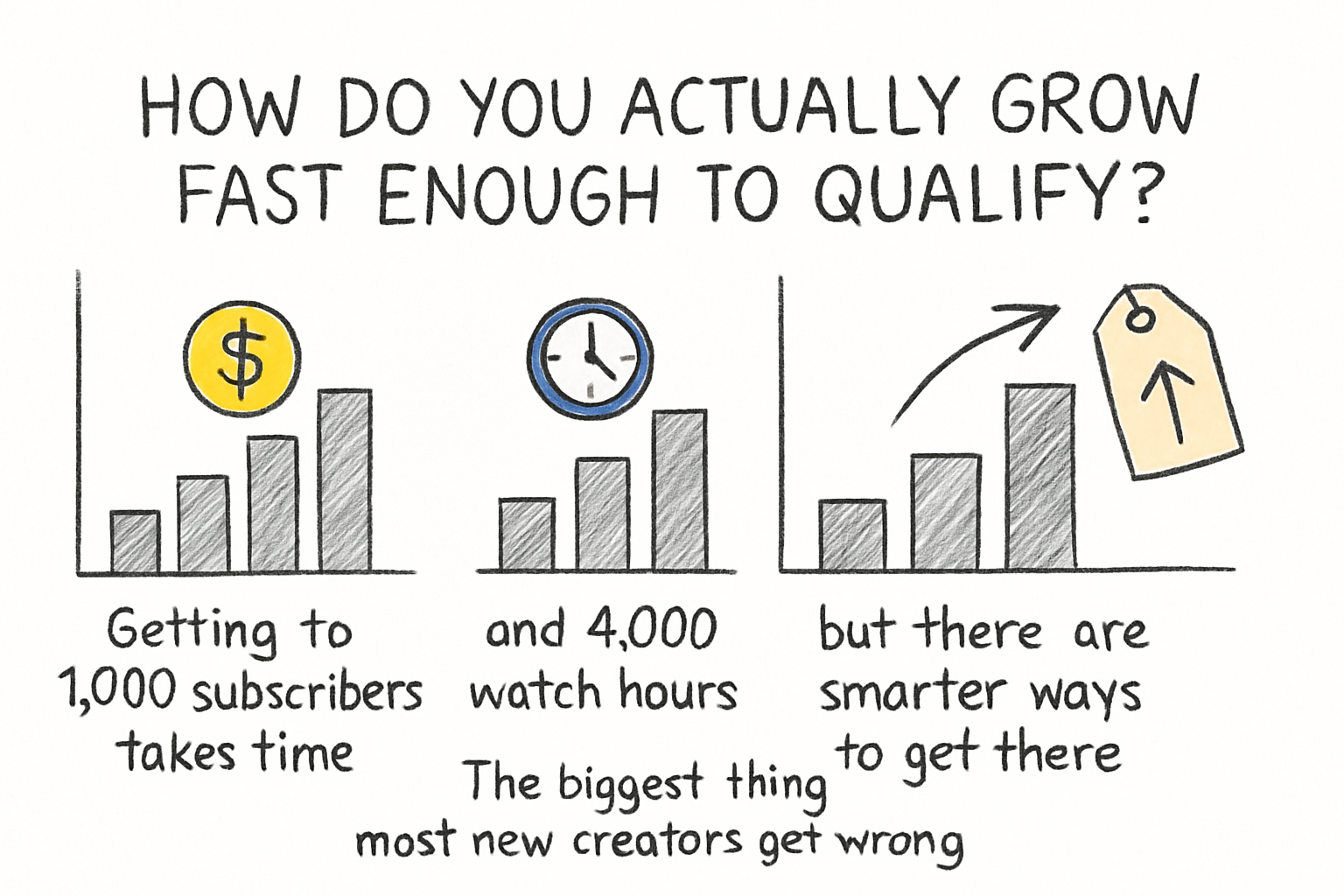
Getting to 1,000 subscribers and 4,000 watch hours takes time, but there are smarter ways to get there. The biggest thing most new creators get wrong is posting randomly without any real strategy. You can't just upload whatever and hope it works. You need to understand what your audience is searching for and create videos that answer those questions better than anyone else.
Keyword research is a big part of this. When you know what people are typing into the YouTube search bar, you can make videos that show up in results and actually get watched. Our article on how to do YouTube keyword research like a pro is a great place to start if you've never thought about this before. It's one of those things that sounds complicated but makes a huge difference once you get the hang of it.
Shorter content can also speed things up. YouTube Shorts have their own view count threshold, and some creators have hit YPP requirements almost entirely through Shorts. If you're looking for ideas, check out these YouTube Shorts ideas to grow your channel fast and see what fits your niche. Mixing Shorts with longer videos gives you two different ways to pull in watch time.
Honestly, I remember when I first tried to understand why some channels blew up while others with similar content just sat there. The answer almost always came back to consistency and strategy, not luck. Show up regularly, study what's working, and adjust as you go. That's the formula, even if it's not the exciting answer people want to hear.
What happens after you get accepted into the program?
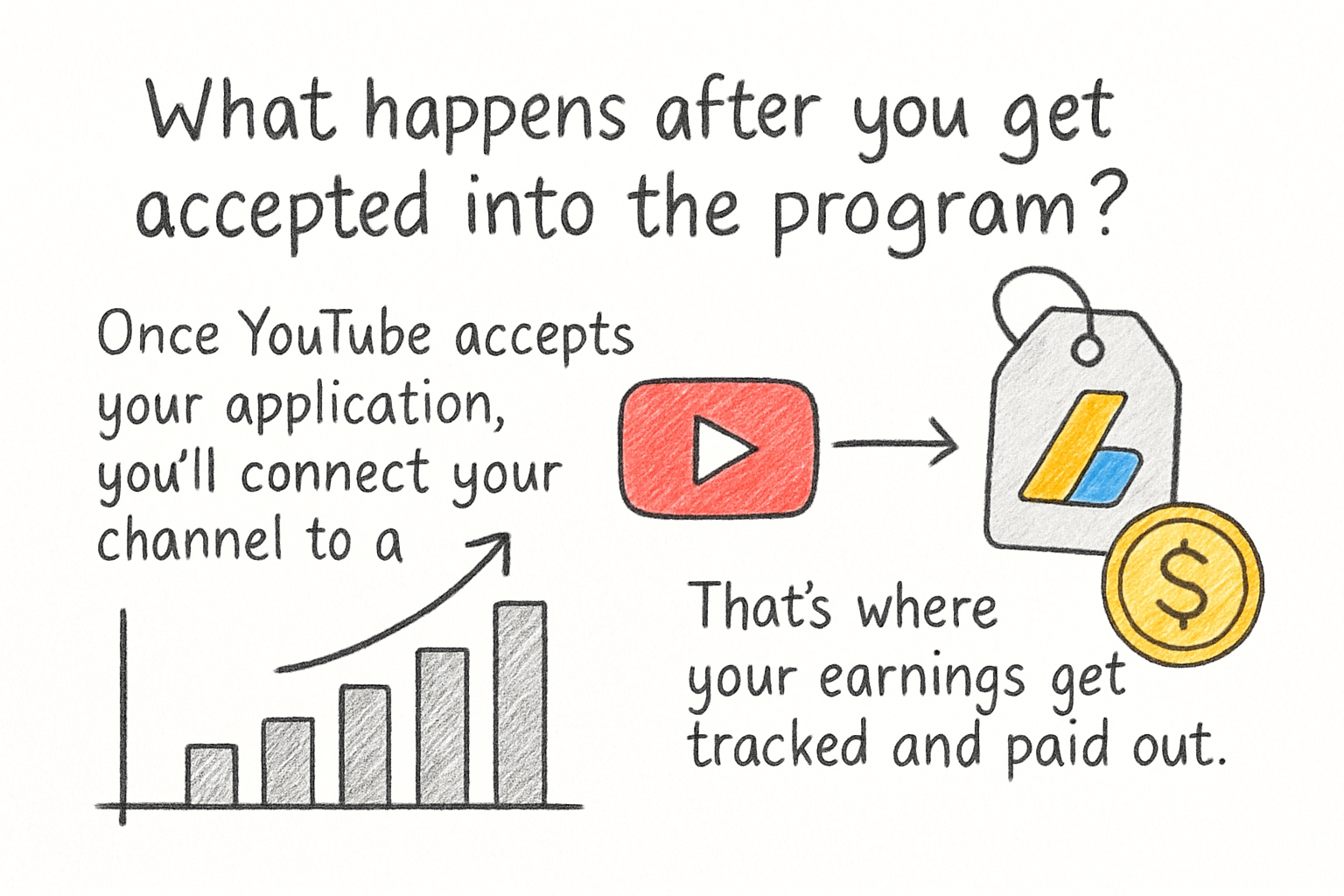
Once YouTube accepts your application, you'll connect your channel to a Google AdSense account. That's where your earnings get tracked and paid out. YouTube pays you a portion of the ad revenue generated from your videos, and the amount can vary a lot depending on your niche, your audience's location, and the time of year. The holiday season tends to pay better because advertisers spend more.
You'll start seeing two key numbers in your YouTube Studio dashboard: CPM and RPM. CPM is what advertisers pay per thousand impressions, while RPM is what you actually take home after YouTube's cut. They're different, and knowing the difference matters. We've written about this before in our breakdown of CPM vs RPM and why it matters, which explains exactly how your earnings get calculated.
Beyond ads, being in the YPP opens up other income streams. You can enable channel memberships where fans pay a monthly fee for perks. You can use Super Thanks, which lets viewers tip you on videos. YouTube also has a merch shelf feature for some partners. None of these are guaranteed money, but they give you options to diversify beyond just ad revenue.
One thing a lot of new partners don't expect is how inconsistent the income can be month to month. Some months you'll do great, and others will be slower for no obvious reason. Using a YouTube RPM calculator to estimate your earnings can help you set realistic expectations and plan your content around what's likely to perform best for your audience.
Ready to take the next step?
Becoming a YouTube Partner is absolutely possible if you take it seriously and stay consistent. The requirements are clearer than ever, the tools are out there, and creators are qualifying every single day. If you're still figuring out your content strategy or want to work smarter toward those milestones, check out Kliptory for tools built to help YouTube creators grow. And if you've got questions about any of this, drop them in the comments below. We read every one and love hearing where you are in your journey.