YouTube Video Optimization Services: Do You Actually Need One?

So you've been uploading videos for a while, and the views just aren't coming in the way you hoped. You start googling what you're doing wrong, and suddenly you're seeing ads for YouTube video optimization services everywhere. They promise more views, better rankings, and a growing channel. It sounds great. But do you actually need one, or is this just another way to spend money on something you could handle yourself?
Here's the honest truth: optimization matters a lot on YouTube. The platform works like a search engine, which means the words in your title, description, and tags all help YouTube figure out who to show your video to. If you're skipping that step or guessing at it, you're leaving real growth on the table. But that doesn't automatically mean you need to pay someone else to do it.
This post is going to break down what these services actually do, when they're worth it, and when you're better off learning the basics yourself. Whether you're a brand new creator or someone who's been at this for a year or two with slow results, there's something here for you.
What YouTube video optimization services actually do
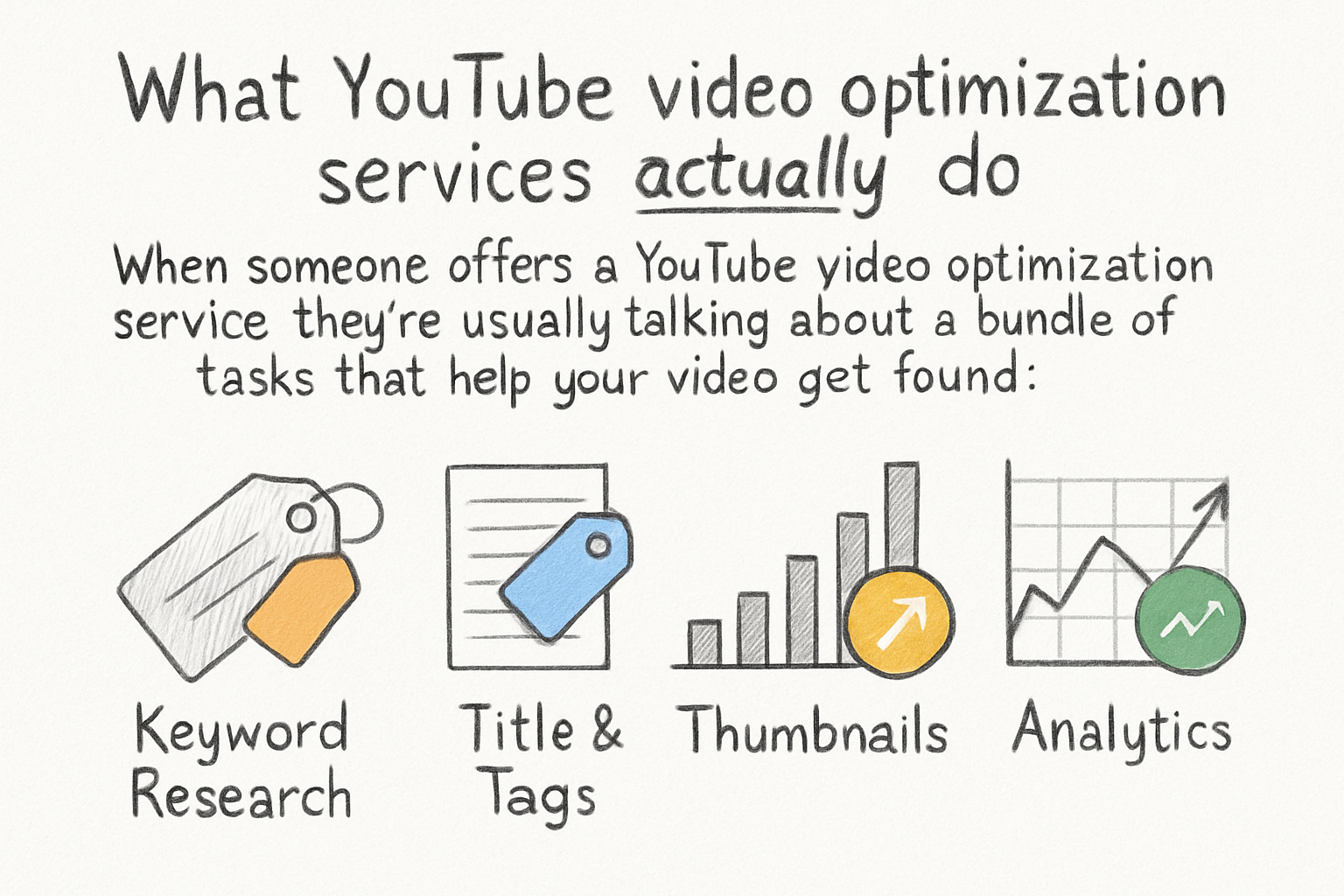
When someone offers a YouTube video optimization service, they're usually talking about a bundle of tasks that help your video get found. That includes writing keyword-rich titles, crafting descriptions that tell YouTube what your video is about, picking the right tags, and sometimes even suggesting thumbnail changes. Some services go further and look at your channel structure, playlists, and posting schedule.
A lot of you have asked about this, wondering if there's some kind of magic behind it. There isn't. These services are applying the same SEO principles you'd use for a website, just adapted for YouTube's algorithm. They research what people are actually searching for, then match your content to those searches as closely as possible.
The tricky part is that this isn't rocket science. Tools like VidIQ and TubeBuddy exist specifically to help regular creators do this on their own without paying for a full service. We did a deep dive into VidIQ a while back if you want to see what that kind of tool can do for you at a fraction of the cost.
That said, knowing a tool exists and knowing how to use it well are two different things. Some creators genuinely don't have time to learn the ins and outs of keyword research, and for them, outsourcing that work makes sense. It really comes down to your situation.
When a service is actually worth the money
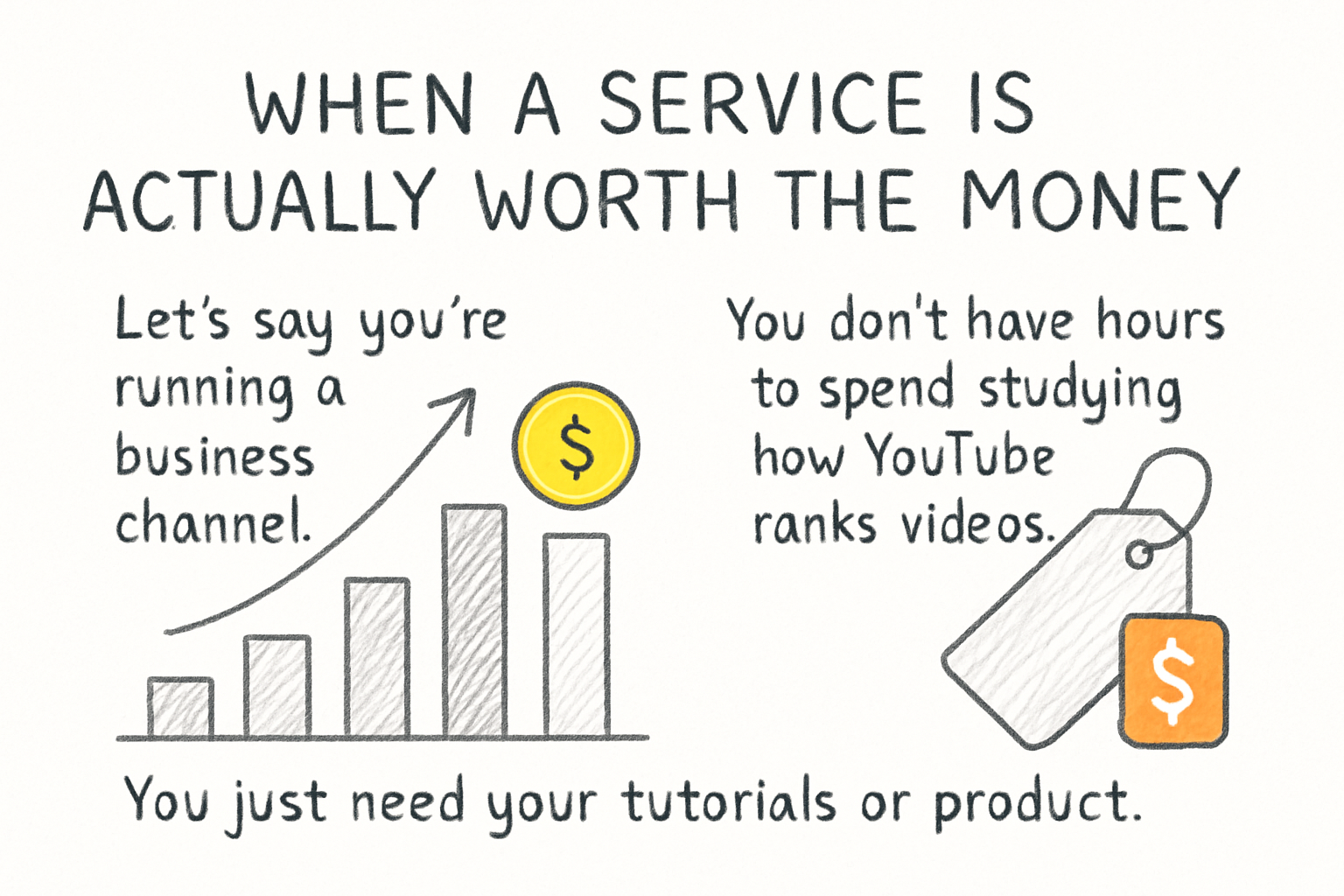
Let's say you're running a business channel. You don't have hours to spend studying how YouTube ranks videos. You just need your tutorials or product demos to show up when potential customers search for solutions you offer. In that case, hiring someone who already knows what they're doing can save you a lot of time and probably pay for itself through better visibility.
I personally think the biggest mistake people make is paying for optimization before they've nailed the basics. If your videos are poorly lit, have bad audio, or cover topics with zero search demand, no amount of metadata tweaking is going to fix that. Good optimization helps good content reach more people. It's not a rescue plan for weak videos.
When your content is solid but your channel is stuck, that's when a service can actually move the needle. Think about it this way: if you've got twenty well-made videos sitting at under 500 views each, the problem might genuinely be discoverability. A professional optimizer can look at what's holding you back and give you a clear path forward.
One thing worth checking before you hire anyone is whether you've already covered the free stuff. Make sure your channel is set up correctly, your niche is defined, and your videos have at least a basic description and tags. If you haven't done that yet, read up on how to find the best niche for your channel first. Start there before spending money anywhere else.
When you should skip the service and do it yourself
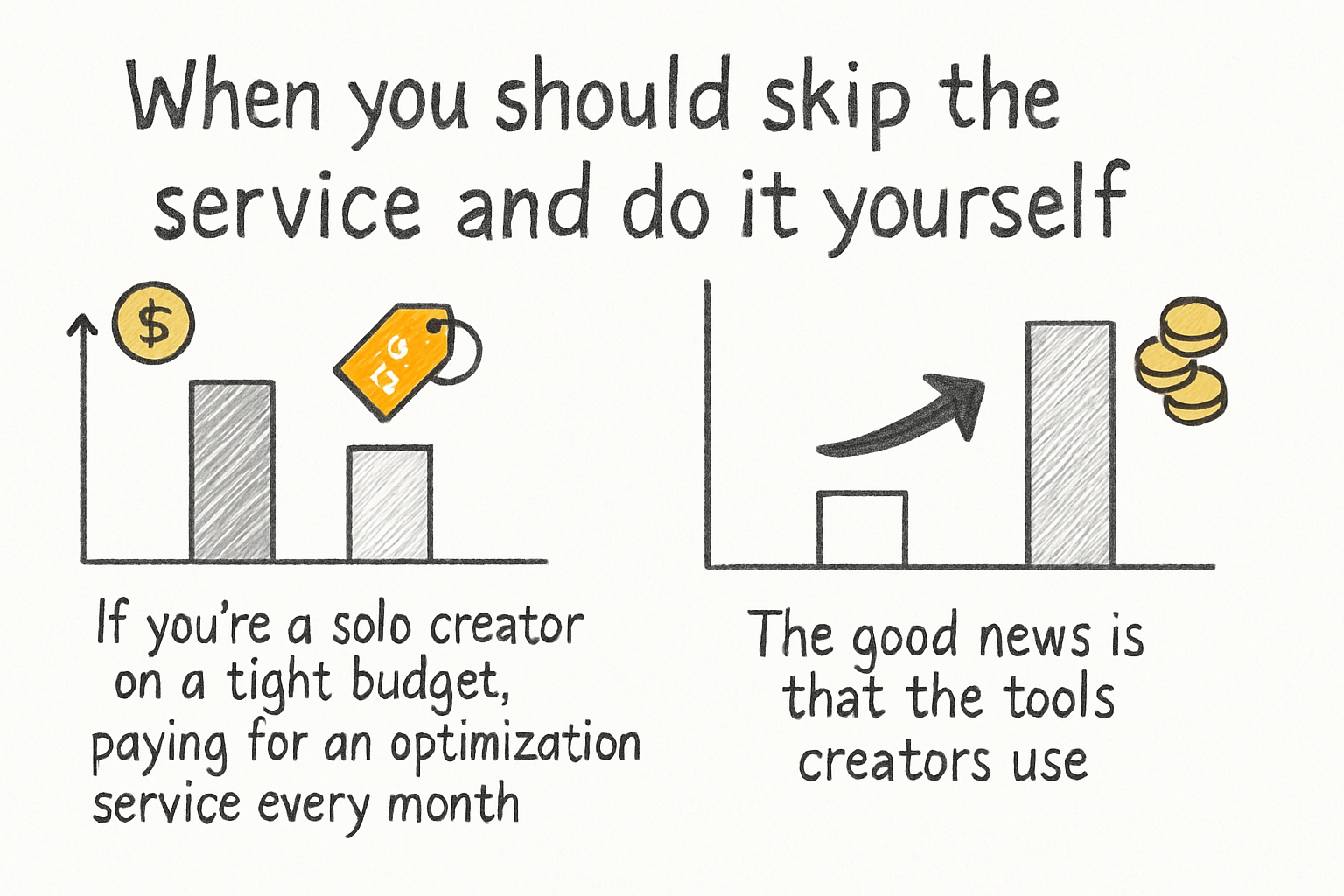
If you're a solo creator on a tight budget, paying for an optimization service every month is a hard sell. The good news is that the tools creators use to do this work themselves have gotten really good. I remember when I first started paying attention to my titles and descriptions more carefully. I spent a weekend going through my old videos, rewriting everything based on actual search terms, and my impressions went up noticeably within a few weeks. It took some effort, but it wasn't complicated.
Tools like TubeBuddy and VidIQ give you keyword scores, competitor data, and tag suggestions right inside YouTube. If you want to know more about how TubeBuddy works and whether it fits your setup, our full review and breakdown covers it well. These tools cost a fraction of what a full service charges, and they teach you the process as you go.
Understanding how YouTube views actually work also helps you make smarter decisions on your own. When you know what signals the algorithm pays attention to, you stop guessing and start making intentional choices. That knowledge sticks with you long after any single optimization is done.
The honest answer for most independent creators is this: learn the basics, use a good tool, and apply that knowledge consistently. You'll get most of the benefit a service would offer, and you'll build skills that compound over time. If your channel grows to the point where your time is worth more than the cost of outsourcing, that's when you revisit the conversation about hiring help.
Ready to take the next step?
YouTube optimization isn't a mystery, and you don't have to throw money at a service to see real results. Start by understanding what your audience is actually searching for, write your titles and descriptions with those searches in mind, and use tools that give you real data instead of guessing. If you've got questions about any of this or want to share what's been working for your channel, drop a comment below. And if you want a smarter way to manage and grow your YouTube presence, check out Kliptory and see what it can do for you.