Best Niche for YouTube: How to Find Yours

Starting a YouTube channel is exciting. But a lot of you have asked about this exact problem: you sit down to plan your channel, and suddenly you have no idea what it should even be about. Should you do cooking? Gaming? Finance? Personal vlogs? The choices feel endless, and that's exactly why so many people never hit record in the first place.
Here's the thing, though. Picking a niche isn't about finding the most popular topic on YouTube right now. It's about finding the sweet spot where what you love, what you know, and what people actually want to watch all meet in one place. Miss that spot, and you'll either burn out fast or spend months making videos nobody watches.
This guide is going to walk you through how to actually find your niche, not just guess at it. We'll cover how to look at yourself, how to look at the market, and how to put the two together in a way that makes sense. By the end, you'll have a real starting point, not just a vague idea.
Start with what you already know and love
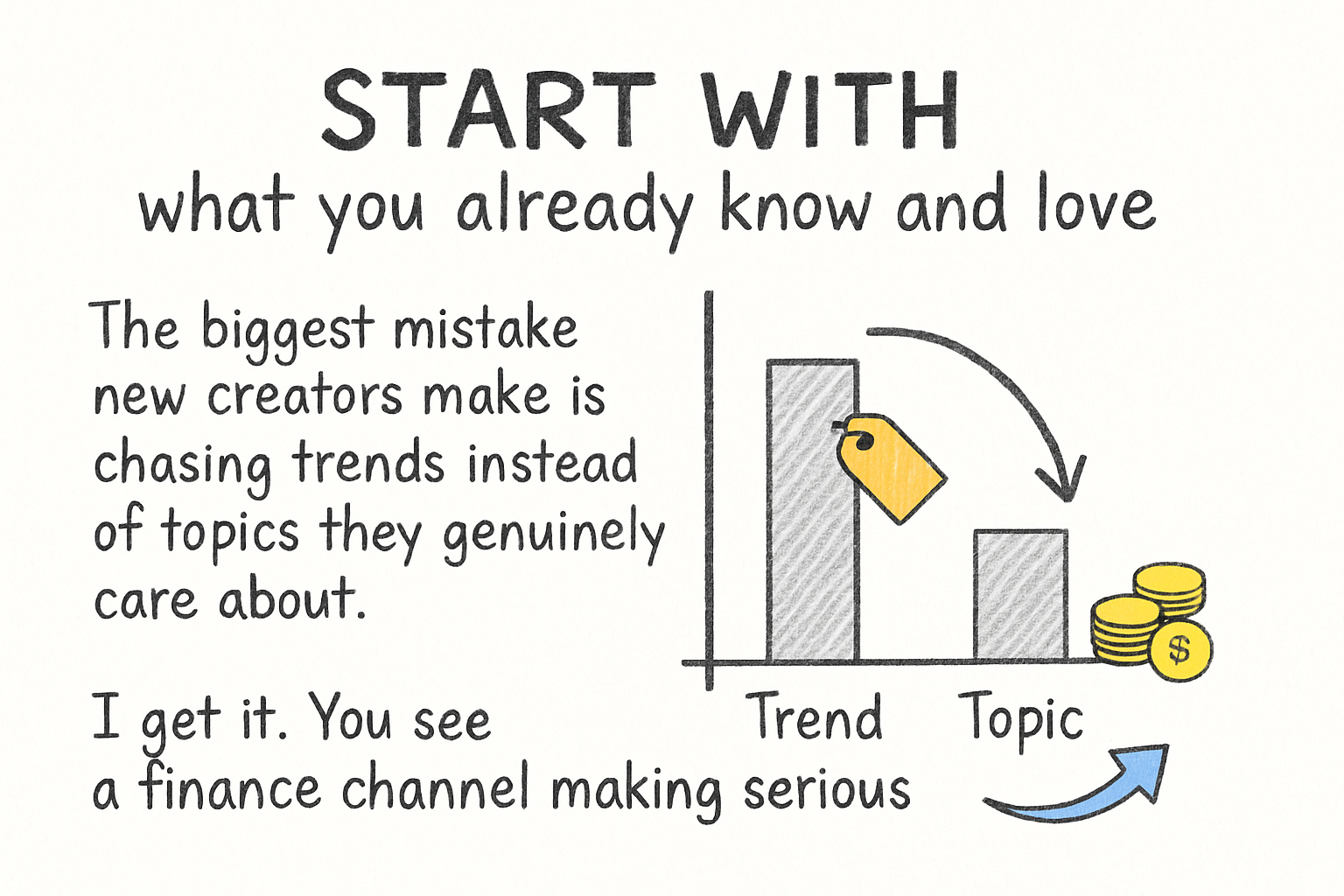
The biggest mistake new creators make is chasing trends instead of topics they genuinely care about. I get it. You see a finance channel making serious money and think, 'I should do that.' But if you don't care about personal finance, that enthusiasm is going to run out around video number five. YouTube rewards consistency, and consistency requires that you actually want to keep going.
Start by writing down everything you know a lot about, even stuff that feels boring or too small. Think about hobbies, past jobs, things your friends always ask you about, or subjects you could talk about for an hour without running out of things to say. I personally think this step is where most niche advice falls short, because people skip it and go straight to what looks profitable without checking if they can sustain it.
When I first started messing around with content creation, I tried to cover way too many topics at once. A tech tip here, a travel video there. Nothing stuck. It wasn't until I narrowed down to the one area I actually knew inside and out that things started to click. Your personal experience is an asset, not a limitation.
Once you have your list, narrow it down to the top three or four topics where your knowledge and your interest both feel strong. Those are your candidates. Don't throw the others away yet, but these are the ones worth looking at more closely in the next step.
Check if your niche has an audience
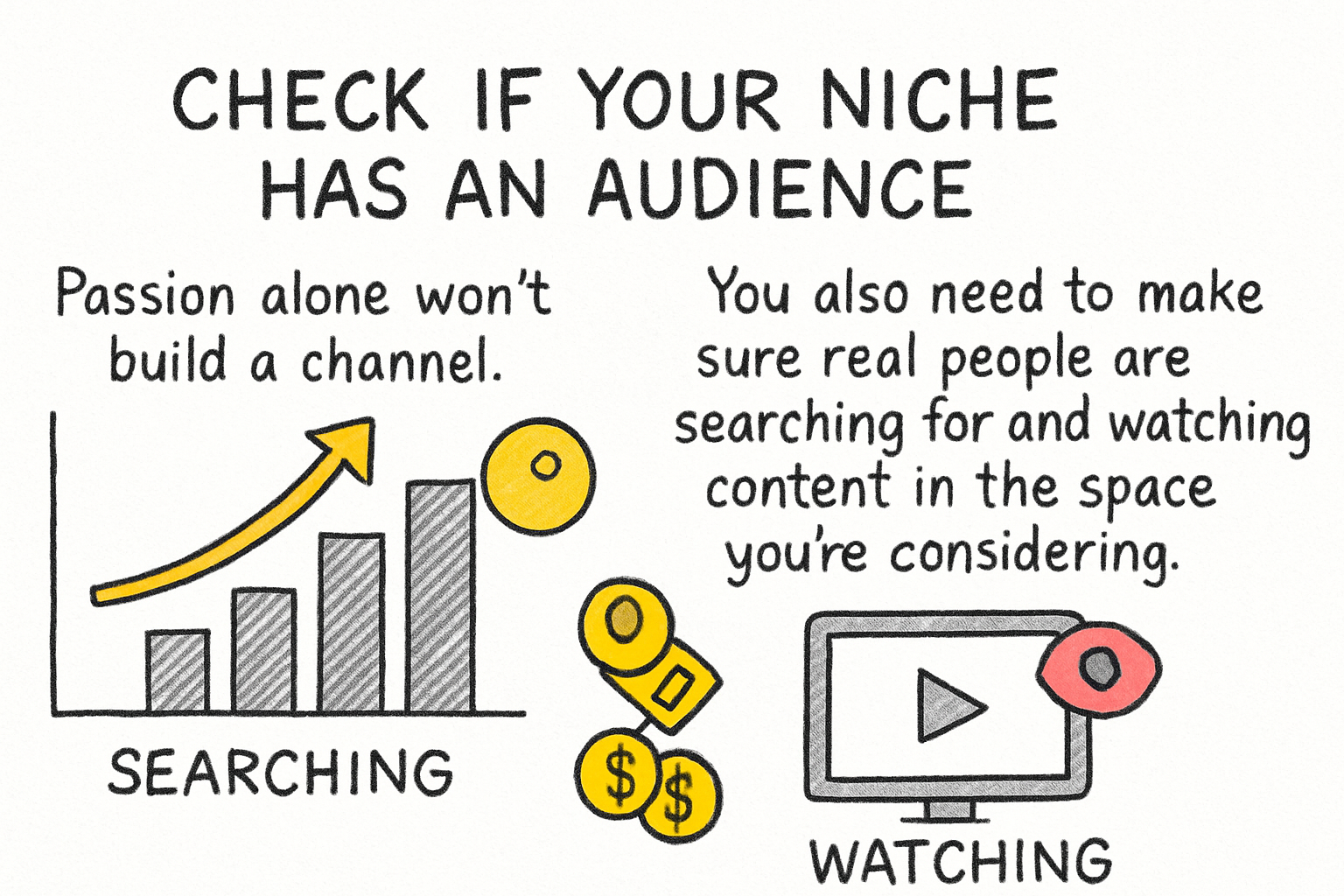
Passion alone won't build a channel. You also need to make sure real people are searching for and watching content in the space you're considering. This is where a little research goes a long way. Start by typing your topic into YouTube's search bar and see what comes up. Are there channels already covering it? That's actually a good sign. It means there's demand. A totally empty niche usually means nobody's looking for it.
Next, look at how those existing channels are doing. Are they getting views? Do the comment sections feel alive? You're not trying to copy these channels. You're just checking that the market exists. If you see dozens of channels all doing the same generic version of a topic, that might mean you need to narrow down even further. For example, 'fitness' is huge but also very crowded. 'Fitness for people over 50 who travel a lot' is specific, and specific niches are often easier to grow in because your audience feels like you're talking directly to them.
You can also use free tools like Google Trends to see if interest in your topic is growing or fading. A niche that's slowly rising is usually better than one that peaked two years ago. If you want ideas to keep your content calendar full once you've picked your niche, our article on good ideas for videos on YouTube is a solid place to start.
Don't skip this research phase just because it feels less fun than actually making videos. Ten hours of research before you start can save you months of making content nobody ever finds.
How to test and lock in your niche
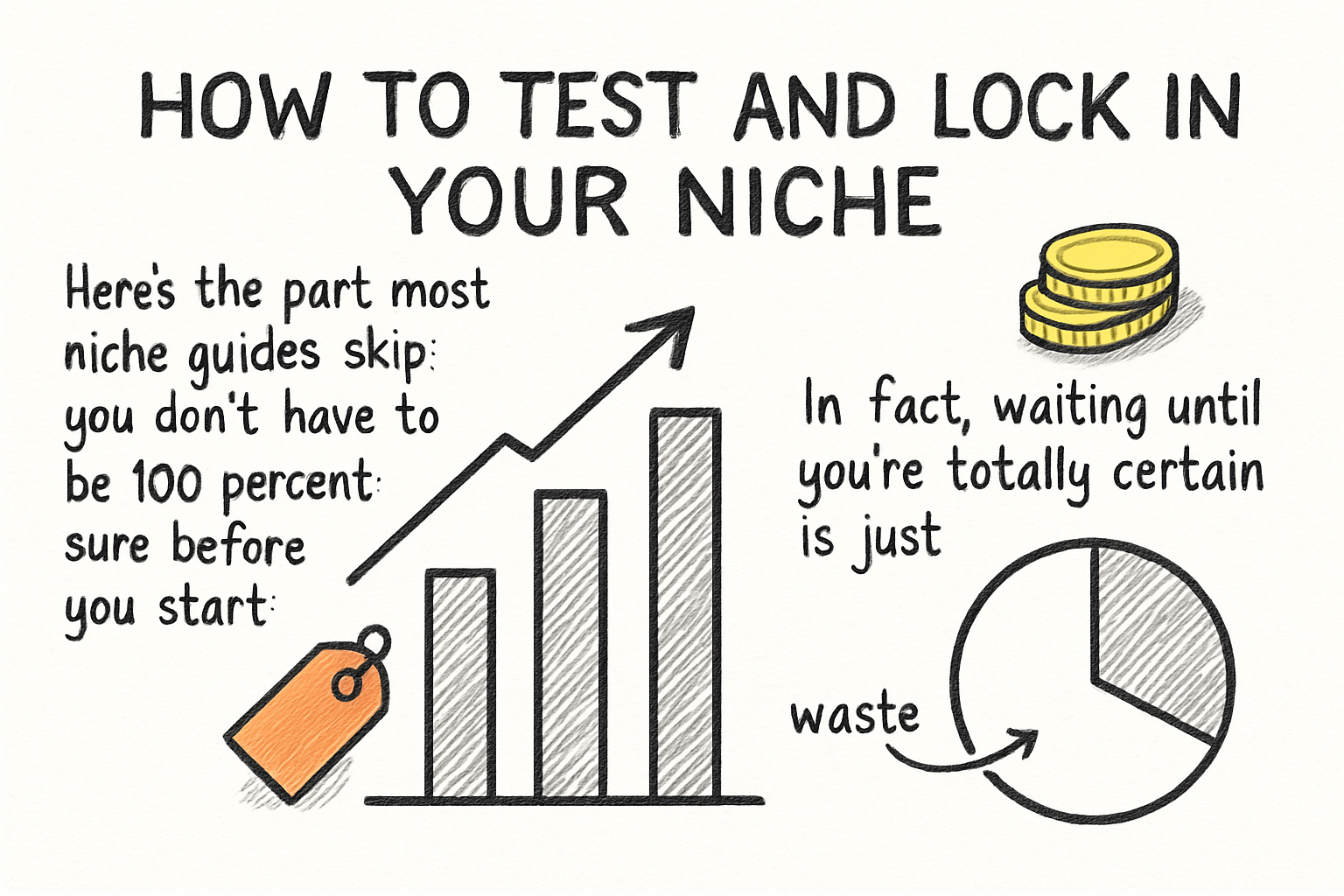
Here's the part most niche guides skip: you don't have to be 100 percent sure before you start. In fact, waiting until you're totally certain is just another form of procrastination. What you should do instead is treat your first five to ten videos as a testing phase. Pick your top one or two niche candidates and start making content. Watch what your audience responds to. Pay attention to which videos get shared, which ones get comments, and which ones people seem to actually finish watching.
Watch time is one of the clearest signals you have. If people are clicking away after thirty seconds, something isn't connecting. If they're sticking around and leaving comments, you're onto something. Understanding how that data works can really help, and if you're new to it, our breakdown of YouTube watch hours covers exactly what you need to know.
As your channel grows, you'll also start to understand who your viewers actually are, and that can shape how you refine your niche over time. Maybe you started out doing general personal finance videos and discovered your audience is mostly college students. That's useful. Now you can lean into that, make content that speaks directly to them, and grow a tighter, more loyal community than a channel that's trying to talk to everyone at once.
Locking in your niche doesn't mean you can never evolve. It just means you commit to a clear direction long enough to give it a real shot. Most channels that fail do so because they switched direction too fast, not because their original niche was wrong. Give your idea at least three solid months of consistent effort before you decide it's not working. And once your channel starts gaining traction, you'll want to be ready, so check out our guide on how to enable monetization on YouTube so you're not scrambling when that day comes.
Ready to take the next step?
Finding your niche is the foundation everything else gets built on. Get it right, and every video you make has a clear purpose and a real audience waiting for it. If you're still working through ideas or want help tracking your channel's growth as you test things out, check out Kliptory and see how it can help you stay on top of your progress. And if you've already found your niche or you're somewhere in the middle of figuring it out, drop a comment and let us know. Your experience might be exactly what someone else needs to hear.