YouTube Automatic Translation: How It Works

If you've ever clicked the CC button on a YouTube video and suddenly had subtitles in your language pop up, you've already seen automatic translation in action. It's one of those features most people use without really thinking about how it works. But once you understand what's actually happening behind the scenes, it changes how you think about making and watching videos online.
YouTube's automatic translation system is built on two separate processes that work together. First, the platform listens to the audio and converts speech into text. Then it takes that text and translates it into another language. These two steps happen using machine learning models trained on enormous amounts of data. The result isn't always perfect, but it's gotten a whole lot better over the past few years.
A lot of you have asked about this after reading our earlier piece on how YouTube views work, and it makes sense why. If your video can reach people who speak other languages, your view counts and watch time can grow in ways you might not expect. So let's break this down properly.
How YouTube generates automatic captions
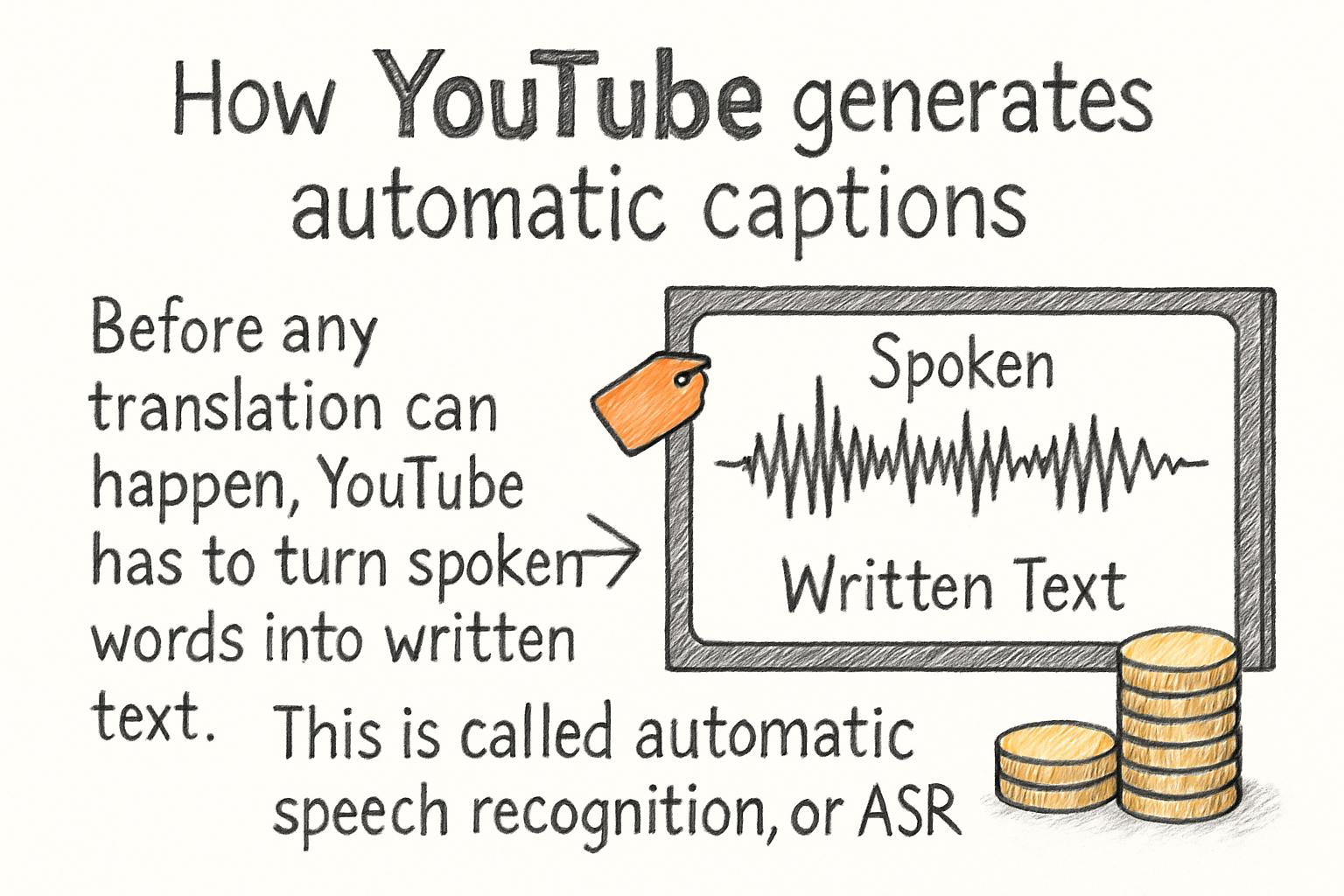
Before any translation can happen, YouTube has to turn spoken words into written text. This is called automatic speech recognition, or ASR. YouTube uses Google's ASR technology, which has been trained on millions of hours of audio across many different languages. When you upload a video, YouTube's system listens to it, identifies words, and builds a timed transcript that lines up with what's being said on screen.
The system works best when the audio is clear and the speaker talks at a normal pace. Background noise, heavy accents, or fast speech can throw it off. That's why you'll sometimes see captions that say something completely different from what was actually said. It's not glitching. It's just that the model made its best guess based on what it heard, and that guess was wrong.
YouTube currently generates automatic captions for a limited set of languages, including English, Spanish, Portuguese, French, German, Italian, Japanese, Korean, Dutch, and a handful of others. If your video is in a language outside that list, automatic captions might not appear at all. Creators can also upload their own caption files, which tend to be far more accurate than the auto-generated ones.
One thing worth knowing is that captions take time to generate. After you upload a video, it can take anywhere from a few minutes to several hours for automatic captions to show up. YouTube says this depends on the length of the video and the current load on their systems. Longer videos and busy periods mean longer waits.
How the translation part actually works
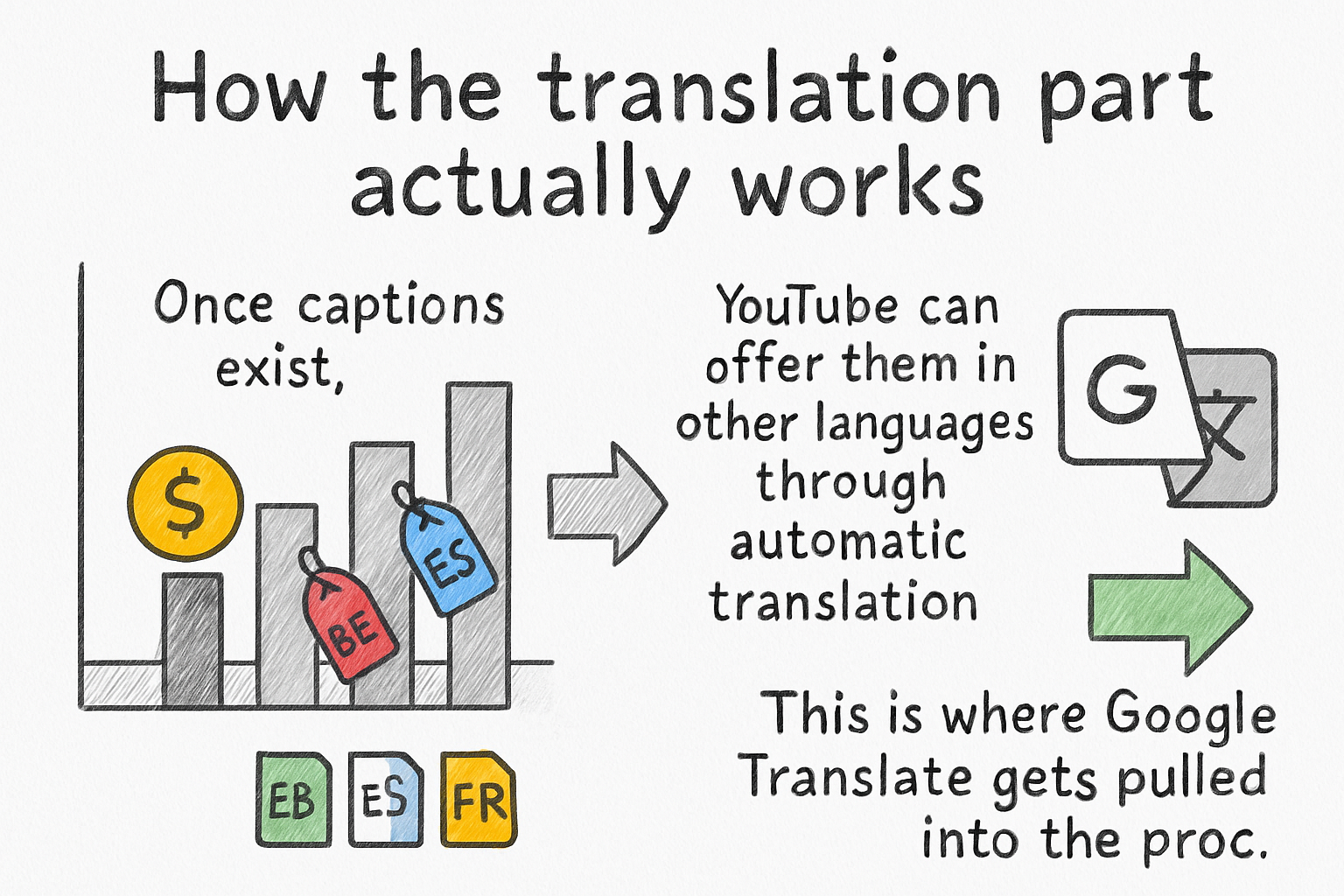
Once captions exist, YouTube can offer them in other languages through automatic translation. This is where Google Translate gets pulled into the process. When a viewer selects a different language for subtitles, YouTube takes the auto-generated caption text and runs it through Google's neural machine translation system to produce subtitles in the viewer's chosen language.
Neural machine translation is different from the old word-for-word translation tools most people remember from early internet days. Instead of swapping one word for another, it tries to understand the meaning of whole sentences and then writes them out naturally in the target language. It's trained on massive amounts of text written by real humans in both languages, so it learns patterns about how ideas are expressed differently across cultures.
I personally think the gap between automatic translation and human translation is still pretty wide when it comes to nuance, humor, or anything culture-specific. A pun in English almost never survives the trip to another language. Idioms can turn into nonsense. But for straightforward informational content, the translation quality is genuinely useful and often good enough that viewers can follow along without too much confusion.
If you're trying to reach a global audience, it's worth knowing that viewers can choose from over 100 languages when they turn on auto-translated subtitles. That's a huge potential reach. But it all depends on your original captions being solid. Garbage in, garbage out, as they say. If your auto-captions are full of errors, the translated version is going to be even harder to follow.
What this means for creators who want to grow
Here's the practical side of all this. If your captions are accurate, your videos become accessible to a much wider audience without you having to do anything extra. YouTube's algorithm can also read caption text to better understand what your video is about, which can help with search. That's why uploading your own caption file, rather than relying on auto-generated ones, is usually the smarter move.
I remember when I first noticed a video of mine getting views from Brazil. I hadn't done anything special, but the auto-translated Portuguese captions were apparently good enough that people were watching and sharing it. It was a small reminder that the platform is genuinely global, and even a modestly sized channel can reach people on the other side of the world.
If you want to go further, you can use YouTube's built-in tools to add captions in multiple languages yourself, or hire a translator to do it. This gives your international viewers a much better experience than the automatic version. For creators who are serious about growing their watch hours and building a real audience, this kind of effort pays off over time.
Also, if you've ever wondered how to actually translate a Spanish video to English yourself as a viewer or creator, the process is simpler than most people think and worth exploring if you work with content in multiple languages. The more you understand about how these tools work, the better you can use them to your advantage instead of just hoping the algorithm figures it out on its own.
Ready to take the next step?
YouTube's automatic translation isn't magic, but it's genuinely impressive technology that opens real doors for creators willing to take it seriously. Clean audio, accurate captions, and a little effort go a long way toward making your content accessible worldwide. If you've got questions about this or want to share your own experience with auto-translated subtitles, drop a comment below. And if you're looking for smarter ways to manage and grow your YouTube channel, check out Kliptory and see what it can do for you.