Why AI avatar videos may not be what faceless creators actually need

Table of contents
1. What AI avatar videos promise and where the logic breaks down
2. What faceless channels actually need to grow at scale
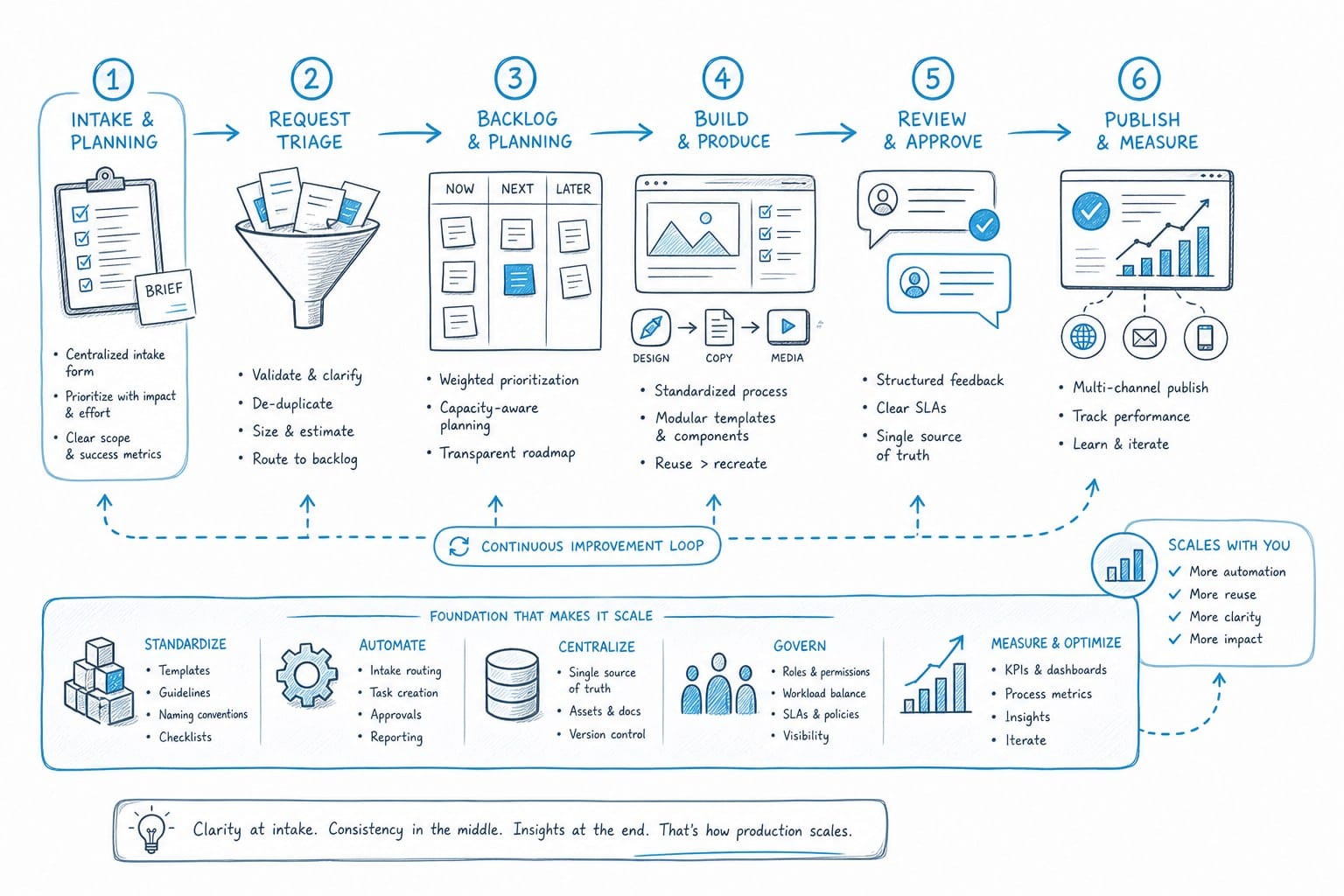
3. Building a production workflow that actually scales
When I first started researching tools for my faceless YouTube channel, AI avatar videos kept showing up as the obvious answer. The pitch is simple: pick a digital human, type your script, and publish. No camera. No face. No problem. But after digging into how faceless channels actually grow, I started to question whether AI avatar videos solve the right problem. This article breaks down what AI avatar videos actually are, where they fall short for serious faceless creators, and what a production workflow actually needs to look like if you want a channel that scales.
What AI avatar videos promise and where the logic breaks down
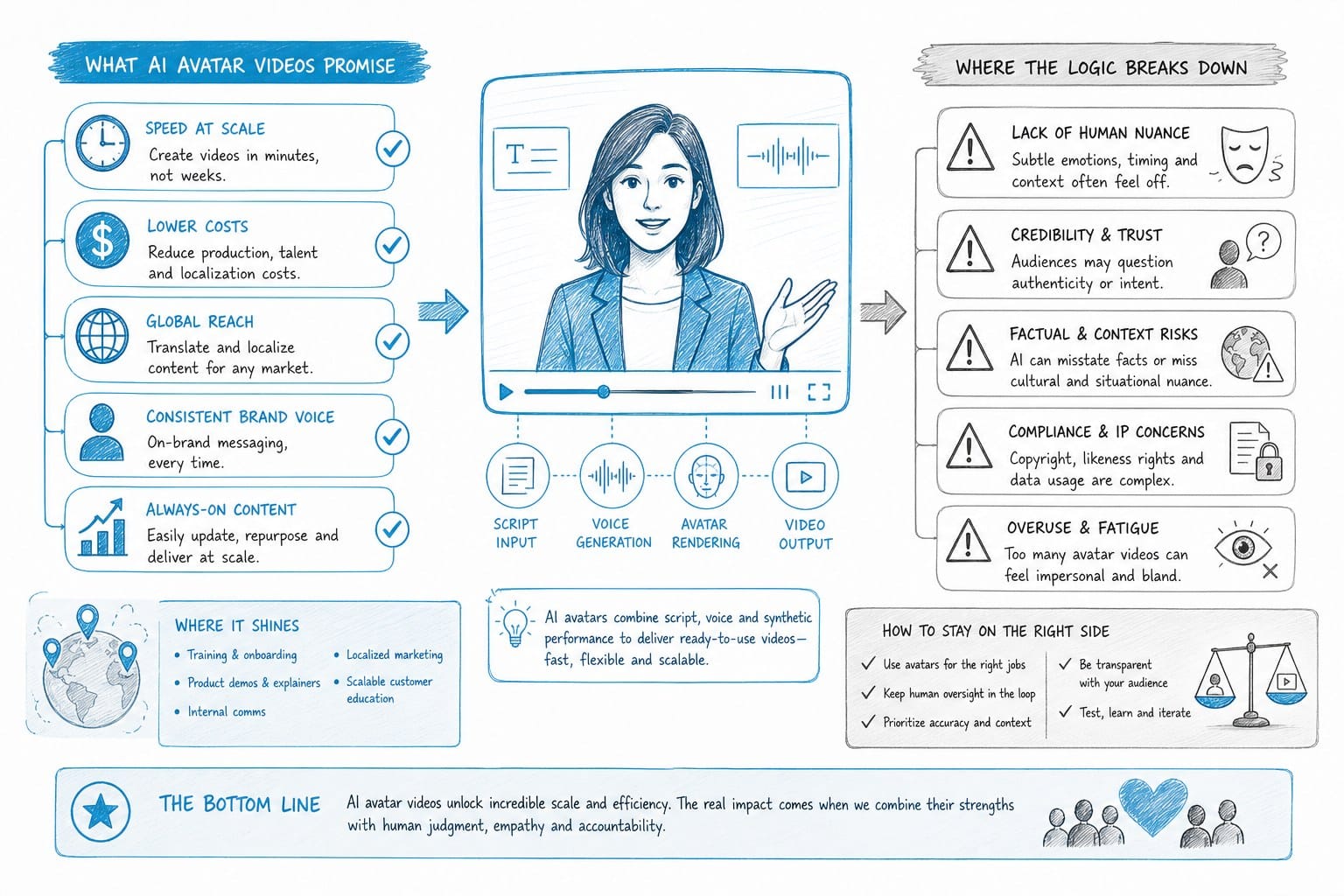
AI avatar videos use a digital human, sometimes generated from a real person's likeness, sometimes fully synthetic, to deliver a script on screen. The avatar moves its lips in sync with a voiceover, nods occasionally, and looks vaguely like a news anchor or corporate trainer. The idea is that viewers will connect with a human face, even an artificial one, and that this connection will drive watch time and subscriber growth.
That sounds reasonable in theory. But let me explain why it breaks down quickly when you look at what actually makes faceless YouTube channels work.
First, most successful faceless channels are not trying to replicate a talking head. They are producing documentary-style content, explainer videos, listicles, and video essays. These formats are built around visuals, not a face. Think about the top channels covering history, geography, geopolitics, science, or true crime. The camera is almost never pointed at a person. Instead, it moves across maps, archival footage, charts, timelines, and b-roll. The voiceover narrates what you see on screen. The storytelling comes from the combination of audio and visual evidence, not from a face delivering lines.
When you drop an AI avatar into that kind of content, you are actually working against the format. The avatar sits in the corner or takes up the whole screen, competing with the information the viewer came to learn. A viewer watching a video about the fall of the Roman Empire does not need to see a digital face. They need to see maps, timelines, and visual reconstructions. The avatar adds a layer of distraction, not engagement.
Second, there is the uncanny valley problem. AI avatars have improved significantly, but many still carry subtle visual artifacts. The eyes do not quite track correctly. The head movements follow a limited loop. The skin texture responds oddly to light. Viewers notice these things, even if they cannot name them. Comments on avatar-heavy videos frequently mention that something feels off or robotic. For a faceless channel trying to build trust and retain subscribers, that reaction is a problem.
Third, and this is the one that matters most from a production standpoint, AI avatar videos solve only one narrow part of the problem. They give you a face to put on screen. But they do not write your script. They do not find your b-roll. They do not build your data visualizations. They do not add captions, sync audio, or export a finished file. After you generate your avatar clip, you still have a half-finished video that needs hours of editing before it is ready to publish.
That means the bottleneck for most faceless creators is not the absence of a face. The bottleneck is everything else: research, scripting, sourcing footage, building visual elements, and editing it all together into a coherent long-form video. AI avatar videos do not touch any of that. They just add a digital face to the top of a problem that remains entirely unsolved underneath.
Finally, consider the audience expectations on YouTube right now. Viewers have become sophisticated. They can tell the difference between a channel that invested in quality visuals and one that slapped a talking avatar over a basic slideshow. The channels growing fastest in the faceless space are the ones that look like documentaries, not corporate training videos. Avatar-heavy content tends to look like the latter, which limits its ceiling on YouTube significantly.
What faceless channels actually need to grow at scale
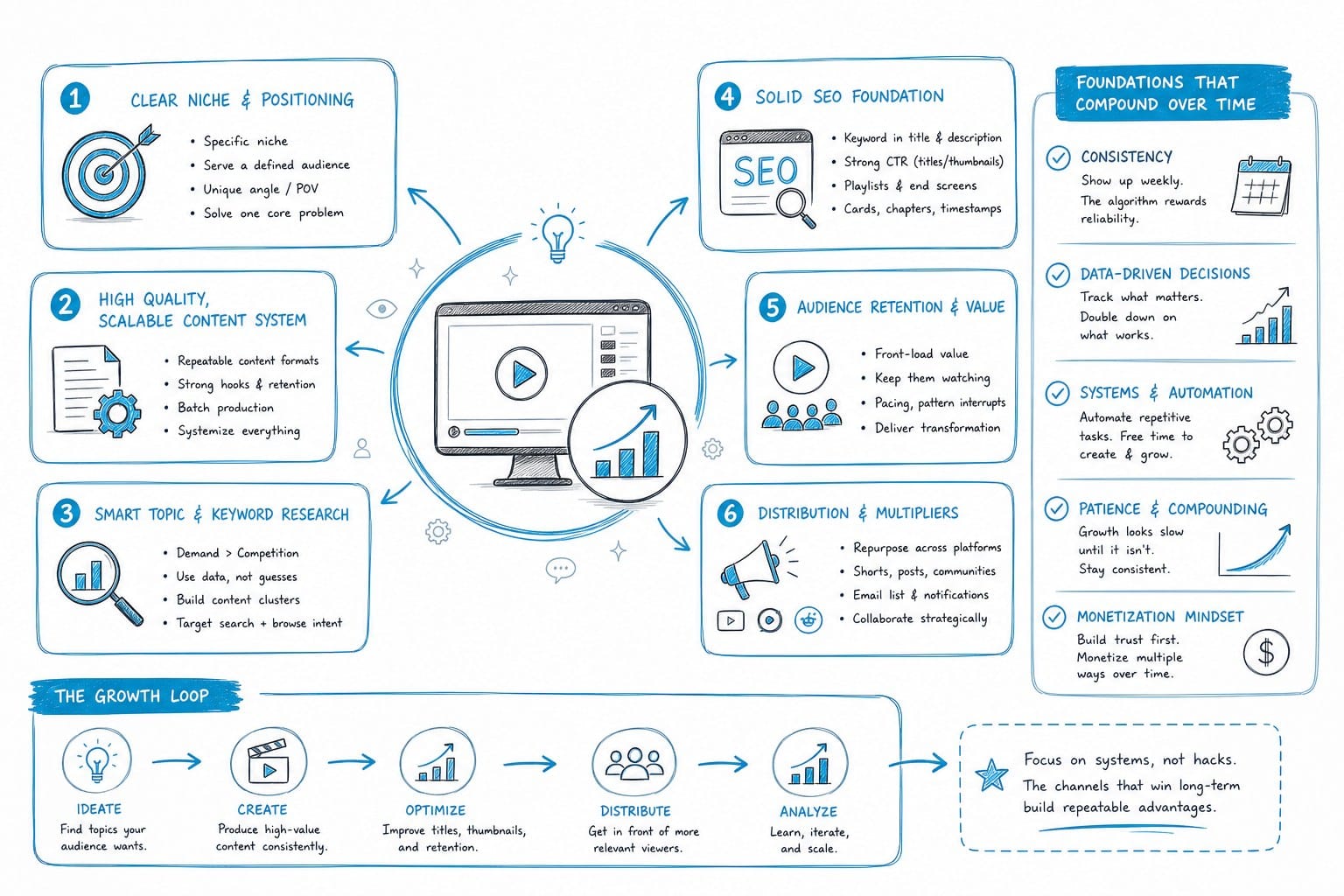
If AI avatar videos are not the answer, what is? The honest answer is that faceless YouTube growth comes from solving a production problem, not a face problem. Let me walk through what that production problem actually looks like.
A single long-form video on a serious faceless channel, something in the 10 to 30 minute range, involves a lot of moving parts. You need a topic that has search demand and can hold a viewer's attention. You need a script that is researched, accurate, and written to be heard rather than read. You need a voiceover that sounds natural, not robotic. You need b-roll footage that matches what the narrator is describing in real time. You need visual elements like maps, timelines, and charts to explain complex ideas. You need captions for accessibility and watch time. And you need all of that edited together in a way that keeps the pacing tight across a video that might run 20 minutes or longer.
If you are doing all of that manually, one video can take a week or more. Research and scripting alone might eat 10 to 15 hours. Sourcing b-roll and building custom visuals can take another 5 to 8 hours. Editing and exporting can take another 4 to 6 hours, more if you are working on a complex topic. For a solo creator trying to post consistently, that math simply does not work. You burn out, fall behind your posting schedule, and lose momentum.
This is where automation makes a real difference, but it has to be the right kind of automation. A tool that writes your script saves you 10 hours. A tool that sources and places b-roll saves you another 5 hours. A tool that builds your data visualizations, syncs your voiceover, adds captions, and exports a finished video saves you the rest. That is a workflow that can turn a week of work into a few hours, and that changes everything about how often you can publish.
Scripting is a good place to start thinking about this. A strong script is the foundation of any good faceless video. If the script is weak, no amount of visual polish will save the video. Learning how to use a script generator to automate your YouTube videos can cut your scripting time dramatically while still giving you something you can edit and refine before production begins.
Beyond scripting, discoverability matters enormously for faceless channels. You can produce the best documentary-style video on a topic, but if the title does not match how people actually search, no one will find it. Understanding how to use a YouTube video title generator to grow your channel is a practical skill that directly affects click-through rate and organic reach. A well-optimized title is not a gimmick. It is a distribution strategy.
Scale also means thinking about audience. A faceless channel has a natural advantage that a face-forward channel does not: the content can be localized for different language markets without reshooting anything. The voiceover can be replaced or translated. The visuals remain the same. If you are serious about growing beyond a single language market, it is worth understanding how to create multilingual faceless YouTube videos with AI. That kind of geographic expansion can meaningfully multiply your revenue without multiplying your production effort.
None of these growth levers require an AI avatar. They require a production system that handles the actual work of making a video, from the first word of the script to the final export. The face question is largely irrelevant. Viewers come back to faceless channels because the content is good, the pacing is tight, the visuals are informative, and the channel posts consistently. A digital human standing in the frame contributes to exactly none of those outcomes.
Let me also address something I see come up regularly in faceless creator communities: the idea that an AI avatar gives a channel a brand identity. The thinking is that if your channel has a consistent digital character, viewers will recognize it and feel attached to it. I understand the appeal of that idea, but the evidence on YouTube does not really support it. The channels with the strongest brand identity in the faceless space have built that identity through consistent visual style, music, topic focus, and posting schedule, not through a recurring digital face. Viewers subscribe to channels that reliably deliver content they care about. An avatar does not reliably deliver anything on its own. It is just a visual element, and not a particularly useful one for documentary-style content.
What creators actually need is a system that makes production fast enough to stay consistent, high-quality enough to hold attention, and flexible enough to cover a wide range of topics. That is a production platform problem, not a face problem.
Building a production workflow that actually scales
Let me get specific about what a scalable faceless video workflow looks like in practice, because the gap between theory and execution is where most creators get stuck.
The first step is choosing topics that have genuine audience interest. This means doing keyword research, looking at what is already performing in your niche, and identifying gaps where good content does not yet exist. Topic selection is upstream of everything else. A beautifully produced video on a topic no one is searching for will not grow a channel. I treat topic research as the most important 30 minutes of any production cycle.
From there, scripting needs to happen fast without sacrificing quality. For a 15-minute video, you are looking at roughly 2,000 to 2,500 words of narration at a comfortable speaking pace. Writing that from scratch takes hours, especially if you are also doing the research inline. AI-assisted scripting tools can dramatically compress that time, but the output still needs a human pass for accuracy, tone, and flow. The goal is to use automation to get to a solid first draft quickly, then spend your time improving it rather than staring at a blank page.
Voiceover is the next piece. For faceless channels, the voiceover is the primary connection between the creator and the viewer. It needs to sound natural, authoritative, and well-paced. AI voiceover technology has reached a point where it is genuinely difficult for casual listeners to distinguish from a human narrator, provided you choose the right voice and the script is written in a conversational style. This is one area where AI genuinely delivers on its promise, and it is one of the core components of a serious faceless production platform.
B-roll is where a lot of solo creators lose the most time. Finding footage that actually matches the narration, frame by frame, requires either a large stock library, a tool that can source and match clips automatically, or both. For documentary-style content covering history, science, or geography, you often need a mix of archival footage, licensed stock clips, and custom-built visual elements. Manually sourcing all of that is slow and expensive. Automation that can read your script and place appropriate b-roll against each segment is one of the most valuable capabilities a production platform can offer.
Data visualizations deserve special mention because they are often the element that separates a great documentary-style video from a mediocre one. If your video is about population growth, you need a map or a chart. If it is about a historical event, you need a timeline. If it is about economic trends, you need graphs that match the numbers you are citing. Building these by hand in a design tool takes skill and time. A production platform that generates these elements automatically, based on the data and script context you provide, removes a major bottleneck for creators who are not designers.
Captions and subtitles are not optional anymore. A significant portion of YouTube viewers watch videos with the sound off, especially on mobile. Accurate captions also help with watch time and accessibility. Auto-generated captions from YouTube's own system are often inaccurate enough to require manual correction, which eats time. A workflow that includes accurate captioning as an automatic step, not an afterthought, is noticeably faster to operate.
Finally, editing and export. For long-form content, the editing pass is where you refine pacing, cut dead air, adjust music levels, and make sure the overall structure holds together. For creators who are not professional editors, this step has historically been the hardest to automate. But modern AI-assisted editing tools can handle a lot of the mechanical work, leaving you to make the judgment calls that actually require a human eye.
Kliptory is built around this full production workflow. It handles scripting, voiceover, b-roll sourcing, data visualizations including maps and timelines and charts, captions, and editing, all inside a single platform designed specifically for faceless YouTube channels. The goal is to take a video from concept to finished export in hours rather than weeks, without requiring a post-production team or advanced editing skills. That is the kind of automation that actually changes the economics of running a faceless channel.
I want to be clear about what this means practically. If you can produce one solid video per week instead of one per month, your channel grows roughly four times faster in terms of content volume. More videos means more entry points for search traffic, more opportunities for the algorithm to surface your content, and more data about what your audience actually responds to. Consistency and volume are the levers that move faceless channels forward, and production speed is what makes both of those possible.
AI avatar videos do not contribute to any part of that production chain. They are a cosmetic layer added on top of a workflow that still needs to be built from scratch. For creators who are serious about building a channel that grows and generates real revenue, the more useful question is not how to add a face to your videos. It is how to produce better videos faster so you can stay in the game long enough for the channel to mature.
The faceless format works because it is scalable, flexible, and not dependent on any one person's schedule or appearance. That is a genuine structural advantage over face-forward content. The creators who recognize that advantage and build production systems around it, rather than trying to approximate a talking head with a digital avatar, are the ones who are going to win in this space over the next few years.
If you are early in your journey as a faceless creator, the single most valuable thing you can do is figure out your production workflow before you worry about branding, thumbnails, or monetization. A workflow that lets you publish consistently at a quality level your audience respects is the foundation everything else gets built on. No avatar required.
Ready to take the next step?
If you are ready to build a production workflow that actually scales, Kliptory was designed for exactly this. It automates the full long-form video process, from script to export, so you can publish documentary-style videos in hours instead of weeks. Visit https://kliptory.com to see how it works and start your first project.