How AI makes long-form YouTube videos faster to produce


Table of contents
1. Where the time really goes in long-form video production
2. How AI actually speeds up each stage of production
3. What to think about before switching to an AI production workflow
Producing a long-form YouTube video used to mean weeks of work. You had to write a script, record or source a voiceover, hunt for B-roll footage, build graphics, drop in captions, and then edit everything together. For solo creators running faceless channels, that workload was brutal. Most people either burned out, published inconsistently, or gave up entirely. Long form YouTube video AI tools are changing that equation in a real way. Platforms built specifically for this format can now handle scripting, narration, visuals, and editing in a fraction of the time it used to take. In this article, I want to walk through exactly how that works, what parts of the process actually get faster, and what you should know before you commit to an AI-assisted workflow.
Where the time really goes in long-form video production
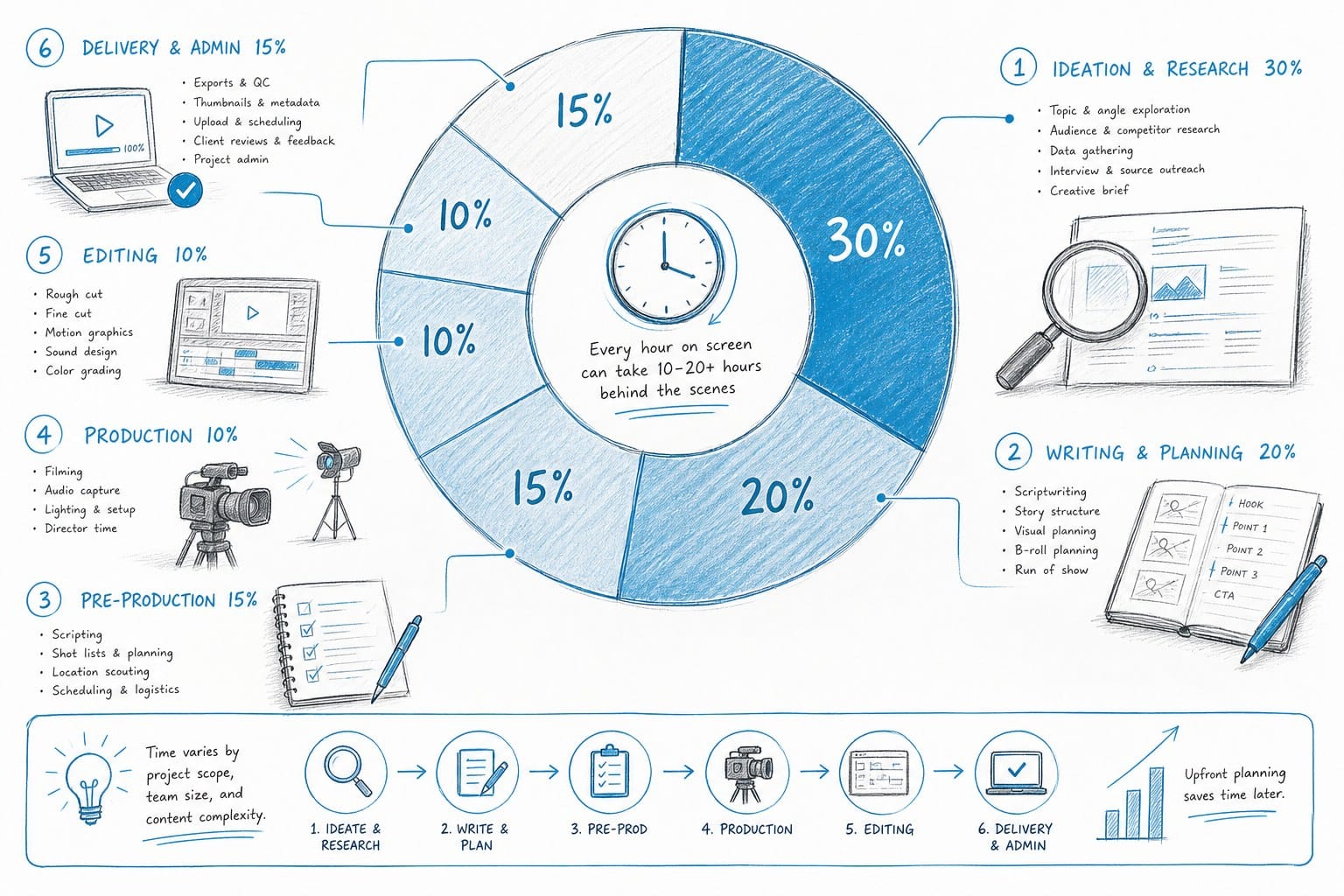
Before I get into how AI helps, it is worth being honest about where creators lose the most time. I have talked to dozens of people running faceless YouTube channels, and the bottleneck almost never sits in one single place. It stacks up across every stage.
Scripting alone can take a full day for a ten-minute video. If you are making a twenty or thirty minute documentary-style video about a historical event, a geography topic, or an explainer about a complex subject, you are probably looking at two to four days just to get a solid script with proper sourcing, structure, and pacing. That is before you have recorded a single second of audio.
Voiceover is the next wall. If you are not recording your own voice, you are either paying a voice actor or wrestling with text-to-speech tools that sound robotic and flat. Even when you do get a decent recording, you still need to edit it for pauses, pacing, and clarity.
Then comes B-roll. Finding footage that actually matches what the narrator is saying is harder than most people admit. Stock footage libraries are enormous, and browsing them by hand to find the right clip for each sentence of a ten-minute script can take four or five hours on its own. And when you need something specific, like a map of a trade route, a timeline of historical events, or a chart showing economic data, stock footage simply does not have it.
Data visualizations are where a lot of documentary-style channels get stuck. Building a custom animated map or a clean animated timeline from scratch in After Effects or even Canva takes skill and time. Most solo creators either skip those elements entirely or outsource them, both of which cost something.
Editing is the final layer. Syncing voiceover to B-roll, trimming dead space, placing captions, adding music, color grading, and rendering a forty-minute video can eat an entire weekend. Even experienced editors take several hours per finished minute of polished content.
Add all of that together, and a single high-quality long-form video can take three to six weeks for a solo creator working part-time. That pace makes it almost impossible to publish consistently, which directly hurts channel growth because the YouTube algorithm rewards regular uploads.
The good news is that long form YouTube video AI tools are now built to attack every single one of those stages, not just one or two of them.
How AI actually speeds up each stage of production
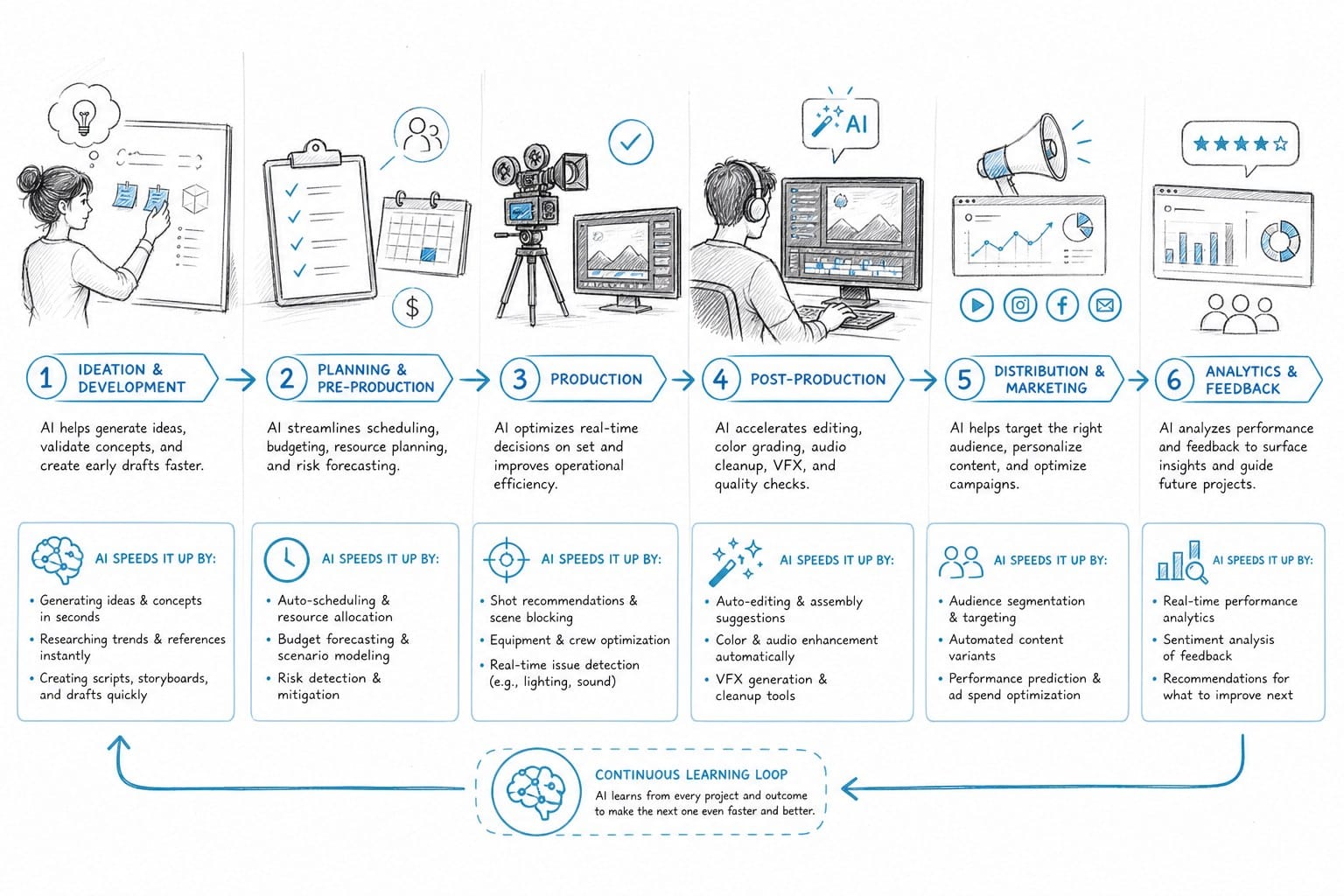
The most useful thing I can do here is walk through each production stage and explain what AI can realistically do versus what still needs a human touch. There is a lot of hype in this space, and I want to be specific.
Scripting
AI script generation has come a long way. Modern tools can take a topic, a target length, and a tone, and produce a structured long-form script that includes an introduction, segmented sections, transitions, and a conclusion. For a twenty-minute video, that can happen in under ten minutes.
The output is not always perfect on the first pass. You might need to adjust facts, sharpen a turn of phrase, or add a personal angle that makes the content feel distinct. But starting from a structured draft is dramatically faster than starting from a blank page. A creator who used to spend two days on a script might now spend two to three hours reviewing and refining one.
For listicles, video essays, and explainer content, this improvement is especially significant. The format is predictable, which means AI can structure it well without much prompting. For more nuanced editorial content, the human layer still matters, but AI gets you most of the way there.
Voiceover
Text-to-speech technology has improved enough that many viewers cannot tell the difference between an AI voice and a professional narrator if the voice is chosen well. Platforms designed for faceless channel production offer a range of voice styles, accents, and pacing controls so you can match the tone of your content.
For a thirty-minute script, generating a voiceover file that would have taken hours of human recording and editing can now happen in minutes. You still want to listen through and catch any mispronunciations or awkward pauses, but the bulk of the work is done automatically.
This matters a lot for creators who either cannot record their own voice or who are working at volume. If you are publishing two or three videos per week, recording voiceover for each one simply is not sustainable without a team.
B-roll sourcing and visual matching
This is one of the areas where long form YouTube video AI has made the biggest practical difference. Rather than manually searching a stock library for clips that match each line of narration, AI tools can read the script, identify the key concepts at each timestamp, and pull relevant footage automatically.
For a video about the history of the Silk Road, that means the tool is sourcing footage of deserts, trade goods, camels, ancient cities, and merchant scenes without you having to search for each one individually. The time savings here are significant. What used to take four to six hours can happen in minutes, with the creator spending thirty to sixty minutes reviewing and swapping out any clips that do not quite fit.
The visual matching is not flawless. AI does not always understand context the way a human editor would, and sometimes the footage it pulls is a little generic or slightly off-topic. But the correction pass is fast, and the starting point is far better than a blank timeline.
Data visualizations: maps, timelines, and charts
This is the feature set that separates platforms built specifically for documentary-style content from general-purpose video editors. Animated maps that show geographic movements, timelines that walk through a sequence of events, and charts that visualize data are core to the kind of content that performs well in the history, geography, science, and finance niches on YouTube.
Building these from scratch traditionally required motion graphics skills or a budget for a specialized freelancer. AI-powered platforms can now generate these assets automatically based on the content of the script. A creator making a video about World War II troop movements can get an animated map without knowing anything about After Effects.
For faceless channel operators focused on educational and documentary content, this capability alone can change what is possible. It brings a production quality to the channel that used to require a team.
Captions and accessibility
AI-generated captions are now accurate enough that they require only light editing. Platforms can transcribe the voiceover, sync captions to the audio, and style them automatically. This step used to be tedious and time-consuming. Now it is mostly automatic.
Captions matter for engagement because a significant share of viewers watch without sound, especially on mobile. Getting them right without spending hours on manual transcription is a real workflow improvement.
Editing and assembly
The final assembly stage, where all the pieces come together into a finished video file, is where automation delivers its most dramatic time savings. Instead of manually placing every clip, adjusting every transition, and syncing every caption in a traditional editing timeline, AI-powered platforms can assemble the full video automatically once the script, voiceover, and assets are in place.
For a forty-minute video, that assembly process might take an AI platform twenty to thirty minutes to render. A human editor working in Premiere Pro might need eight to twelve hours to do the same job at the same quality level.
I want to be clear that this does not mean the output is identical to a hand-crafted edit. A skilled human editor brings creative choices that AI does not replicate. But for faceless YouTube channels where the goal is clear, engaging, and consistent content at volume, the automated assembly gets very close to what you need.
Platforms like Kliptory are built specifically for this full-pipeline automation. Rather than patching together five different tools, creators can manage scripting, voiceover, B-roll, visualizations, captions, and editing inside a single workflow. That integration is a big part of why production time drops from weeks to hours for long-form content.
What to think about before switching to an AI production workflow
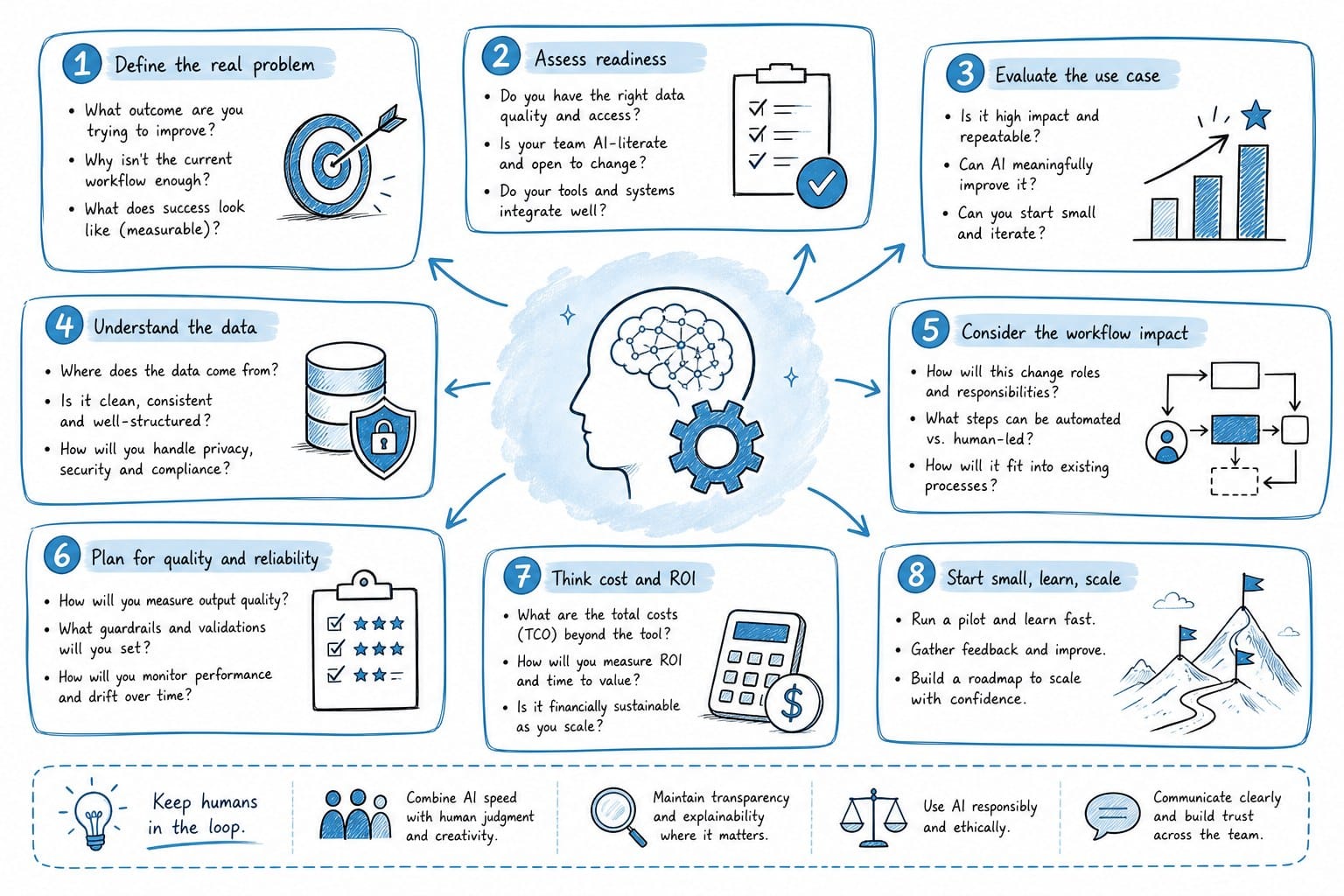
AI production tools are genuinely powerful, but they work best when you go in with clear expectations. I want to cover a few things that creators often overlook when they first start exploring this workflow.
Your niche shapes how well AI fits
Not every type of long-form content benefits equally from AI automation. The niches where AI production tools perform best tend to be ones with a clear informational structure: history, geography, science explainers, finance, true crime, and listicle-style content. These formats have predictable structures that AI can work with effectively.
If your content depends heavily on original reporting, personal storytelling, or on-camera personality, the AI layer has less to offer on the creative side. It can still help with editing and asset management, but the core of what makes your content unique will always require human input.
For faceless channels in educational niches, though, the fit is very strong. The format rewards consistent quality, clear narration, and good visuals more than it rewards a specific personality. That is exactly the space where AI production tools shine.
Volume is where the ROI becomes obvious
If you are publishing one video per month, the time savings from AI tools are nice but not transformative. The math changes dramatically when you want to publish consistently, say two to four videos per month at the fifteen to forty minute range.
At that volume, the manual workflow becomes genuinely unsustainable for a solo creator without either burning out or hiring a team. AI tools make that publishing pace achievable without either of those costs. That consistency pays off algorithmically because YouTube rewards channels that publish regularly in their niche.
Digital entrepreneurs and side-hustlers running monetized YouTube channels often talk about the point where revenue starts to justify investment. Consistent publishing is one of the biggest levers for getting there faster, and AI production tools are one of the most direct ways to make consistent publishing achievable without a team.
Quality review still matters
I want to be straightforward about this: AI-produced videos need a human review pass before they go live. The tools do not know when a stock clip is slightly wrong, when a caption has a mispronunciation, or when a paragraph in the script makes a factual error. That review layer is important.
The good news is that the review pass on an AI-assembled video is dramatically faster than building the video from scratch. You are checking and correcting rather than creating from nothing. For most creators, that review might take one to two hours on a thirty-minute video instead of the ten to fifteen hours the full build would have taken manually.
That time difference is what makes the workflow genuinely useful. You are still in control of the quality, but you are spending your time in the highest-leverage place: reviewing and improving rather than building from zero.
Faceless channels have specific needs that general tools do not always meet
This is worth emphasizing because there are a lot of general-purpose AI video tools on the market. Many of them are built primarily for short-form content, social clips, or videos that feature an on-screen presenter or AI avatar.
Faceless YouTube channels running long-form content have different requirements. They need tools that can handle scripts long enough for a twenty or forty minute video. They need B-roll sourcing at scale. They need data visualizations that make educational content engaging. They need voiceover that sounds natural over a long listening session, not just a thirty-second clip.
If you are evaluating tools for a faceless channel, it is worth checking whether the platform was actually built for long-form formats or whether it is a short-form tool being stretched beyond its design. You can read more about this distinction in this piece on why faceless channels win without an AI video avatar, which gets into why the faceless format has specific production needs that generic AI tools often miss.
The avatar question comes up a lot
Many creators wonder whether they should use an AI avatar to give their channel a visual identity. It is a reasonable question, but for most long-form faceless channels, an avatar is not actually what makes content successful. The quality of the script, the clarity of the narration, and the strength of the visuals matter far more than whether there is a digital face on screen.
In fact, for documentary-style content, an AI avatar can actually undercut the production value because it draws attention to itself in a way that pulls viewers out of the content. If you are curious about this, this article on why avatars video may not be what faceless creators actually need lays out the reasoning in detail.
Comparing tools thoughtfully
If you are currently using a general AI writing or video tool and wondering whether something more specialized would serve you better, it is worth doing a direct comparison on the specific tasks that matter most for your channel. Scripting depth, voiceover quality, B-roll sourcing capability, and support for data visualizations are the four features I would prioritize for long-form documentary content.
For creators who have looked at lighter-weight tools in this space, this comparison of TubeMagic alternatives for long-form YouTube creators is a useful starting point for understanding what a platform built specifically for long-form production can do that simpler tools cannot.
Practical expectations on time savings
To give you a realistic benchmark: creators using a full-pipeline AI production platform for long-form YouTube video often report cutting their per-video production time from three to six weeks down to one to three days. Some report producing a finished thirty-minute video in a single eight-hour workday once they are familiar with the workflow.
That compression does not mean zero effort. It means the effort shifts from time-consuming mechanical work, searching for footage, building graphics by hand, manually syncing captions, to higher-value decisions about content strategy, topic selection, script refinement, and quality review.
For creators trying to build a channel that actually grows, that shift in how time gets spent is meaningful. You end up doing more of the work that actually moves the needle and less of the work that is just necessary but adds no creative value.
A note on consistency and channel growth
The YouTube algorithm is not subtle about rewarding consistency. Channels that publish regularly in a focused niche tend to grow faster than channels that publish sporadically, even if the sporadic videos are slightly better in quality. The reason is that consistent publishing builds subscriber habits, signals to the algorithm that the channel is active, and compounds the library of content that can surface in search and recommended feeds.
For solo creators, AI production tools are one of the most direct ways to achieve that consistency without sacrificing quality or burning out. Long form YouTube video AI is not a shortcut to replacing the creative judgment that makes a channel worth watching. It is a way to remove the production bottlenecks that prevent good creators from publishing as often as they should.
Ready to take the next step?
If you are running a faceless YouTube channel and want to produce long-form documentary-style videos without the weeks-long production grind, Kliptory is built for exactly that workflow. From script to finished video, the platform handles scripting, voiceover, B-roll sourcing, data visualizations, captions, and editing in one place. You can visit Kliptory to see how it works and whether it fits the kind of content you want to produce.