Produce.so alternative for AI-powered YouTube video creation

Table of contents
1. What most creators find missing in produce.so
2. What Kliptory does differently for long-form YouTube creators
3. Who should make the switch and how to evaluate your options honestly
If you have been searching for a produce.so alternative, you are probably a creator who wants more than a basic AI video tool. You want something that can actually handle long-form content, documentary-style storytelling, and the kind of production depth that keeps viewers watching past the five-minute mark. That is a specific need, and not every platform is built for it. Short-form tools dominate the AI video space right now, which makes finding something genuinely suited to 20- or 30-minute YouTube videos harder than it should be. This article breaks down exactly what is missing from most platforms, what Kliptory does differently, and how to honestly evaluate whether switching makes sense for your channel and your workflow.
What most creators find missing in produce.so
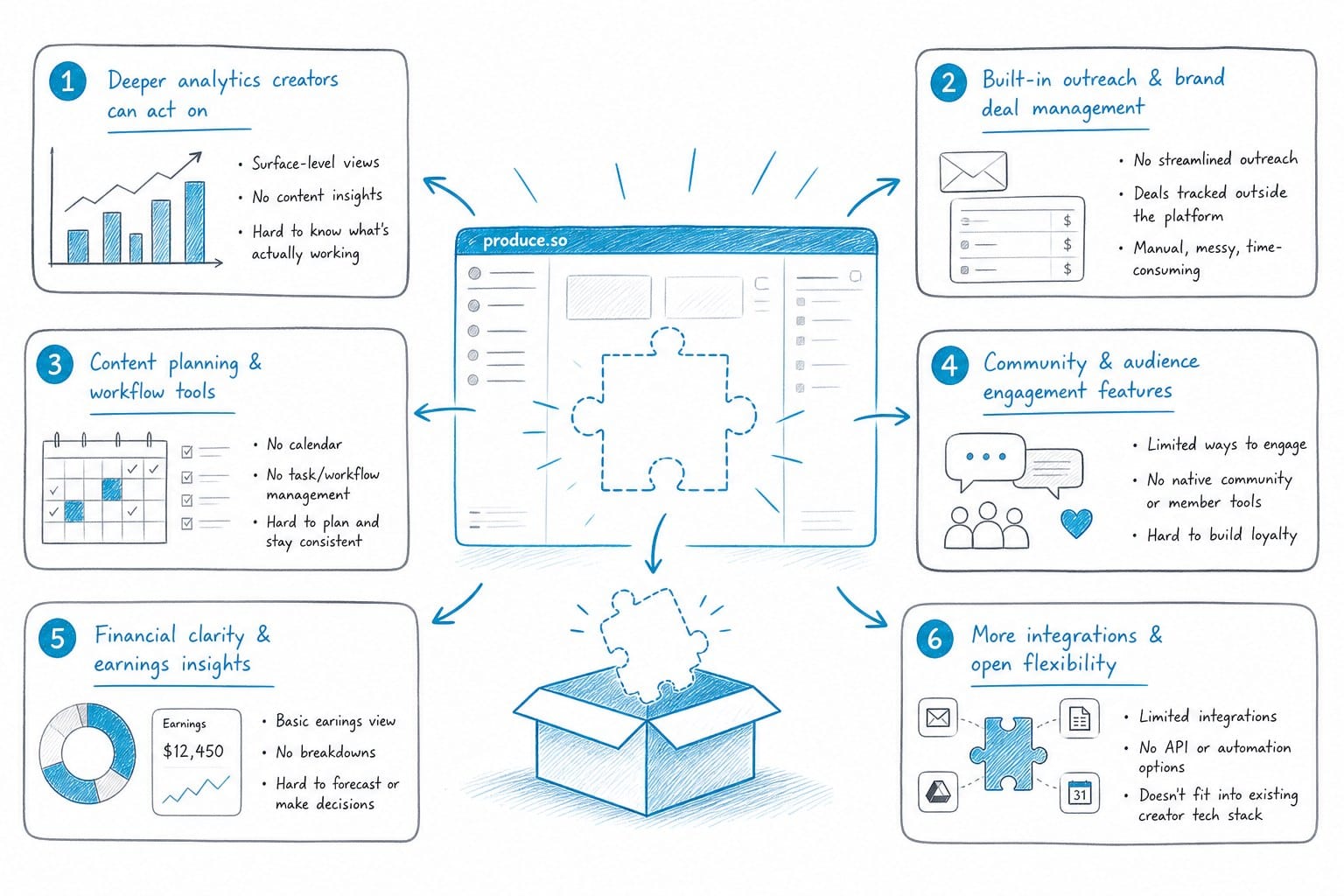
Produce.so markets itself as an AI video creation tool, and for short-form content or quick social clips, it checks some boxes. But when you start pushing it toward longer videos, the gaps become obvious fast.
The biggest complaint from creators who have tried it is that the output feels shallow. You get a basic structure, some stock footage stitched together, and a voiceover that sounds like it was generated in five seconds. For a two-minute social reel, that might be acceptable. For a 20-minute documentary on the fall of the Roman Empire, a deep-dive video essay on semiconductor supply chains, or a data-heavy explainer about global inflation trends, it falls apart completely.
Long-form YouTube videos demand more from a production platform. They need coherent scripting with a real narrative arc, not just a bulleted outline padded into paragraphs. They need B-roll that actually matches the script beat by beat, not random footage pulled from a generic library because a keyword matched. They need data visualizations — maps, timelines, charts, and historical comparisons — that help viewers follow complex information across 20 or 30 minutes. And they need editing logic that holds a viewer's attention across a video that would take half an hour to watch.
Creators running faceless channels covering history, geopolitics, finance, science, or true crime know this better than anyone. These are not short-form creators dabbling in YouTube. They are essentially operating small documentary studios, and they need tools that match that scale. A platform built for Instagram Reels is not going to cut it when your audience expects the production quality of a cable documentary.
Take a concrete example. Say you are making a 25-minute video about the economic history of the Ottoman Empire. A shallow AI tool might generate a five-paragraph script that reads like a Wikipedia summary, drop in some stock footage of mosques and old maps, and call it done. That is not a video. That is a slideshow with narration. A viewer who clicks on that expecting genuine depth will leave inside two minutes, and YouTube's algorithm will take note.
Real long-form content needs structural logic from beginning to end. The opening has to earn the viewer's time. The middle sections have to build on each other rather than just listing facts. The pacing has to vary — tighter when the information is dense, more expansive when the storytelling takes over. None of that happens automatically when you use a tool that was designed to turn a prompt into a 90-second clip.
Voiceover quality is another issue that becomes much more important at longer run times. A robotic-sounding voice is annoying for two minutes. For 25 minutes, it is unwatchable. Most AI video platforms give you one or two generic voice options with awkward pacing and flat delivery. That works fine if you are making a quick explainer for a company's internal training library. It does not work if you are trying to build a YouTube channel with 100,000 subscribers who have come to expect a certain standard.
Caption style and customization are also points of friction. Many platforms give you a single caption format that is hard or impossible to adjust. For creators who have built a brand identity around a specific visual look, that rigidity means either accepting something off-brand or spending time in a separate editing tool to fix it. That is exactly the kind of inefficiency that compounds badly when you are trying to publish consistently.
There is also the issue of B-roll specificity. Generic AI video tools pull footage based on surface-level keyword matching. If your script mentions "trade," you might get footage of a handshake. If it mentions "war," you might get stock footage of soldiers that has nothing to do with the specific conflict you are covering. That mismatch breaks the viewer's trust in the content. It signals that the video was assembled carelessly, even if the script itself is solid.
Finally, there is the question of what these tools are actually optimized for. Most AI video platforms are optimized for speed and simplicity. That is a legitimate design choice for their target user — someone who needs to churn out short content fast. But that optimization comes at the direct expense of depth, coherence, and production quality. When a platform is designed to go from prompt to published in three clicks, it is not designed to produce the kind of content that wins in competitive YouTube niches.
None of this is a criticism of produce.so for being what it is. Every tool has a use case it fits. The point is that if your use case is long-form YouTube video production at scale — real documentary-quality content in competitive niches — you need a platform built specifically for that job. That is a very different product than what most AI video tools are selling.
What Kliptory does differently for long-form YouTube creators
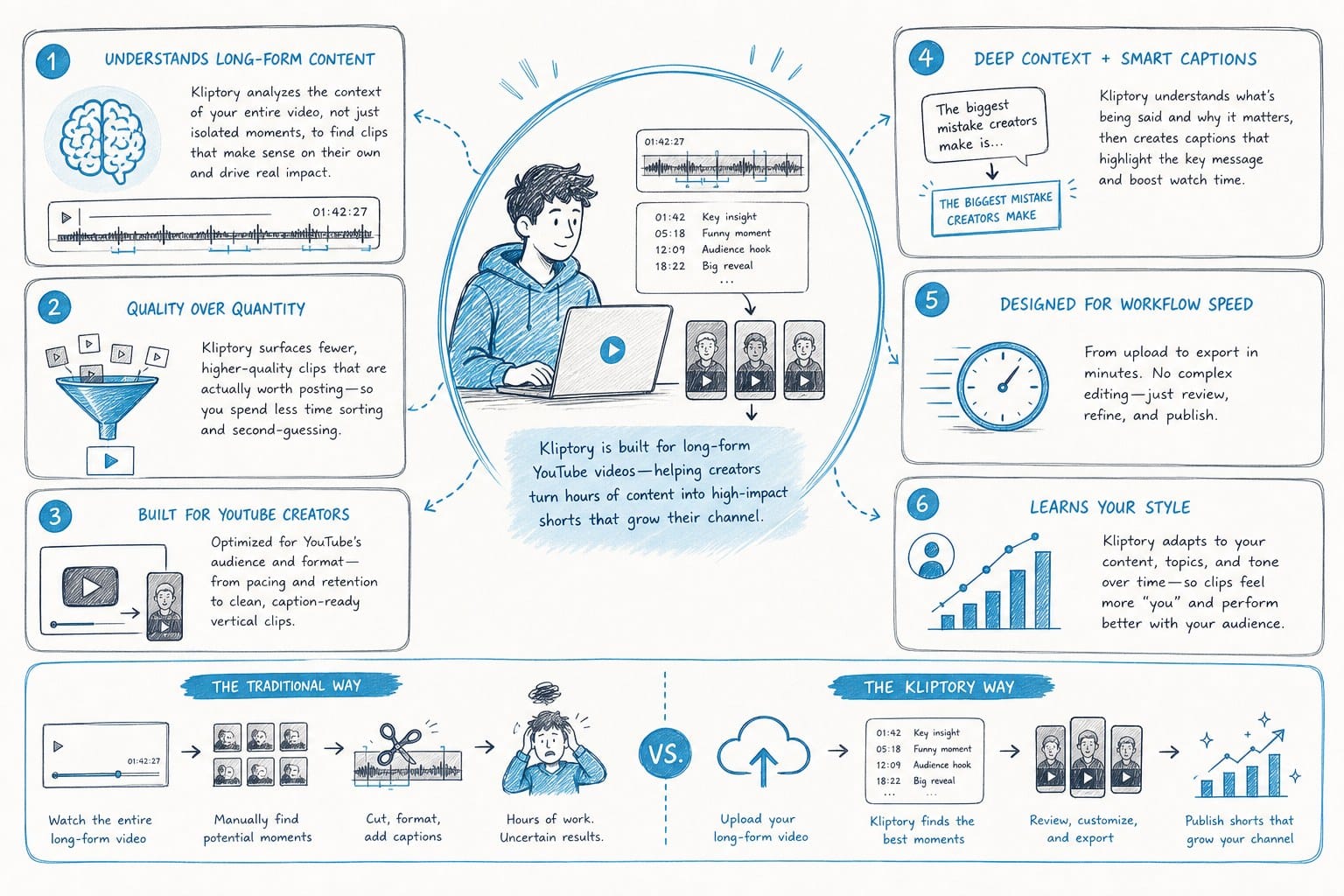
Kliptory is built from the ground up for one specific thing: producing long-form, documentary-style YouTube videos for faceless channels without needing a production team. That is not a marketing angle. It is a design decision that runs through every part of how the platform works.
Start with the scripting. Kliptory does not generate a generic outline and dress it up as a script. It produces full, detailed scripts designed for long-form video — the kind that actually guides a viewer through 20 or 30 minutes of content without losing them. If you are making a video about the rise of semiconductor manufacturing in Taiwan or the economic collapse of Venezuela, the script needs structure, transitions, and storytelling logic that sustains viewer attention across the full run time. Kliptory handles that. The output reads like something a research-driven writer put real time into, not like a chatbot answered a one-line prompt.
The scripting also handles pacing deliberately. Long-form YouTube content is not just information delivery. It is a narrative experience. A 28-minute video needs moments of tension and release, section breaks that feel natural, and language that adapts to what the viewer needs at each stage. A platform that generates a flat 2,000-word block of text has not solved that problem. Kliptory builds narrative structure into the script itself, which is what makes the editing and pacing of the final video feel intentional rather than mechanical.
Next is B-roll sourcing, and this is where a lot of AI video platforms completely fall apart. They either pull obviously irrelevant stock footage because a keyword matched, or they serve up the same clips that every other creator using the platform is already using. Kliptory matches B-roll to your script at a granular level. If the script is talking about shipping containers at the Port of Shanghai during the 2021 supply chain disruptions, the B-roll shows shipping containers at a port, not a generic aerial shot of a skyline. If the script is covering the drought conditions in the Horn of Africa, the footage reflects that specific context.
This matters more than it might seem on paper. B-roll is not decoration. It is evidence. It tells the viewer that the creator took the content seriously enough to find visuals that actually support the claims being made. When B-roll is clearly mismatched, it undermines the credibility of the entire video. When it is specific and relevant, it reinforces the viewer's trust and keeps them engaged with the information on screen.
Data visualizations are the next differentiator, and this is something almost no other platform does well at all. Maps, timelines, bar charts, animated population graphs, country-by-country breakdowns — these are the visual elements that make documentary-style content credible and watchable in niches like history, finance, geopolitics, and science. If you are making a video about population growth in Southeast Asia, you need a map that animates across decades. If you are covering the history of oil prices, you need a chart that shows the actual price movements. Static images of spreadsheets are not enough.
Kliptory builds these visualizations into the video automatically based on the content of the script. When the narrative calls for a timeline, the platform generates a timeline. When the script references economic data, the visualization reflects that data. This is not a minor feature. It is the difference between a video that looks like it was made by a production team and one that looks like it was assembled from a template.
Voiceover quality is the next piece. Kliptory offers AI narration that actually sounds like narration — natural pacing, appropriate tone, and delivery that fits the rhythm of long-form documentary content. The voices do not sound like a navigation system reading turn-by-turn directions. They sound like the kind of authoritative but accessible narration that audiences associate with quality YouTube content. Viewers who are not specifically listening for AI voice artifacts will not immediately clock it. That matters enormously when you are trying to hold someone's attention for 25 minutes.
Caption styling and editing round out the production pipeline. Kliptory handles both in ways that are designed specifically for YouTube long-form content. The captions are formatted for on-screen readability across an extended watch session. The editing holds pace with the script rather than running B-roll in a static loop while the voiceover drones on top of it. These are not glamorous features, but they are the ones that determine whether a video feels professionally made or slapped together.
The end result is a video that can genuinely compete with content made by small production teams — not because Kliptory cuts corners, but because it automates the right parts of the production process while keeping the creative and editorial logic intact.
For creators who want to go deeper on the production side of this, the article on how AI makes long-form YouTube videos faster to produce covers the specific workflow steps where automation saves the most time without sacrificing quality. It is worth reading before you make any platform decision, because it is honest about where AI genuinely helps and where human judgment still matters.
It is also worth reading why avatars video may not be what faceless creators actually need, because it addresses a misconception that leads a lot of creators to the wrong tools. Many creators assume that faceless content means using a digital avatar as the on-screen presence. It does not. The best-performing faceless channels in competitive niches rely on narration, B-roll, and data visualization — exactly what Kliptory is optimized to produce. Avatars are a different product solving a different problem.
One more comparison worth reading is the TubeMagic alternative for long-form YouTube creators article, which covers similar ground from a slightly different angle. If you have been evaluating multiple tools at once — which most serious creators do before committing to a platform — that article can help you sort out where different products fit in your workflow and what trade-offs each one asks you to make.
For creators who are trying to publish two to four long-form videos per month without burning out or hiring a team, Kliptory is built for exactly that workflow. You can move from a topic idea to a finished, publishable video in hours rather than days. That kind of speed matters when you are trying to maintain the publishing cadence that YouTube's algorithm rewards. It also matters when you are trying to run a channel as an actual business rather than a time-consuming side project.
Creators running channels in history, finance, technology, and geopolitics benefit most from this. These niches reward depth and production quality in a way that lower-stakes niches do not. Viewers in these spaces are sophisticated. They will click away from a video that looks cheap or sounds uninformed within the first two minutes. Kliptory helps you clear that production bar without the overhead of a traditional video production workflow.
Who should make the switch and how to evaluate your options honestly
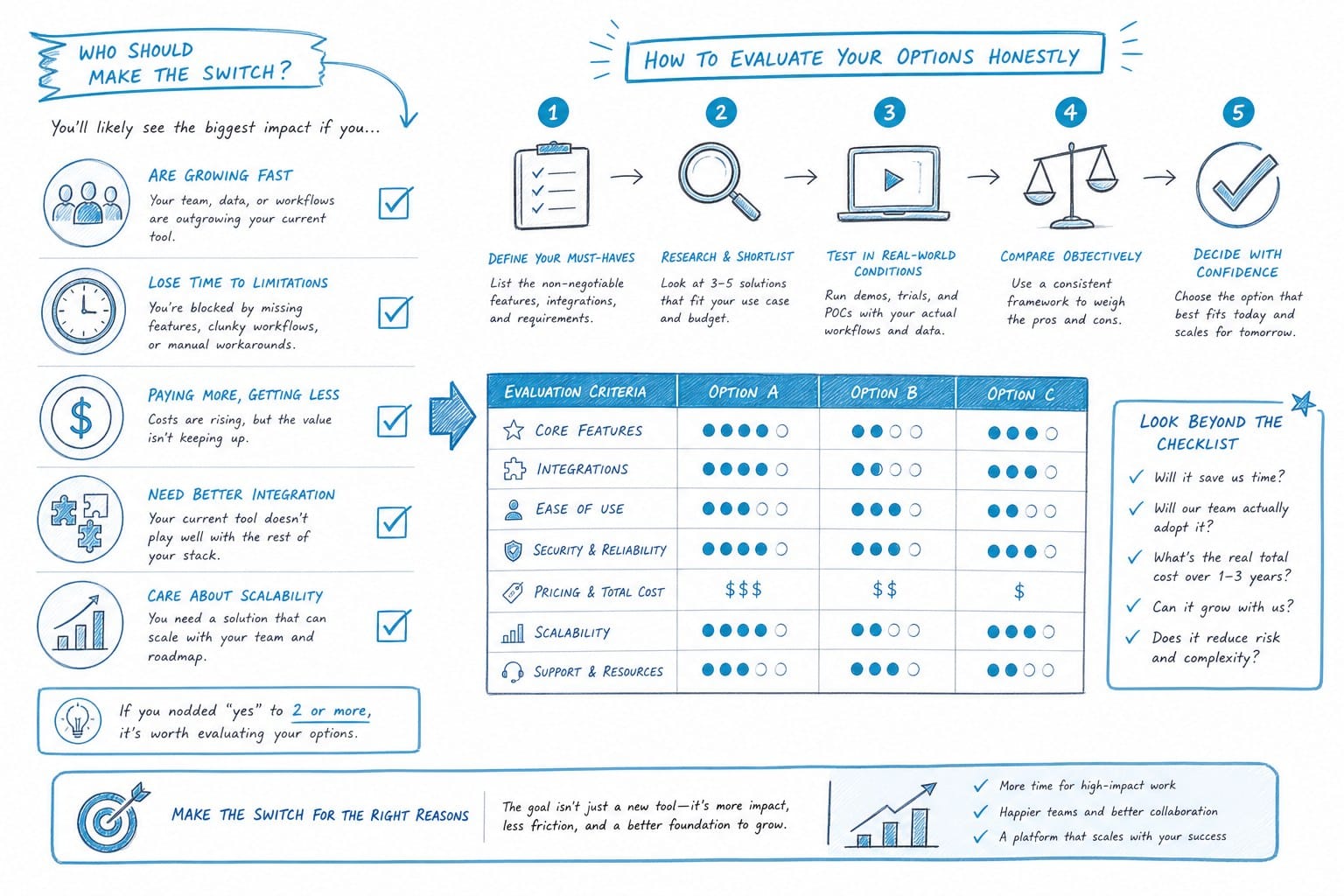
Not every creator needs to switch platforms. If you are making short product review clips, social content, or 60-second explainers, simpler tools might serve you fine. This section is for people who are genuinely considering Kliptory as a produce.so alternative and want to make an honest, grounded evaluation before committing.
Start with your average video length. If your content lives in the five-to-ten minute range and you are satisfied with what your current tool produces, the math looks different than if you are trying to make 20-to-40 minute documentary content. Kliptory is optimized for the longer end of that spectrum. The scripting logic, the B-roll matching, the data visualizations — all of it is designed for videos that need to sustain narrative attention over an extended viewing session. Using it for three-minute clips is like using a broadcast camera to shoot a grocery store selfie. It will work, but it is not what the tool is for.
Your niche matters just as much as your video length. Documentary-style channels covering history, science, geopolitics, true crime, finance, and technology are the clearest fit for Kliptory. These niches share a set of common demands: authoritative narration, visual evidence that supports factual claims, data that needs to be shown not just described, and structured storytelling that builds across a long run time. They also share an audience characteristic that is worth naming directly — viewers in these niches will sit through a 35-minute video if the quality justifies it. They have shown, repeatedly, that they are willing to invest real time in content that treats them as intelligent adults. Kliptory is built to produce content that meets that expectation.
Think honestly about your publishing cadence and what is limiting it. For most solo faceless YouTube creators, the bottleneck is not ideas or research. It is production time. Scripting takes a day. B-roll sourcing takes half a day. Voice recording or AI voice setup takes time. Editing takes a weekend. Captions take an afternoon. By the time a single 25-minute video is published, you have put 15 to 20 hours into it. If you publish once a month because that is all the production bandwidth you have, your channel growth is being throttled by the production process, not by your ideas or your niche.
YouTube rewards consistent publishing. The algorithm favors channels that post regularly, and compound interest on video libraries is real — older videos keep generating views and subscribers long after they go live, but only if you have enough of them. A creator who publishes two quality long-form videos a month will, over 12 months, have a library of 24 videos working for them around the clock. A creator who publishes once a month has half that library. The difference in channel growth is not linear. It compounds.
Kliptory is designed to make two-to-four long-form videos per month achievable for a solo creator without burning out. That is not a vague promise — it follows directly from what the platform automates. When the script, the B-roll sourcing, the data visualizations, and the initial editing are handled by the platform, you are left doing the work that actually requires your judgment: shaping the topic, reviewing the output, making creative decisions about framing and emphasis, and doing final quality checks before publishing. That is a fundamentally different relationship with production time than doing everything yourself from scratch.
For small media teams and agencies producing content for multiple channels, Kliptory shifts the team's time away from mechanical production work and toward higher-value creative decisions. Instead of having an editor spend three days on a single video, you use Kliptory for the heavy lifting and have human editors do final review and polish. That is a meaningful leverage ratio when you are running multiple channels simultaneously.
When you evaluate any produce.so alternative, including Kliptory, test it with a real project rather than just reading feature lists or watching demo videos. Pick a topic you would actually cover on your channel — something specific, not generic. Give the platform that topic and see how the script reads. Is it structured? Does it have a narrative arc, or is it just a list of facts in paragraph form? Does it sound like something your audience would actually watch?
Then check the B-roll. Is it relevant to the specific content of the script, or is it generic stock footage that happens to share a keyword? Check the voiceover. Listen to it all the way through for two or three minutes and ask yourself honestly whether your audience would stay. Look at the data visualizations if your topic involves any quantitative information. Are they clear? Are they accurate? Do they help a viewer understand the information, or do they just add visual noise?
Finally, look at the finished video as a whole. Compare it to what you are currently producing or to what you aspire to produce. The gap between your current output and what Kliptory produces tells you more than any feature comparison chart.
One thing to be direct about is the learning curve. Any new platform takes time to get comfortable with, and Kliptory is no exception. You will spend the first couple of projects figuring out how to give the platform the right inputs to get the best output. The scripting quality improves when you come in with a specific, well-defined topic rather than a vague prompt. The B-roll matching gets sharper when the subject matter is focused. Like any production tool, the quality of what you put in shapes the quality of what you get out.
That said, most creators report getting a usable, publishable long-form video out of Kliptory within their first or second project. The workflow is intuitive enough that you do not need a background in video production to get results. If you can write a clear topic brief and know what your audience expects, you can use Kliptory effectively from the start.
There is also a financial logic to this decision that is worth naming plainly. Faceless YouTube channels can be real, meaningful revenue sources. With the right niche and consistent publishing, these channels generate ad revenue, sponsorship income, and affiliate earnings. The faster you can produce quality content, the faster that revenue compounds. A platform that cuts your production time by 70 to 80 percent is not just a workflow convenience. It is a direct input into your channel's financial trajectory.
Creators who treat their faceless channel as a business — rather than a creative hobby that occasionally earns money — understand this intuitively. Every hour spent on mechanical editing tasks is an hour not spent on the next video, on channel strategy, on building audience relationships, or on identifying the next topic that is going to perform well in search. Time spent on production is time not spent on growth, and that trade-off compounds just as predictably as the publishing cadence does.
Kliptory is designed to break that bottleneck at its root. When you can produce a finished, high-quality long-form video in a few hours instead of a few days, the entire economics of running a faceless YouTube channel changes. You can test more topics. You can respond to trending subjects while they are still relevant. You can build a library of content faster. And you can do all of that without hiring editors, B-roll researchers, or scriptwriters.
That is the real case for making the switch — not just that Kliptory is a technically capable produce.so alternative, but that it is purpose-built for the exact workflow that serious faceless YouTube creators need in order to grow. If your current platform was built for short-form content and you are trying to use it for something else, you are already working against the tool rather than with it. The right platform does not just save you time. It makes the work you actually want to do feel possible.
Ready to take the next step?
If you are ready to stop spending a week on every single video and start producing documentary-quality long-form content at a pace that actually builds a channel, Kliptory is worth a serious look. Visit kliptory.com to see how the platform works and run your first project. You do not need a production team, a studio setup, or years of editing experience. You need a tool built specifically for what you are trying to do — and that is exactly what Kliptory is.