TubeMagic alternative for long-form YouTube creators

Table of contents
1. What TubeMagic is built for and where it stops short
2. How Kliptory handles the full production pipeline for long-form videos
3. Who should actually switch and what to expect
If you have been searching for a TubeMagic alternative, you are probably already doing long-form YouTube content or seriously planning to. You know that short clips are not going to build the channel you want. You are thinking about documentaries, deep-dive explainers, listicles that run 15 to 30 minutes, and video essays that actually hold an audience from start to finish.
The problem is that most AI video tools are built for something entirely different. They help you find trending keywords, generate short scripts, or paste an AI avatar onto a slide deck. That is useful for certain creators. It is not the workflow a serious long-form channel needs.
This post breaks down what TubeMagic actually does, where it stops being useful for long-form creators, and why Kliptory is worth a close look if your goal is publishing documentary-style videos without hiring a full post-production team.
What TubeMagic is built for and where it stops short
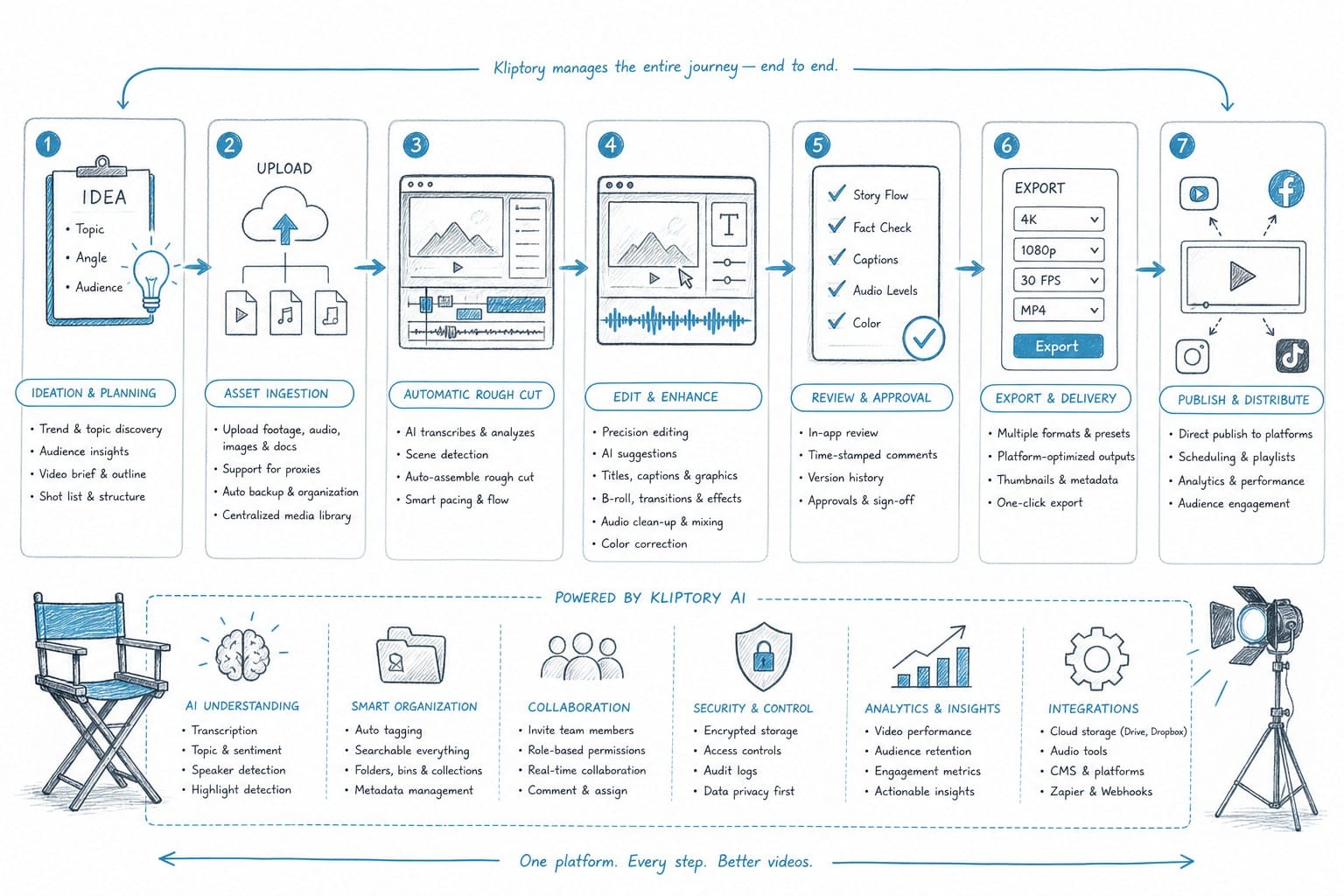
TubeMagic is primarily a YouTube research and ideation tool. It helps you find trending topics, analyze competitor channels, generate thumbnail concepts, and draft short-form scripts. Those are genuinely useful features, especially if you run a high-volume channel that needs a constant stream of content ideas and posts three or four times a week.
But research and ideation are only the first five percent of making a long-form video. After you have your topic locked in, you still need a full script that runs 3,000 to 8,000 words. You need a voiceover that sounds natural and holds attention across 20 or 30 minutes. You need B-roll footage that actually matches what the narrator is saying at each moment. You need captions, chapter markers, smooth transitions, data visualizations when the topic calls for them, and a final edit that does not feel like a slideshow someone stitched together in an afternoon.
TubeMagic does not do most of that. It gets you to the starting line, and then you are on your own.
For creators running short explainer channels with three to five minute videos, that gap is manageable. Write a tight script, record a quick voiceover, drop in some stock footage, and publish the same day. The research workflow TubeMagic provides fits neatly into that kind of production schedule.
For long-form creators, the gap is enormous. A single 20-minute documentary-style video might take a solo creator anywhere from 30 to 50 hours of work spread across scripting, sourcing footage, recording or generating voiceover, editing, color correction, caption creation, chapter markers, and thumbnail design. A research tool does not close that gap. It cannot. You need something that actually handles production, not just the brainstorming that comes before it.
That is the real reason creators start searching for a TubeMagic alternative. They are not trying to do less research. They are trying to stop spending 40 hours on every video after the research is done.
There is another limitation worth naming directly. TubeMagic's output is entirely text-based. It gives you ideas and draft scripts, but it does not produce actual video. For faceless channels in particular, this means you are rebuilding your entire visual layer from scratch every single time. You are hunting for stock footage on one platform, generating voiceover on a second, editing on a third, and adding captions on a fourth. Managing four or five separate tools for every video is slow, error-prone, and genuinely exhausting when you are trying to publish consistently.
I also want to address the AI avatar question here, because a lot of creators run into avatar tools when they start looking for alternatives. An AI avatar reading a script is not a documentary. It is a presentation. If you are building a faceless channel around history, geography, science, true crime, personal finance, or any topic that benefits from rich visual storytelling, a synthetic face on screen is not the right format. Audiences watching long-form content on subjects they care about want visuals that match and deepen the story they are hearing, not a digital talking head reciting text.
You can read more about why this matters in this post on why faceless channels win without an AI video avatar. The short version is that the format succeeds because the visuals serve the content, not because there is a face to identify with.
So if TubeMagic gives you ideas but not production, and avatar tools give you a face but not a documentary, the long-form creator is left holding a significant problem. That is exactly the gap Kliptory was designed to fill.
It is also worth thinking about the cumulative cost of that gap over time. A creator who spends 40 hours producing one 20-minute video will publish roughly one video every two to three weeks if they have any other obligations. At that pace, it takes two years to build a library of 30 to 40 videos. A creator who can produce the same quality video in six to eight hours can publish two or three times a week and build that same library in three months. The difference in channel growth over a 12-month period is not marginal. It is the difference between a channel that gains real momentum and one that stalls because the creator burns out before the algorithm starts rewarding them.
Research tools like TubeMagic are valuable when production is fast. When production is slow, no amount of better topic selection makes up for the bottleneck. The constraint is not ideas. It is the 35 hours between having an idea and publishing a finished video.
How Kliptory handles the full production pipeline for long-form videos
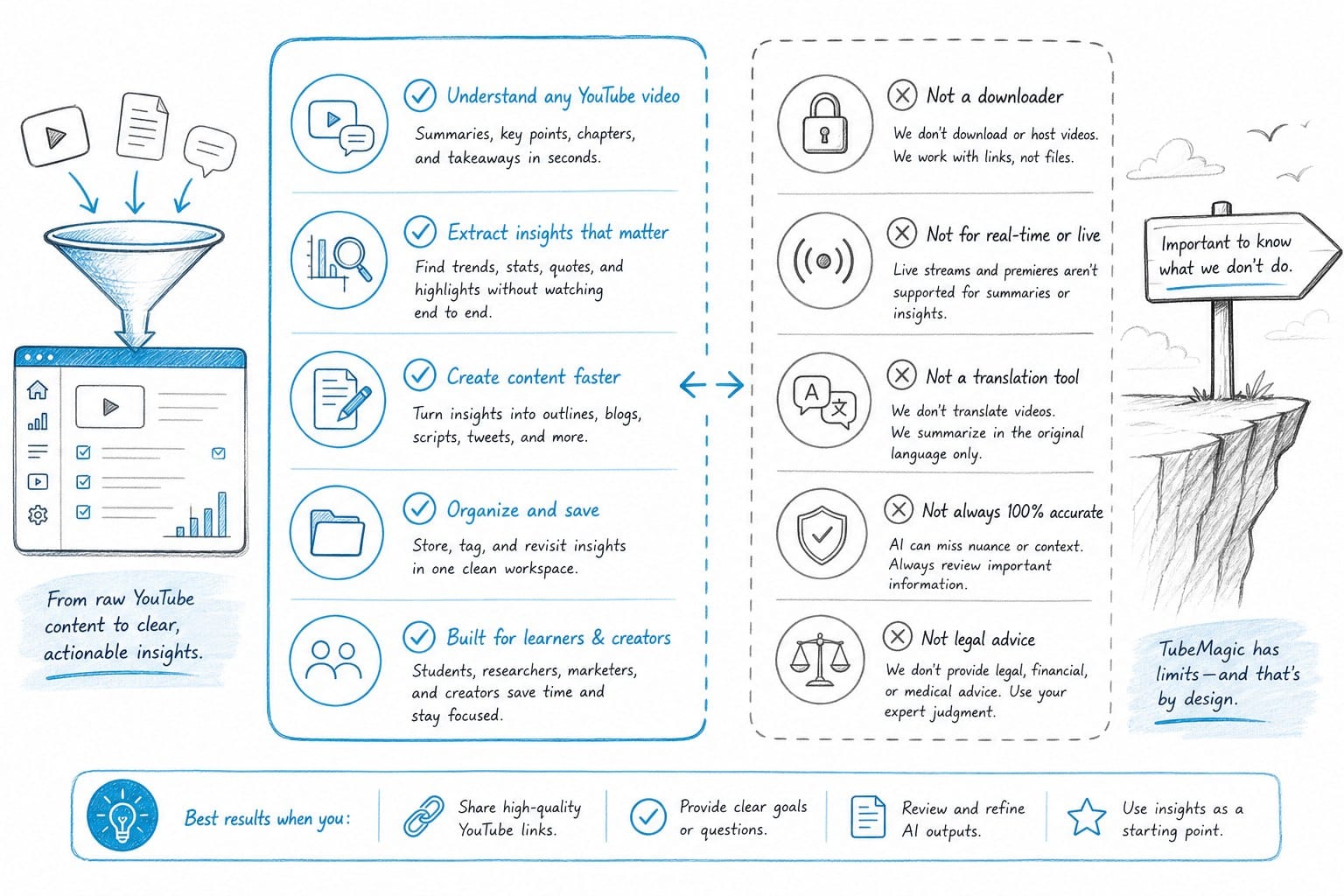
Kliptory is an AI-powered production platform built specifically for faceless YouTube channels that want to publish long-form content on a consistent schedule. The platform automates the full process from script to finished video, which means you can move from a topic idea to a publishable documentary-style video in hours rather than days or weeks.
Here is what that actually looks like across each stage of production.
Scripting
The scripting phase is where a lot of solo creators lose momentum first. Writing an 8,000-word script for a 40-minute documentary is a serious undertaking even for experienced writers. You have to structure the argument or narrative logically, keep the pacing tight throughout, write for the ear rather than the eye, make sure each section transitions naturally to the next, and leave room for visuals to carry part of the story. That takes real skill and significant time.
Kliptory generates these scripts at scale, and because the platform is built around long-form structure, the output is not a padded blog post read aloud. It is an actual video script with scene-level thinking built in. The narration is written to move, not just to inform. For a solo creator who is not a professional scriptwriter, that difference in output quality is significant.
For creators who do want to write their own scripts, the platform still handles everything downstream. You bring the words. Kliptory handles the rest.
Voiceover
A flat, robotic AI voice is one of the fastest ways to lose viewers in the first 60 seconds of a long-form video. If the voice sounds synthetic or monotonous at minute one, most people are gone before minute three. Kliptory generates voiceover that sounds natural and consistent across the full length of the video. That consistency matters a lot when you are producing 20 or 30 minutes of continuous audio. You are not stitching together clips that shift in tone or pacing or suddenly sound like a different voice entirely.
This is also where the integrated pipeline starts to show its advantage over assembling separate tools. When the script generation and voiceover generation happen inside the same platform, the voice timing and the script structure are aligned from the start. You are not importing a script into a separate voiceover tool, downloading the audio, then reimporting it into your editor and discovering the timing is off in six places.
B-roll sourcing
Finding B-roll is one of the most time-consuming and frustrating parts of long-form production for solo creators. You need footage that actually matches what the narrator is saying at each moment in the script. It needs to be legally cleared for commercial use, which rules out a large portion of what you can find with a quick search. It needs to look good enough to hold a viewer's attention across a video that runs 20 to 40 minutes. And you need a lot of it, because a long-form documentary might use 200 or more distinct B-roll clips across its runtime.
Manually sourcing that footage from stock libraries means searching, previewing, downloading, organizing, and then placing each clip in your editor against the voiceover timeline. For a single video, this process can easily take eight to ten hours.
Kliptory handles B-roll sourcing automatically by pulling relevant footage that fits the content of each section, rather than requiring you to search stock libraries manually. This single feature alone saves a meaningful number of hours per video for most creators who have been doing it by hand.
Data visualizations
This is a feature most video tools ignore entirely, and it is a meaningful differentiator for certain categories of content. If you are producing videos about geography, history, economics, demographics, science, or any other topic where data tells part of the story, you need maps, timelines, charts, and other visual elements that static stock footage cannot provide.
A video about population migration patterns needs a map that shows movement over time. A video about the history of a financial crisis needs a timeline that puts events in sequence. A video comparing economic outcomes across countries needs a chart. These are not optional nice-to-haves. They are the visual layer that makes the content clear and keeps viewers engaged rather than confused.
Kliptory generates these data visualization elements as part of the production process. This opens up an entire category of content that would otherwise require motion graphics software, a working knowledge of tools like After Effects, and either significant learning time or money paid to a designer. For solo creators, that barrier has historically meant skipping those visuals entirely or producing something that looks underdone. That is no longer the constraint.
Captions
Captions are not optional for any serious YouTube channel. A large share of YouTube viewers watch with the sound off, particularly in the first few seconds of a video when they are deciding whether to keep watching. YouTube's algorithm also factors in viewer retention signals that are directly affected by whether viewers can follow the content without audio. Captions help viewers stay engaged longer, and longer watch time improves search and recommendation performance.
Kliptory adds captions automatically as part of the production process. This is not a small thing. Manually captioning a 20-minute video takes one to two hours in a caption editor if you are doing it carefully. At two videos a week, that is two to four hours per week spent on a task that adds no creative value and could be automated. Over a year, that is 100 to 200 hours of caption work that Kliptory eliminates.
Final assembly and editing
The editing layer is where everything comes together, and it is also where the most hours go in traditional production workflows. Importing assets, placing B-roll clips against the voiceover timeline, trimming sections that run too long, adding transitions, and reviewing the full cut for pacing problems is a multi-session project for most solo creators. A 20-minute documentary might require four to eight hours of editing work after all the other production is done.
Kliptory assembles the video. The output is a finished product you can review and publish, not a rough assembly you still need to spend half a day cleaning up. The platform is not handing you a stack of assets and a timeline. It is handing you a video.
What integrated production actually means at scale
For creators who have been managing five different tools to produce each video, this kind of integrated pipeline represents a qualitative shift, not just a time saving. You are not just moving faster through the same steps. You are removing the coordination overhead that comes from managing separate subscriptions, separate file formats, separate exports and imports, and separate workflows for every project.
The scale question matters here too. Creators who build large faceless YouTube channels do so by publishing consistently, often one to three times a week. That schedule is not achievable for most solo creators when each video requires 40 hours of manual production. When you bring that production time down to five or six hours, publishing consistently becomes realistic without burning out or hiring additional people.
Small media companies and agencies face the same problem at higher volume. If you are producing 20 videos a month across multiple channels, the math on manual production does not work past a certain point. You either hire more editors and researchers, or you find a production platform that scales with the work. Kliptory is built for both the solo creator trying to go from one video a month to four, and the small team trying to go from ten videos a month to thirty without doubling their headcount.
One thing worth saying plainly: the goal of automation here is not to produce cheap-feeling AI content as fast as possible. The goal is to produce documentary-style videos that look and sound professional, hold viewer attention for 20 to 40 minutes, and build an audience that comes back for more. The platform is designed for that standard of output. Creators who are looking to spin up low-effort content at high volume are solving a different problem.
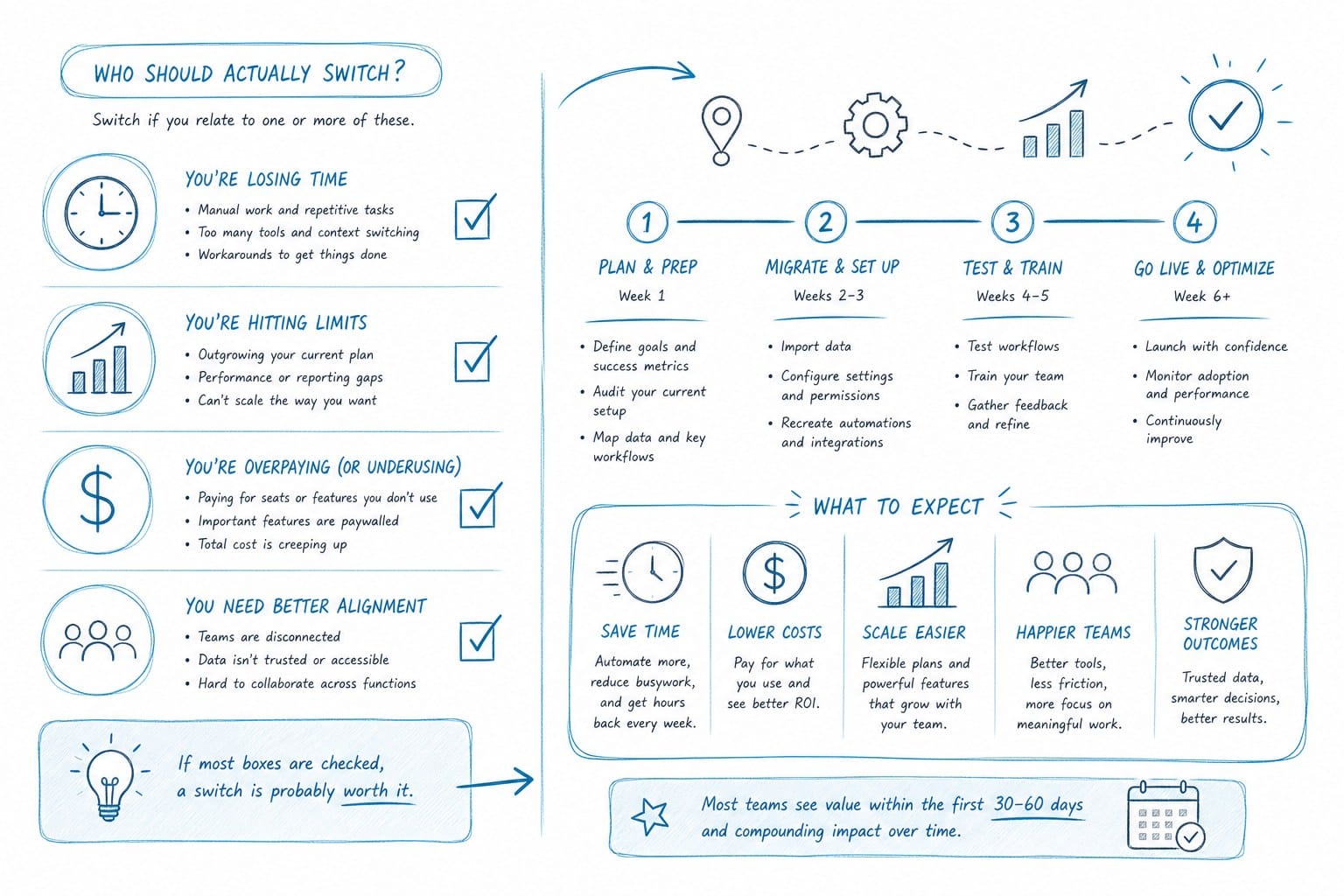
Who should actually switch and what to expect
Not every creator needs to move away from their current tools. If you are producing short-form content, running a talking-head channel, or monetizing primarily through sponsorships that require your face on camera, a research-focused tool that helps with ideation and keywords is probably doing its job. You might not have a production bottleneck at all.
But if any of the following describes where you are right now, it is worth taking a serious look at Kliptory as your TubeMagic alternative.
You are running a faceless channel or planning to start one.
Faceless channels built around documentary-style content are one of the most proven formats on YouTube. Topics like history, geography, true crime, science, personal finance, technology, and geopolitics consistently attract large audiences and perform well in both search and recommendations over time. These channels succeed because the content is genuinely useful or interesting, and the production quality supports extended watch time. You do not need a face on camera for any of it. You do need a production workflow that can keep up with a real publishing schedule.
If you have been hesitant about the faceless channel format because you assumed it required expensive software, a recording studio, or a team of editors, it is worth reading more about how this format actually works. This post on why avatars video may not be what faceless creators actually need goes deeper into why documentary-style faceless content succeeds on its own terms, without any of those things.
You are producing long-form content in the 10 to 40 minute range.
Below about 10 minutes, production overhead is manageable with standard tools. Above 10 minutes, the complexity and time required grow fast. Scripts get much longer. B-roll requirements increase significantly. Voiceover takes more careful management. Editing becomes a multi-session project rather than a single afternoon. That 10 to 40 minute range is exactly where an integrated production platform starts to pay for itself in time saved on every single video.
Creators in this range who are currently spending 30 to 50 hours per video are spending the equivalent of a full work week on production for every piece of content they publish. That is not sustainable unless you have no other obligations or a team behind you. Most solo creators in this situation either burn out, slow their publishing frequency to something that prevents real channel growth, or both.
You are a solo creator or small team with limited post-production capacity.
If you do not have a dedicated video editor, a motion graphics person, and a research assistant, you are doing all of those jobs yourself on top of topic research, scripting, and channel strategy. That is genuinely a lot of roles for one person to fill, and none of them can be done poorly without it showing in the final video.
Kliptory is built to replace that extended team for the specific workflow of long-form faceless YouTube content. You handle topic selection, strategic decisions, and review. The platform handles the production.
You want to publish documentary-style videos without learning professional video editing software.
Premiere Pro and DaVinci Resolve are powerful tools. They are also applications with steep learning curves that take real time to use effectively even once you know them. A beginner can spend 200 hours developing basic editing competency in either application before producing work that looks professional. If your goal is to build and grow a YouTube channel rather than to become a skilled video editor, that 200 hours is not the best investment of your time. Kliptory lets you focus on content strategy, topic research, and distribution while the platform handles production execution.
You are treating YouTube as a business, not a hobby.
For digital entrepreneurs monetizing YouTube through AdSense, affiliate revenue, digital products, or services, time is the critical resource. Every hour spent on manual production is an hour not spent on channel growth, additional revenue streams, audience research, or content strategy. The economics of automated production for this group are direct: more content, published more consistently, builds a larger library faster, which drives compounding returns from search and recommendations over time.
A creator publishing two quality 20-minute documentaries per week will always outpace a creator publishing one every three weeks because production is bottlenecking them. The performance gap between those two channels at the 12-month mark is not incremental. It is the difference between a channel with 80 or more videos that the algorithm is actively surfacing and a channel with 15 or 20 videos still trying to gain its first real foothold.
What to expect when you start
The learning curve with Kliptory is real but manageable. You will spend some time early on understanding how to give the platform the context it needs to produce scripts that match your channel's specific angle, tone, and audience. The first few videos will involve more review and adjustment than videos you produce after you have developed a sense of what inputs produce the results you want.
Expect to treat the first two or three videos as a calibration period rather than finished work. Most creators find that output quality improves noticeably once they understand how to frame their topic briefs, what level of specificity to provide, and how their channel voice should be reflected in the instructions they give the platform.
You should also expect that strategy and editorial thinking remain your job even though production is automated. Kliptory handles how the video gets made. The what and the why are still decisions that require human judgment. Choosing topics that have genuine search demand, structuring a series that keeps viewers returning across multiple videos, and deciding which angle on a subject will resonate with your specific audience are not things automation replaces. They are the work that separates channels that grow from channels that stall, and they are where your time is best spent once production is no longer the bottleneck.
The long game
YouTube channels that build large audiences over time do so because they publish consistently, improve their craft with each video, and build a library of content that compounds in search performance and recommendations across months and years. A creator who produces two high-quality 20-minute documentaries per week will build that library in a fraction of the time it takes a creator whose production workflow limits them to one video every few weeks.
The math on automated production is ultimately about giving yourself the conditions to win over time. Not just saving hours on the next video, but creating a sustainable workflow that lets you publish at the frequency required for real channel growth without burning out six months in.
A tool that helps with research but leaves 90 percent of the work to you does not solve that problem. A platform that handles the full production pipeline does. If you are a long-form faceless creator and you are currently the bottleneck in your own workflow, that is the most important thing to fix. Everything else about channel strategy, audience building, and monetization gets easier once you can publish consistently without the process exhausting you.
Ready to take the next step?
If you are ready to stop losing weeks to manual production and start publishing long-form documentary-style videos on a consistent schedule, take a look at what Kliptory can do for your channel. Visit kliptory.com to learn more about how the platform works and what kinds of channels it is built for.