How to make money with AI-generated YouTube videos


Table of contents
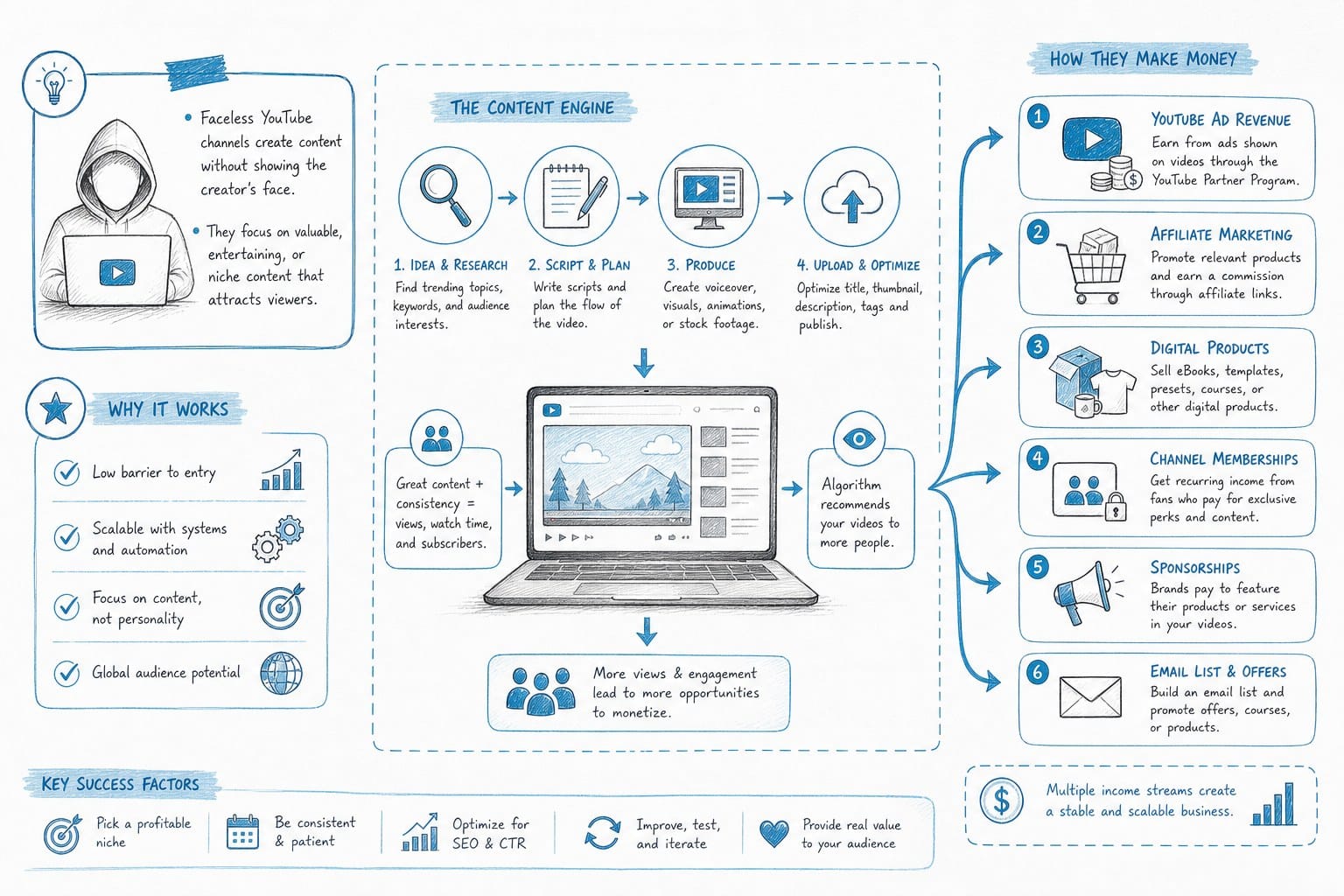
1. Understanding how faceless YouTube channels make money
2. Choosing a niche and building an AI-powered production workflow
3. Growing the channel and scaling revenue over time
A few years ago, running a profitable YouTube channel meant buying camera gear, learning to edit, and spending dozens of hours a week in front of a screen. That model still works, but it is no longer the only one. Today, creators are building faceless channels around AI-generated content and earning real money doing it. If you want to make money with AI-generated YouTube videos, this guide breaks down exactly how the business model works, what it realistically takes to earn consistent income, and the tools that make it practical for one person without a production team.
Understanding how faceless YouTube channels make money
Before jumping into tools and tactics, it helps to understand the business model clearly. A faceless YouTube channel is one where no presenter appears on camera. Instead, each video combines a voiceover narration with stock footage, animated visuals, captions, and background music. The creator stays completely off screen. This format works especially well for documentary-style content, educational explainers, listicles, historical topics, geography breakdowns, true crime, and personal finance.
The most direct revenue source is the YouTube Partner Program, which pays creators based on ad revenue. YouTube pays per thousand views, a figure called CPM, or cost per thousand impressions. CPM varies widely by niche. Finance and investing channels can earn $15 to $40 per thousand views in strong quarters. Entertainment and general interest channels often fall in the $2 to $8 range. A channel publishing consistently in a high-CPM niche can generate meaningful income without massive view counts.
Think about what that math means in practice. A finance channel averaging 100,000 views per month at a $20 CPM earns around $2,000 from ads alone. A general entertainment channel at the same view count might earn $400. The niche choice matters more than raw audience size, especially early on.
Beyond ad revenue, faceless channels branch into sponsorships, affiliate marketing, and digital product sales. A personal finance channel might recommend a budgeting app and earn a commission on each signup. A history channel might sell a companion ebook or link to relevant books on Amazon. These income streams compound over time because older videos keep pulling views, and every new video adds to a growing library that works around the clock.
The channel does not need to be famous to be profitable. Many creators running niche channels with 50,000 to 200,000 subscribers earn more per month than creators with millions of followers in lower-CPM categories. The math rewards focused content in the right niche more than raw subscriber numbers.
What makes this model genuinely different right now is that AI tools have removed the production bottleneck that used to require a team. Traditionally, a single 15-minute video might take 20 to 40 hours to script, record, edit, caption, and publish. AI-assisted workflows can cut that timeline dramatically, which means one creator can publish more videos per week and grow a library faster. More videos published consistently means more chances for search traffic, more impressions, and more compounding income over time.
That word consistently is doing real work here. YouTube rewards channels that post on a reliable schedule. Channels that go quiet for weeks lose momentum in the algorithm, and rebuilding that momentum takes longer than most people expect. That is exactly why production speed matters so much. If producing one video takes two weeks, posting consistently enough to grow becomes nearly impossible. If AI tools reduce that to a few hours per video, posting two or three times a week becomes realistic for one person.
I want to be direct about one more thing before moving on. The money is real, but it is not instant. Most channels take six to twelve months of consistent publishing before they hit Partner Program thresholds or attract meaningful sponsorship offers. The creators who succeed treat this like building a small media business, not a passive income experiment. AI tools accelerate the production work, but the strategy still requires patience, smart niche selection, and editorial judgment. The tools do not replace the thinking.
Choosing a niche and building an AI-powered production workflow
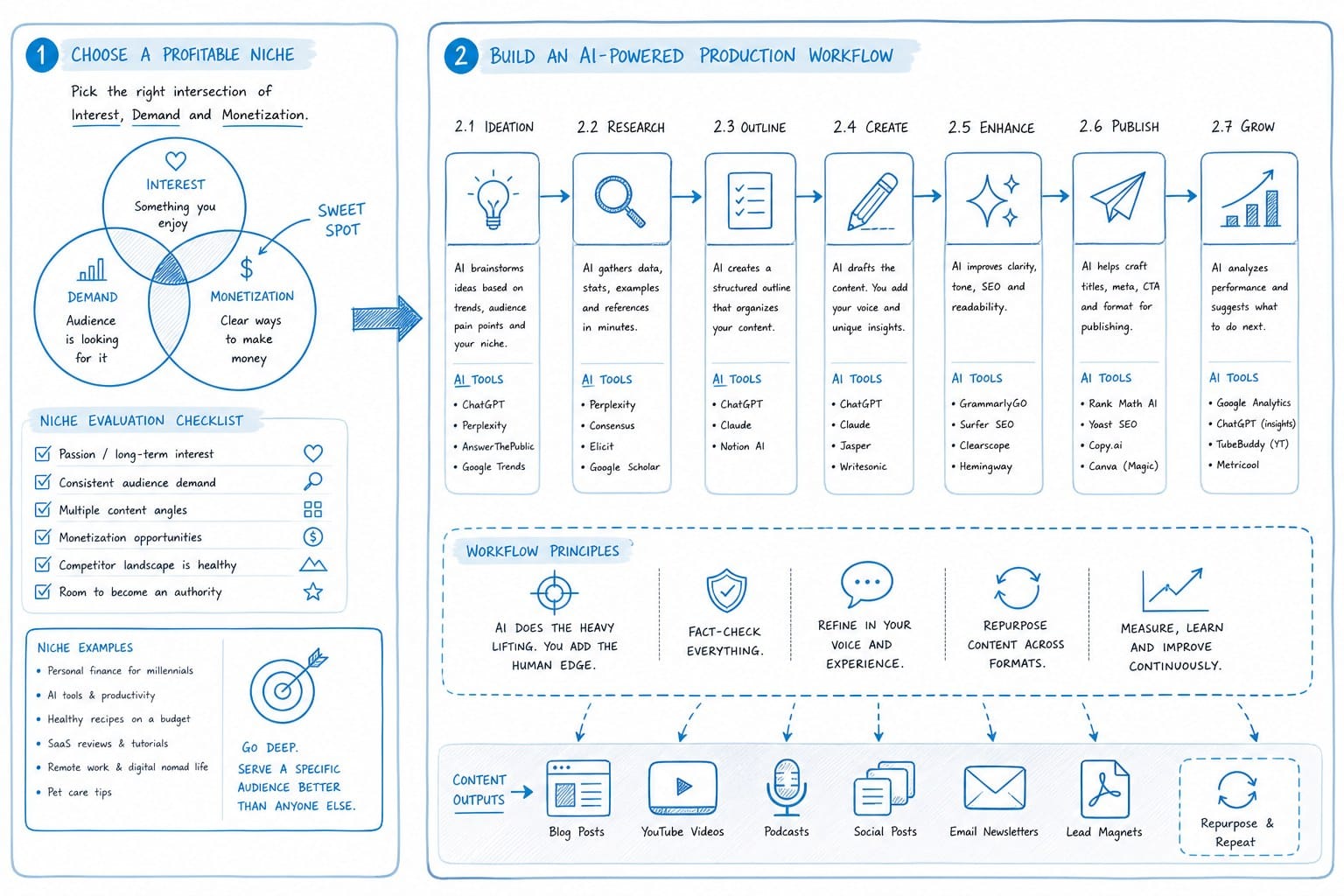
Niche selection is the first decision that shapes everything downstream. The right niche has three qualities: strong and consistent search demand, above-average CPM, and enough topic depth to support hundreds of videos without running out of angles. Geography and history, personal finance, world events explained for general audiences, science and space, true crime, and economics all check those boxes. Broad entertainment categories like reaction content or gaming commentary are harder for faceless channels because they tend to depend heavily on personality and live commentary.
A useful exercise before committing to a niche is to open YouTube and search your topic with the filter set to show videos from the past year. If dozens of channels with hundreds of thousands of views are covering the space, there is demand. If the top results are years old and have modest view counts, the audience may be too small to build on.
Once you have a niche, the next step is building a repeatable production workflow. This is where AI tools shift the economics of the whole operation. A standard faceless video has six core components: a script, a voiceover, B-roll footage, visual assets like charts or maps, captions, and a final editing pass. Doing each of these manually is time-consuming even if you have the skills. AI tools now handle every one of these steps.
Scripting is usually the first step creators try to automate. AI writing tools can generate a structured long-form script in minutes when given a clear topic and a basic outline. The important thing is to treat that output as a first draft, not a finished product. Reading through and adjusting the script to match your channel's voice takes 15 to 30 minutes but makes a measurable difference in how the video lands. A script that sounds like every other AI-generated video on the platform will not hold viewer attention past the first two minutes.
One practical approach is to prompt the AI with a specific angle rather than a broad topic. Instead of asking for a script about the Roman Empire, ask for a script about the three economic decisions that accelerated Rome's collapse. Specific angles produce more focused scripts, and focused scripts produce videos with better watch time.
Voiceovers are the next component. AI voice tools have improved sharply over the past two years. The best ones now carry natural pacing, emphasis, and tone variation that would have sounded robotic just a few years ago. For faceless channels, an AI voiceover removes the need to record yourself and eliminates the audio quality problems that come with most home recording setups. Voice clarity and pacing variation matter more than whether the voice sounds perfectly human. A voice that rushes through dense historical information or never varies its emphasis loses viewers quickly, regardless of how good the script is. For a deeper look at picking the right AI voice for your channel style, this article on AI voiceover for YouTube videos: best tools for faceless channels walks through the key considerations.
B-roll is the footage that plays under the narration. For a documentary about ancient Rome, that means historical illustrations, aerial shots of Italian landmarks, close-ups of artifacts, and animated maps showing territorial expansion. Sourcing this manually used to mean hours searching stock footage libraries and downloading clips one at a time. AI-powered platforms now automate B-roll matching by analyzing the script and pulling relevant clips automatically, cutting what used to be a multi-hour task down to minutes.
Data visualization is one area where faceless channels most often fall short, and where the payoff for doing it well is clearest. Viewers respond strongly to animated maps showing troop movements, charts illustrating economic trends over time, and timelines placing events in context. These visuals make complex information easier to follow and give videos a production value that keeps viewers watching longer. Watch time is one of the clearest signals YouTube uses when deciding which videos to recommend. A video with strong data visuals holds attention better than one relying entirely on generic stock footage. If you want to understand how to create these visuals without any design background, this guide on data visualization for YouTube videos: auto-generate maps, charts, and timelines with AI covers the process in practical terms.
Captions matter more than most new creators expect. A large portion of YouTube viewers watch with sound off, especially on mobile. Accurate, well-timed captions keep those viewers engaged instead of scrolling past. YouTube's built-in auto-captions are often inaccurate, particularly with names, places, and dates, which are exactly the details that matter most in documentary content. AI captioning tools that generate captions from the original script produce cleaner results and sync more reliably to the audio.
Once all the components exist, the editing pass assembles them into the final video. This traditionally required learning software like Premiere Pro or DaVinci Resolve, both of which have steep learning curves. For creators without that background, AI editing tools that automate cuts, sync audio to visuals, and apply consistent formatting make the final assembly much faster. The goal is not perfection on the first edit. It is a clean, watchable video produced efficiently enough that you can repeat the process several times a week.
Kliptory brings all of these steps into a single platform built specifically for faceless long-form channels. Instead of managing five or six separate tools and manually transferring files between them, you work through one workflow that handles scripting, voiceover generation, B-roll sourcing, data visuals, captioning, and editing in sequence. The platform is built around documentary-style content that runs five to forty minutes, which is exactly the format that performs well in high-CPM niches. That focus matters because a general video editor and a specialized long-form documentary tool are genuinely different products with different tradeoffs.
If you are running this as a solo operation and want to understand the full picture of scaling output without adding staff, this piece on how to scale a YouTube channel without hiring editors covers the operational side in depth.
A practical weekly workflow might look like this. On Monday, you spend 30 minutes researching three video topics using keyword tools and YouTube search data. On Tuesday, you generate and review scripts for all three, adjusting for voice and accuracy as you go. On Wednesday, you run all three through the AI production platform. Thursday is for thumbnail creation and scheduling uploads. By Friday, three videos are queued to publish across the following week. That production pace was genuinely out of reach for one person a few years ago. It is achievable now.
Growing the channel and scaling revenue over time
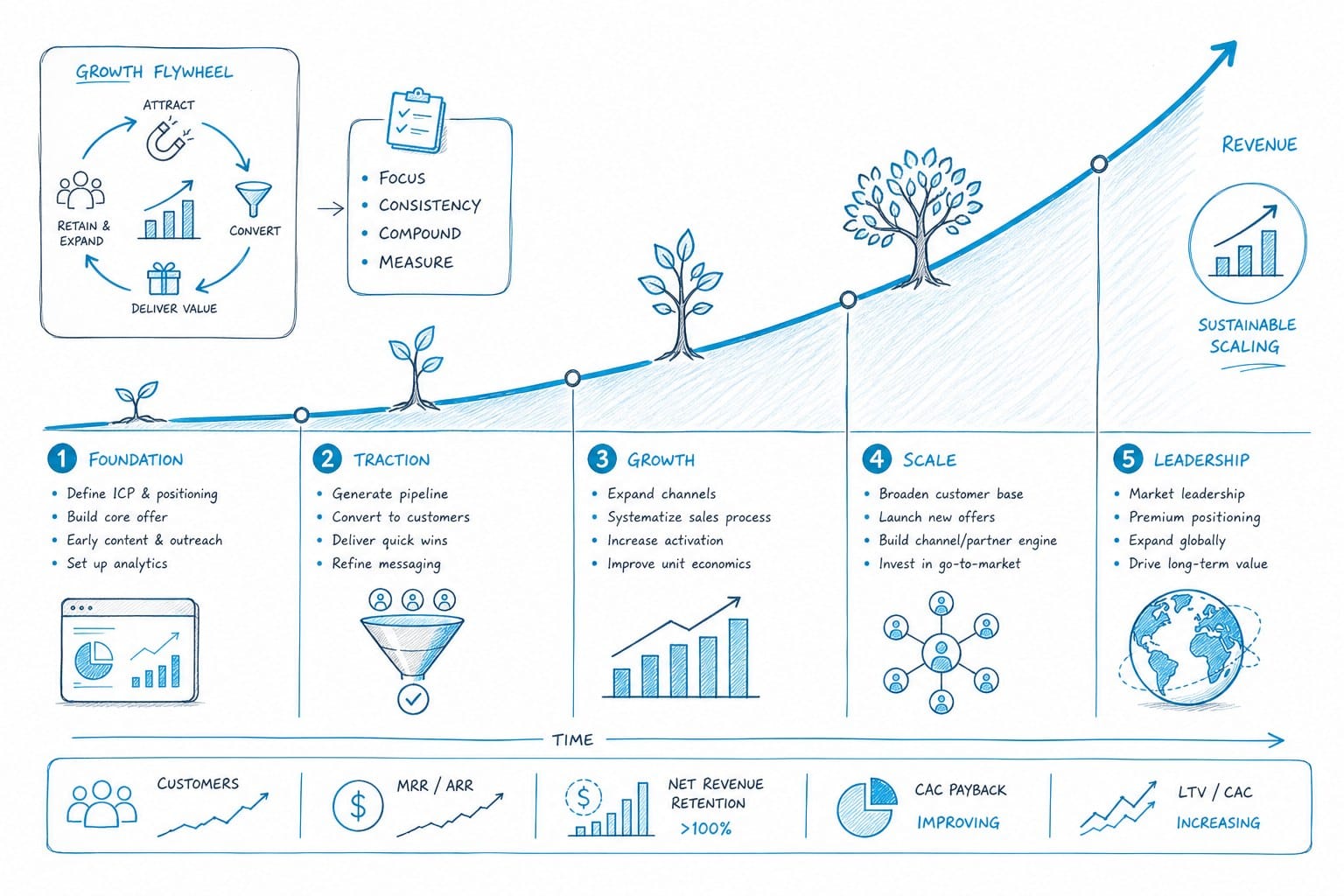
Publishing consistently gets you into the game. Growing revenue requires thinking about the channel as a compounding asset. Every video you publish becomes a permanent piece of searchable content. Videos built around evergreen topics, things people will still be searching for in five years, keep pulling views and ad revenue long after their publish date. A video about the causes of World War One, the psychology of compound interest, or how the Panama Canal was built does not expire. It sits in search results, gets clicked month after month, and earns ad revenue without any additional work.
This is one of the clearest arguments for long-form content over short-form clips. A ten-minute video generates more ad impressions per view than a one-minute short. It also holds viewer attention longer, which improves watch time metrics and tells YouTube that the content is worth recommending to more people. When you can produce ten-minute documentary-style videos in a few hours using AI tools, the case for long-form becomes even stronger from a revenue-per-hour-worked perspective.
The path to YouTube Partner Program eligibility requires 1,000 subscribers and 4,000 hours of watch time in the past twelve months. Those numbers look large when a channel is new, but channels posting several times a week in a focused niche typically reach them in four to eight months. After that, ad revenue starts flowing. The first months after monetization will be modest, maybe $50 to $300 per month depending on view volume and niche. As the content library grows and the channel builds authority in its category, monthly revenue rises steadily. The library effect is real: a channel with 200 videos earns more from its back catalog than a channel with 20 videos publishing the same number of new videos per week.
Once ad revenue is stable, the next step is layering in other income streams. Affiliate marketing fits naturally into educational and finance channels. If your channel explains investment strategies, you can recommend a brokerage platform and earn a commission when viewers sign up. If your channel covers travel history, you can link to travel booking tools, language learning apps, or relevant books. The affiliate income does not require extra video production. You add relevant links to descriptions and mention them naturally in the script where they fit.
Sponsorships become available as the channel establishes a track record. Brands pay for dedicated mentions in videos that reach their target audience. Finance channels, business channels, and technology channels attract sponsors willing to pay $500 to $5,000 per integration for mid-sized channels with engaged viewers. Getting there requires consistent uploads and a clear audience profile that you can present to potential sponsors in a straightforward media kit. Many channels start landing small sponsorships around the 10,000 to 30,000 subscriber range if the niche is commercially valuable.
Memberships and digital products are the third income layer many successful faceless channel creators eventually add. A channel about economics might sell a detailed research report on a topic their audience cares about. A history channel might offer a paid community where members get early access to videos and bonus content. These products convert a percentage of loyal viewers into paying customers, and because the audience is already engaged with the channel's format and perspective, conversion rates can be surprisingly strong even on small channels.
Quality control is worth addressing directly here, because it is where many AI-powered channels fail. There is a version of this content that performs poorly: low-effort scripts that restate obvious information, generic stock footage that has no connection to the narration, voiceovers with flat delivery that never change pace, and no visual variety to break up long segments of talking. That content bores viewers, tanks watch time, earns low ad rates, and gets suppressed by the algorithm quickly. The creators earning consistent income with AI-generated content treat the tools as accelerators for their production process, not substitutes for editorial judgment.
The difference shows up most clearly in the research and scripting stage. A channel covering world history that uses AI tools well will still spend time finding specific angles viewers have not heard explored before, verifying historical details for accuracy, and structuring the narrative so it builds toward something. The AI handles the production work. The creator still brings the perspective, the angle, and the decision about what makes a topic worth covering.
Thumbnails deserve their own focus because they are the single biggest variable in whether a video gets clicked. YouTube is a search and discovery platform, and the thumbnail is what a viewer sees before deciding whether to watch. A video with strong production quality but a weak thumbnail will consistently underperform. Most successful faceless channels use high-contrast image editing to create thumbnails with bold, readable text and a clear visual hook that creates curiosity or signals the video's payoff. This is one area where spending an extra 20 minutes per video pays off disproportionately in click-through rates.
Title optimization works similarly to SEO for written content. Titles that match how real viewers phrase their searches get more impressions because YouTube surfaces them in relevant searches. Using keyword research tools to find what people actually type into YouTube search, rather than guessing, improves discoverability significantly. One specific, clearly framed title outperforms a vague or cluttered one every time. Compare "The Roman Empire" to "Why the Roman Empire Collapsed in Less Than 100 Years" and the difference in clarity is obvious.
Channel branding builds trust over time in ways that compound with growth. A consistent visual style across thumbnails, a recognizable short intro, and a clear content focus all tell returning viewers what to expect. Viewers who trust a channel subscribe, watch more of its videos, and come back when new content is published. That returning viewer behavior shows up in watch time metrics and session initiation data, both of which YouTube's algorithm rewards by recommending the channel to new audiences.
Analytics deserve regular attention from the beginning. YouTube Studio provides detailed data on which videos are performing, where viewers drop off in the watch experience, which topics drive the most new subscriptions, and how the overall channel is trending. Spending 30 minutes per week looking at this data tells you what to make more of and what to stop producing. Channels that grow reliably are almost always responding to what the data shows rather than publishing based on gut feel alone.
A channel that publishes 150 videos in its first year, maintains consistent quality, and reviews its analytics monthly is building something that genuinely compounds. The hundredth video benefits from the authority and audience the first ninety built. The income from the back catalog reduces pressure on each new video to perform immediately. The workflow gets faster as the creator becomes more familiar with the production process. That combination of compounding content, compounding income, and improving efficiency is what makes this business model worth taking seriously.
The full picture looks like this. Making money with AI-generated YouTube videos is a legitimate and increasingly accessible business model. It works because AI tools have removed the production bottleneck that used to require a team of editors, voice actors, and motion graphics designers to overcome. Long-form faceless content in high-CPM niches earns real ad revenue, attracts sponsors, and supports affiliate income that grows as the library grows. The creators who succeed pair fast AI-assisted production with strong editorial thinking, consistent publishing schedules, and honest attention to what their analytics show. The tools do not replace the strategy. They make executing the strategy dramatically more efficient for one person working independently.
Ready to take the next step?
If you are ready to start producing long-form documentary-style videos faster than you thought possible, Kliptory is built for exactly this workflow. The platform handles scripting, voiceover, B-roll sourcing, data visualizations, captions, and editing in one place so you can publish more without building a team. Visit kliptory.com to see how it works and start building your faceless channel library today.